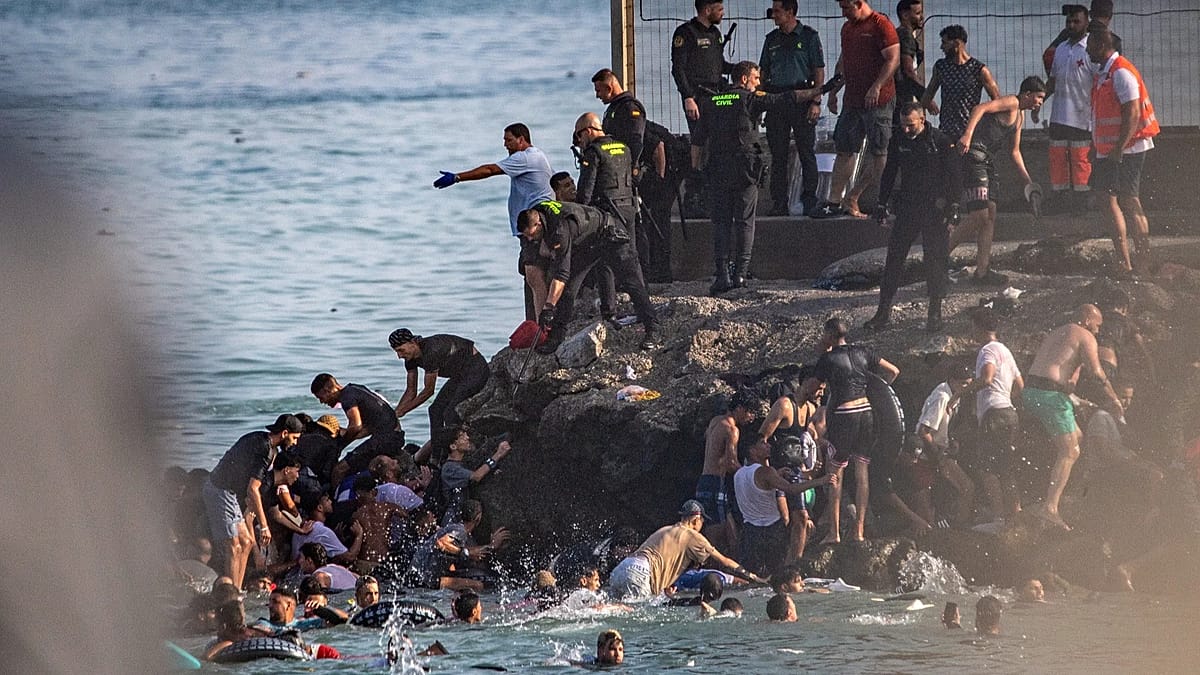
The European Commission is preparing to significantly tighten the bloc's migration rules in response to the dramatic events at Ceuta in late July, when around 80,000 people crossed into the Spanish exclave in a single day. According to several EU officials, diplomats and MEPs, three main policy options are under discussion, and Commission President Ursula von der Leyen could unveil them in her State of the Union address this week.
The Ceuta episode, described by one EU official as “too disturbing for Europeans,” has given fresh momentum to a political drive to curb irregular arrivals, even though overall crossings and asylum applications have been falling since 2023. The options are not mutually exclusive, and von der Leyen may pursue more than one.
Temporary suspension of asylum rights
The most far-reaching proposal would allow EU member states to temporarily suspend the processing of asylum claims in cases of sudden, mass influxes. Under current rules, anyone present in an EU country has the right to apply for asylum, regardless of how they entered. A suspension would mean that people arriving irregularly in such circumstances would not have their claims assessed individually.
“This idea is floating, and it would be a significant change,” a second EU official told Euronews. Some member states have already moved in this direction: Greece suspended asylum processing for three months for migrants arriving by sea from Libya in July 2025, and Poland has had a similar ban for crossings from Belarus since March 2025. The change would build on the new asylum rules that took effect last June, which introduced a faster “border procedure” for applicants from countries deemed safe.
Expanding Frontex's role
The Commission has long wanted to strengthen Frontex, the EU border agency, and the Ceuta crisis has given that ambition new urgency. Von der Leyen promised in her July 2024 re-election speech to triple Frontex's staff to 30,000 officers, and the agency is slated to receive €12 billion under the next seven-year budget, double its previous allocation.
A wide-ranging reform of Frontex's mandate is expected by the end of the year, though details remain unclear. A Frontex official said changes could include involvement in migrant returns, broader cooperation with third countries, and a more active surveillance role, with a concrete proposal likely in October. However, even the agency's board has not been fully briefed, and Director Hans Leijtens has not been informed about the content of von der Leyen's speech.
“The main question is whether Frontex will be able to take over from national authorities in crisis situations such as the one in Ceuta,” a senior MEP said, expressing doubt that this would happen. Alternatively, the agency could be given a role in deporting irregular migrants to third countries other than their country of origin, as outlined in the new Return Regulation due for formal adoption in the autumn.
EU funding for return hubs
The Commission could also take a bold step on the so-called “return hubs” – deportation centres in third countries that the Return Regulation would enable. The current rules leave financing entirely to member states, but the Commission's next budget proposal allocates €74 billion to migration management for 2028-2034, and there is talk of using EU funds to support these hubs.
Five member states are already in advanced talks with unnamed partner countries to start deportations by 2026. A joint letter from 19 EU countries in June praised “innovative solutions” to reduce irregular migration, and an EU official said a common financing mechanism “cannot be excluded.”
The European People's Party (EPP), the largest group in the European Parliament, backs all three proposals, which could ease their passage. As with previous migration files, the EPP may rely on support from right-wing and far-right MEPs to secure a majority. NGOs, civil society groups and left-wing parties are expected to challenge whatever is announced, having already criticised the Commission's recent migration policy guidelines.
The debate comes amid broader security concerns across the continent, including the resignation of Ceuta's chief of staff over disputed warnings about the influx, and Russian sanctioned ships returning to the Mediterranean under NATO watch. The Commission's proposals, if adopted, would mark a decisive shift in how the EU manages its external borders and asylum obligations.