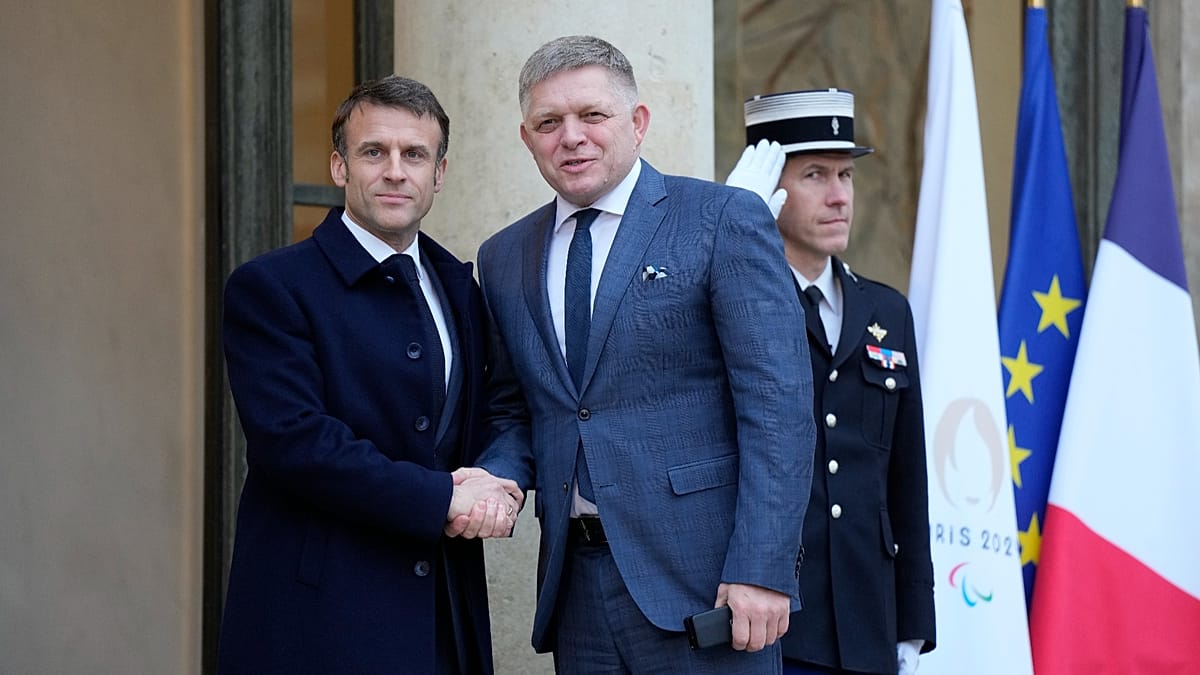
The European Union's efforts to renew its sanctions against Russia hit a fresh obstacle on Monday, as France and Slovakia jointly blocked the move, forcing ambassadors to approve only a one-week extension to buy time for negotiations. The rare alliance between Paris and Bratislava has left other member states puzzled, with France citing only a vague "national security" reason for its stance.
The short-term extension, valid until 22 September, was agreed as a last resort to avoid a lapse in the listings that target nearly 3,000 individuals and entities accused of supporting Russia's war in Ukraine. Diplomats now face a tight deadline to resolve a dispute that has proven stubbornly resistant to compromise.
"Consultations will continue, and further discussions are expected to be held in due course," said a spokesperson for Ireland's EU Council presidency. "Renewal of the listings is essential to continue undermining Russia's war machine, and keeping the pressure on those individuals and entities supporting, enabling and benefitting from it. This is a priority for the Presidency."
Usmanov at the centre of the standoff
At the heart of the deadlock is Alisher Usmanov, a Russian-Uzbek billionaire who was sanctioned in the early days of the full-scale invasion over his alleged close ties to President Vladimir Putin and his stakes in key sectors of the Russian economy. Usmanov has denied these allegations.
Slovakia has long campaigned for Usmanov and fellow oligarch Mikhail Fridman to be removed from the blacklist, a request that other member states have consistently rejected as politically motivated. What is new is France's decision to join that push, a move that has baffled Brussels and added an unexpected dimension to the negotiations.
According to an EU diplomat, the French delegation did not elaborate on its position during Monday's discussions. A French diplomat told Euronews: "We have a separate issue related to national security, and we would like to respond positively to our international partners who are approaching us regarding Mr Usmanov."
The reference to "international partners" has fueled speculation about external lobbying. Earlier this year, a media investigation published a two-page letter allegedly sent by Turkish President Recep Tayyip Erdoğan to Slovak Prime Minister Robert Fico, asking for help to end what Erdoğan called "the unfair practice" involving Usmanov. The letter, dated 2 March 2026, also mentioned Azerbaijan, Kazakhstan, Kyrgyzstan and Uzbekistan as countries backing Usmanov's removal.
It remains unclear whether France's position is linked to such behind-the-scenes efforts. What is clear is that the French-Slovak veto has made it considerably harder to reach the unanimity required for a full renewal.
Member states are seeking to extend the individual sanctions by 12 months to align them with the economic sanctions, which EU leaders renewed for another year in June. The current impasse threatens to undermine the bloc's unity on Russia policy, a cornerstone of its response to the invasion.
Ukrainian President Volodymyr Zelenskyy weighed in on the dispute, urging the EU to maintain its resolve. "Usmanov and Fridman are exactly the kind of Russian business figures who need to find the courage to take concrete steps against the war," he said.
The one-week extension provides only temporary relief. Diplomats will now scramble to find a compromise before the 22 September deadline, but the path forward remains uncertain. The episode underscores the growing difficulty of sustaining a unified European stance on Russia, as individual member states pursue their own interests and external pressures mount.
For now, the EU's ability to project resolve against Moscow is being tested not by external threats, but by internal divisions. As the bloc navigates this delicate moment, the outcome will signal whether it can maintain the cohesion that has defined its sanctions policy since 2022.