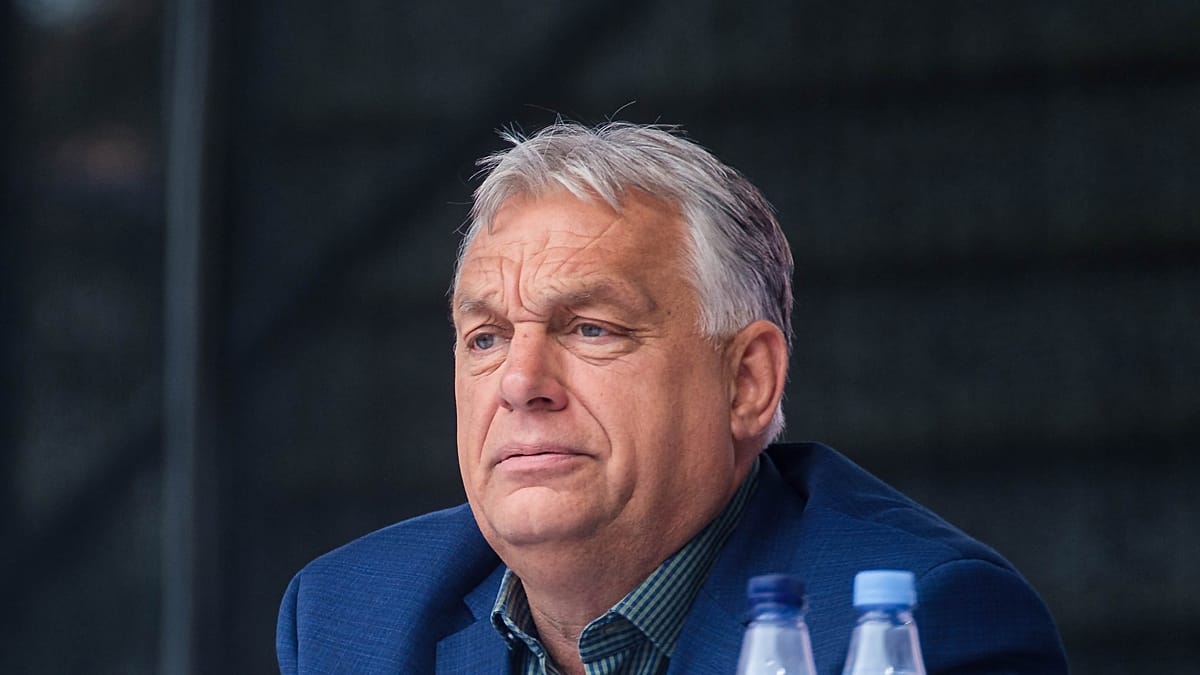
Speaking at the Bálványos Summer University on Saturday, Viktor Orbán declared that Hungary's Fidesz party must pivot from conventional opposition to a new phase of 'resistance politics.' The former prime minister, who lost power in April after 16 years in government, argued that the party could no longer afford to dwell on its electoral defeat.
Orbán claimed that many Hungarians who voted for change in the spring elections did so in good faith, expecting fewer government mistakes and stronger economic performance rather than a betrayal of their trust. He warned that the ruling Tisza party, led by Prime Minister Péter Magyar, is building an authoritarian system reminiscent of Venezuela—a mix of communist ideology, political arbitrariness, and economic oppression.
According to Orbán, there is a concerted effort to eliminate Fidesz entirely by driving its leaders out of politics and using illegitimate means to destroy any viable political alternative. In response, he urged his party to adopt a strategy of 'resistance' rather than self-reflection.
Magyar's Dismissive Response
Prime Minister Péter Magyar quickly dismissed Orbán's remarks. In a Facebook post on Saturday, he wrote: 'It is pointless to deal with an inexorable, disgraced mafia boss.' He added, 'Thank you for your wisdom and trust Hungary.'
The exchange underscores the deepening political rift in Hungary, where Orbán's long tenure has given way to a new government under Magyar's Tisza party. The former prime minister's call for resistance signals that Fidesz intends to remain a disruptive force rather than a constructive opposition.
EU as a Target
Orbán also trained his sights on the European Union, arguing that 'patriots' must take over Brussels to restore member states' independence and rebalance power within the bloc. He specifically called for abolishing the role of European Commission president, currently held by Ursula von der Leyen, and scaling back the EU's executive branch. 'Brussels must be occupied by the Patriots,' he declared.
This rhetoric aligns with Orbán's long-standing criticism of EU institutions, which he has often accused of overreach. His call for a 'patriot takeover' echoes similar sentiments among right-wing populist leaders across Europe, including in Poland and Italy, who have sought to challenge Brussels' authority on issues ranging from migration to judicial independence.
The broader context includes ongoing debates about EU reform, with some member states pushing for a more centralized union while others, like Hungary, advocate for a looser confederation. Orbán's vision of a scaled-back EU executive would represent a significant shift in the bloc's governance structure.
As Fidesz recalibrates its strategy, the party's future role in Hungarian politics remains uncertain. The April elections marked a decisive shift, with Magyar's Tisza party winning a clear mandate. Orbán's call for resistance suggests that Fidesz will not fade quietly but will instead seek to mobilize its base against what it portrays as an illegitimate government.
For now, the political landscape in Hungary is set for continued confrontation, with Orbán framing the stakes as nothing less than the country's freedom and sovereignty.