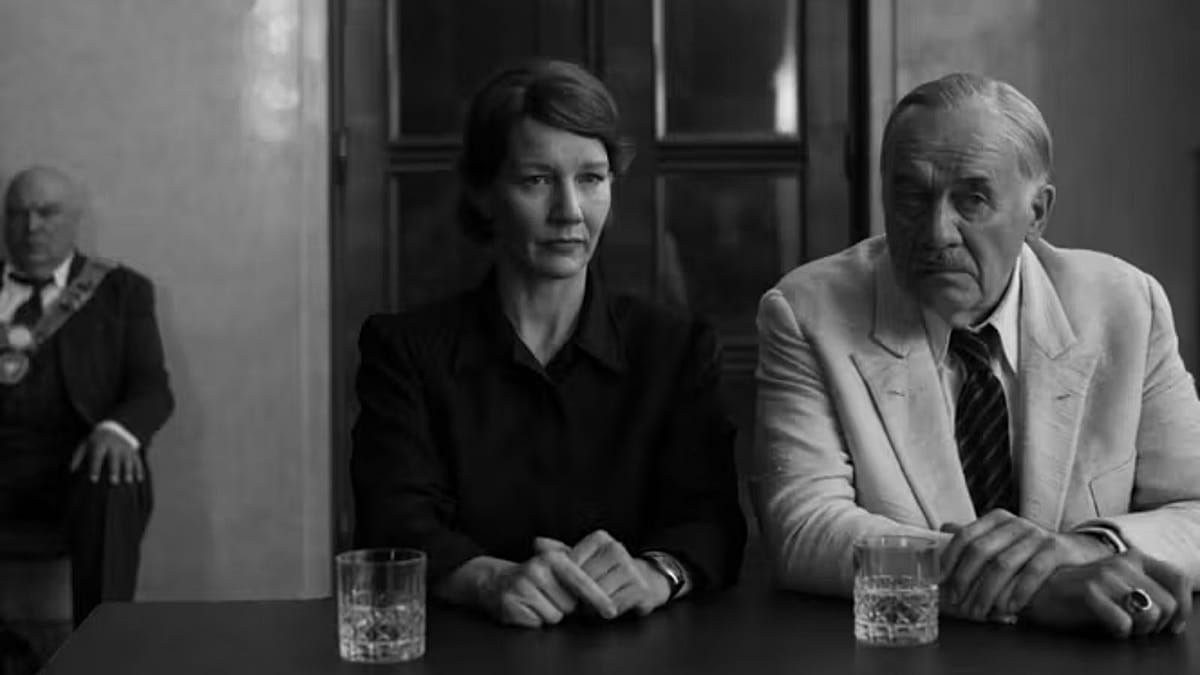
Eight years after Cold War, Polish director Paweł Pawlikowski returns with Fatherland (Ojczyzna), a stark black-and-white drama that premiered in Competition at the 79th Cannes Film Festival and earned him the Best Director prize for the second time. The film is a taut, 82-minute ghost story set in 1949, following Nobel laureate Thomas Mann and his daughter Erika as they travel through a Germany still scarred by war and already split between East and West.
A Divided Nation, A Fractured Family
Thomas Mann (Hanns Zischler) left Germany for the United States in 1933, after the Nazis came to power. Now, four years after the war's end, he is returning to accept two honours: one in West Germany under American occupation, the other in Weimar, East Germany, under Soviet rule. Both sides want to claim the celebrated author as their own. The West Germans hope he will endorse capitalism; the East Germans argue that Goethe, Mann's great influence, would have embraced Marxist values.
Erika (Sandra Hüller) is reluctant. She once called Germany home, but the memory of what it became under Hitler—and the loss of her brother Klaus's banned novel Mephisto—weighs heavily. Klaus (August Diehl), living in France, tells her on the phone: “Never again Germany—ugly place, ugly people, with a language created for lies.” Yet Thomas insists they go, even if travelling to Weimar could jeopardise his American citizenship. Erika agrees to accompany him as his assistant, translator, driver, and barber, hoping to see Klaus along the way.
As they drive through the rubble of divided Germany, the film becomes a meditation on grief, cultural appropriation, and the impossibility of going home. “Let’s go home,” Erika says at one point. “Where is that?” her father replies. It is a question that echoes through every frame.
Pawlikowski's Signature Style
Fatherland completes a loose trilogy that began with the Oscar-winning Ida (2013) and continued with Cold War. All three films use monochrome photography, the Academy aspect ratio, and a European landscape haunted by World War II. Here, cinematographer Łukasz Żal returns to create images of haunted beauty: meticulously composed still frames and claustrophobic long takes that make the ruined churches and empty roads feel like a waking dream.
Pawlikowski handles the material with subtlety. The film is not a political lecture but a character study, exploring how ideology tries to claim heritage while individuals struggle with personal loss. The director lets silence and gesture carry meaning, especially in a devastating scene where Erika and her father sit in a crumbling church while a lone organist plays Bach. Repressed feelings surface, and everything is said without words.
Sandra Hüller's Masterful Performance
Hüller, who also starred in Anatomy of a Fall, makes Erika the emotional core of Fatherland. The real Erika Mann was a war journalist, actress, and writer, but Hüller imbues her with palpable sorrow and suppressed rage. Whether she is burying her hatred or briefly snapping when she meets her ex-husband, Nazi sympathiser Gustaf Gründgens (Joachim Meyerhoff), every facial tic and movement is perfectly calibrated. How she left Cannes without the Best Actress award remains a mystery.
Zischler matches her as a man caught between his public role and private guilt. Together, they create a portrait of two lost souls whose homeland has been replaced by two competing ideologies, each trying to claim a legacy that no longer belongs to anyone.
In a year that has already seen strong European cinema, Fatherland stands out as a powerfully engrossing film—one that will be hard to top when looking back at 2026's best offerings. It is a reminder that Pawlikowski remains one of Europe's most important directors, capable of turning history into intimate, unforgettable art.