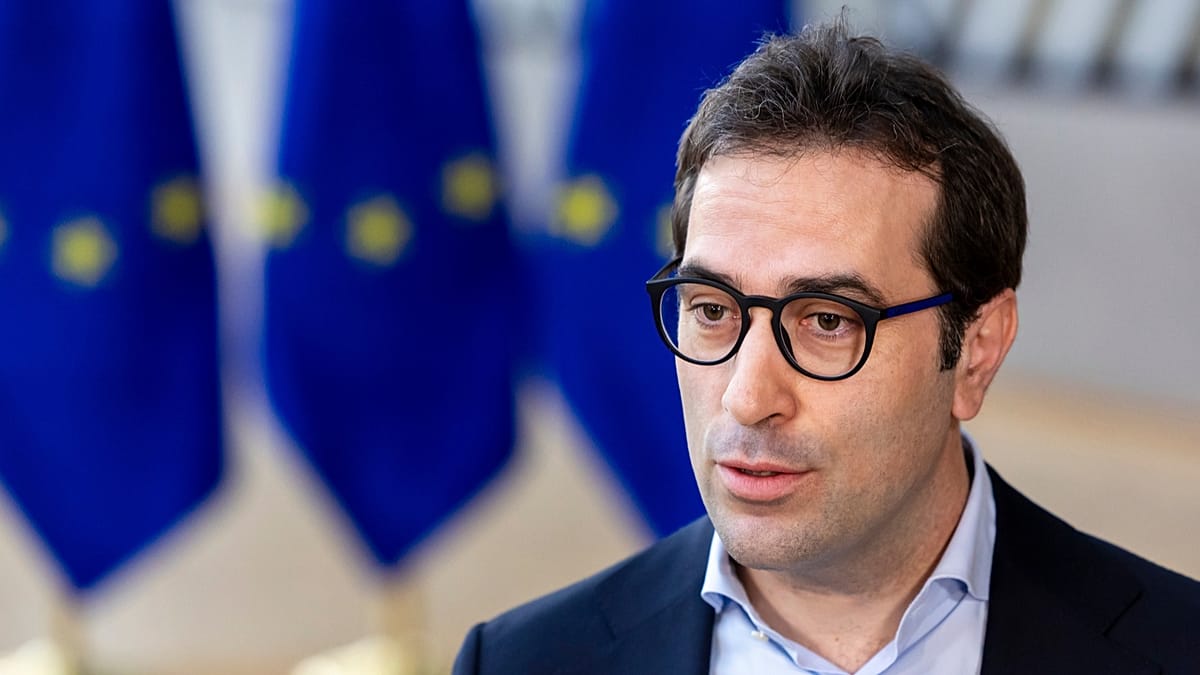
Spanish Finance Minister Carlos Cuerpo has seized on what he calls a "window of opportunity" to advance a major new EU joint borrowing proposal, as heightened geopolitical uncertainty—including renewed US hostilities with Iran—pushes the bloc to seek safer financial assets. Speaking to Euronews during finance ministers' meetings in Brussels, Cuerpo argued that the moment is ripe for a mechanism that could reshape Europe's fiscal architecture.
The proposal, detailed in a Spanish government paper distributed on Wednesday, is called the "European Sovereign Facility." It would centralise joint debt issuance across the EU, reducing the costs that arise from fragmented national borrowing. If all 27 member states, along with the European Stability Mechanism and the European Financial Stability Facility, participate, annual issuance could reach €850 billion. Within five years, that would build a stock of joint debt worth €5 trillion.
A coalition of the willing
Recognising that not all EU capitals are on board, Madrid has suggested a phased approach. An initial "coalition of the willing" could launch the facility, provided it includes at least the five largest euro-area issuers. According to the Spanish document, those five alone would generate annual issuance of roughly €540–550 billion—enough to make the initiative meaningful.
The guarantees underpinning the facility would be twofold: loans to participating member states and the EU budget itself. This dual structure aims to reassure investors and rating agencies, but it also raises questions about risk-sharing and fiscal discipline. The proposal requires participating countries to comply with EU fiscal rules, a condition designed to win over sceptics.
The timing of the push is no accident. The EU is currently debating its 2028–2034 long-term budget, which must be agreed by the end of 2026. That debate includes intense discussions on how the budget will be financed, and Cuerpo sees the joint borrowing plan as a natural complement. "We've been having discussions on the international role of the euro over the past few months, with very good contributions on the fact that we need a safe asset," he told Euronews. "We thought it was about time that there was a specific proposal."
Yet the road ahead is steep. Several Nordic countries, Germany, and the Netherlands remain staunchly opposed to any form of joint borrowing. They argue that it would mutualise debt without sufficient control over national spending, potentially undermining fiscal discipline across the bloc. The Spanish proposal will need to overcome these objections if it is to move from a paper to a policy.
The broader context is the EU's ambition to strengthen the euro's international role as a global reserve currency. In a world where the US dollar still dominates, creating a deep, liquid market for euro-denominated safe assets is seen as essential. The European Sovereign Facility would provide exactly that—a large, unified pool of debt that could rival US Treasuries in scale and reliability.
For now, Cuerpo is pressing his case in Brussels, building on earlier discussions about the euro's global standing. Whether he can convert momentum into consensus remains to be seen, but the proposal has already injected new energy into a long-running debate about the future of European fiscal integration.