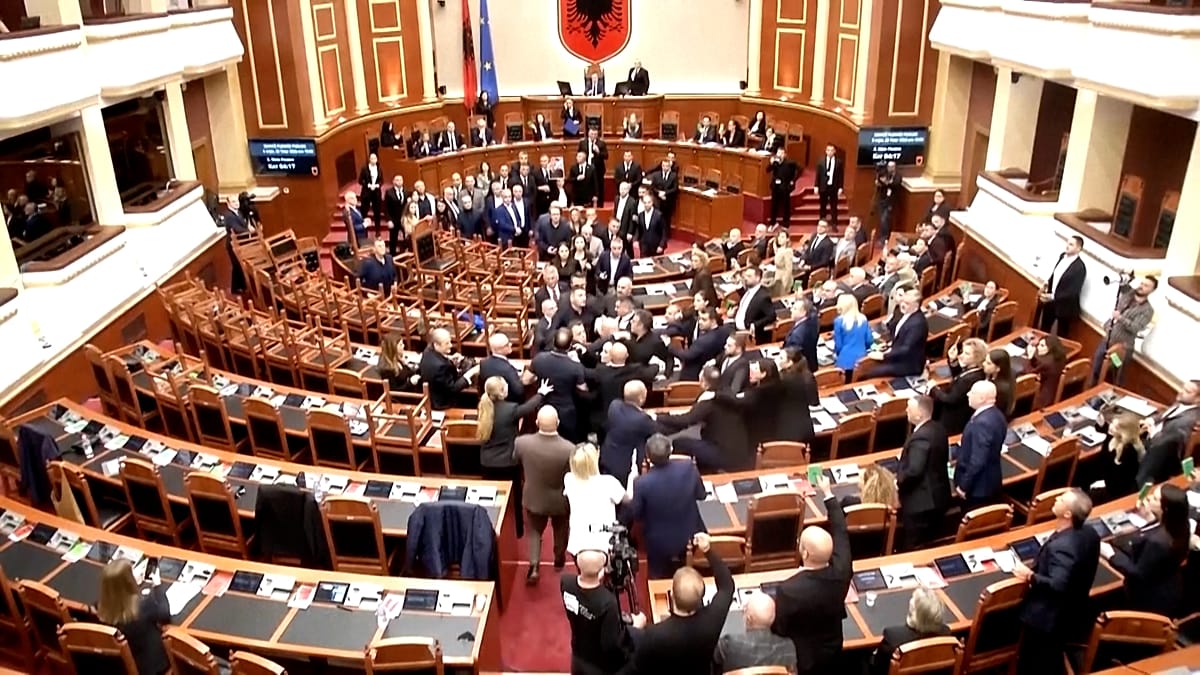
Albania's parliament in Tirana descended into chaos on Thursday as rival lawmakers clashed inside the chamber, while student demonstrators kept up their protests outside for a tenth consecutive day. The scuffles erupted during a session marked by heated exchanges over the government's handling of the ongoing demonstrations.
Clashes inside the chamber
Television footage showed MPs from the ruling Socialist Party and the opposition Democratic Party shoving and grappling with each other near the speaker's podium. The brawl, which lasted several minutes, forced the speaker to suspend the session temporarily. At least one MP was seen being pulled away by colleagues as shouting and jeering filled the hall.
The trigger for the confrontation appeared to be a demand by opposition lawmakers for an emergency debate on the protests, which have drawn thousands of students to the streets of Tirana and other cities. The students are calling for better living conditions, lower tuition fees, and an end to what they describe as corruption in higher education.
Opposition leader Lulzim Basha accused the government of ignoring the students' legitimate grievances. "The government has lost all legitimacy to govern," Basha said in a statement after the session was suspended. "It is treating the parliament as a rubber stamp, and the people as enemies."
Protests continue outside
Outside the parliament building, police in riot gear maintained a cordon as several thousand students and supporters chanted slogans and waved banners. The demonstrations, which began on December 5, have become the largest in Albania in years, drawing attention to chronic underfunding of public universities and the country's high youth unemployment.
Prime Minister Edi Rama, who was not in the chamber at the time of the scuffle, has dismissed the protests as politically motivated, pointing to the involvement of opposition parties. In a Facebook post, he wrote: "The students have every right to protest, but they should not be used as pawns by those who have failed at the ballot box."
The European Union, which has granted Albania candidate status, has urged all sides to exercise restraint. In a statement, the EU delegation in Tirana called for "dialogue and peaceful resolution of differences," stressing that "the right to peaceful assembly is a fundamental right in any democracy."
The unrest in Albania comes as other European countries grapple with their own protest movements. In France, the government is bracing for new protests over a disputed route in Paris, while Italy has deployed elite units and drones to secure upcoming demonstrations. The European Parliament has also been active on other fronts, such as urging the EU to blacklist Yemen's Houthis and backing the ICC with the Sakharov Prize.
Analysts say the Albanian government's response to the protests will be closely watched by Brussels, as the country seeks to advance its EU accession talks. "This is a test of Albania's democratic maturity," said Andi Hoxha, a political analyst in Tirana. "How the government handles this will send a strong signal to the EU about its readiness to join the bloc."
The parliament is expected to reconvene later on Thursday, but it remains unclear whether the opposition will allow business to proceed. The student protesters have vowed to remain on the streets until their demands are met, raising the prospect of further clashes.