The European Parliament has awarded its annual Sakharov Prize for Freedom of Thought to the International Criminal Court (ICC), a pointed rebuke to the United States' recent sanctions against the Hague-based tribunal. The decision, announced on Thursday, sends a clear signal that the EU stands firmly behind the court's work despite external pressure.
The prize, named after Soviet dissident Andrei Sakharov, honors individuals and organizations defending human rights and fundamental freedoms. Past laureates include Nelson Mandela, Burma's Aung San Suu Kyi, and Russian opposition leader Alexei Navalny. This year's choice marks the first time the prize has gone to an international judicial body.
The US administration, under President Donald Trump, imposed sanctions on the ICC on 9 October, following the court's arrest warrant for Israeli Prime Minister Benjamin Netanyahu and its investigation into alleged US military misconduct in Afghanistan. The sanctions freeze assets and bar US citizens from dealing with the court's officials, threatening its operational capacity.
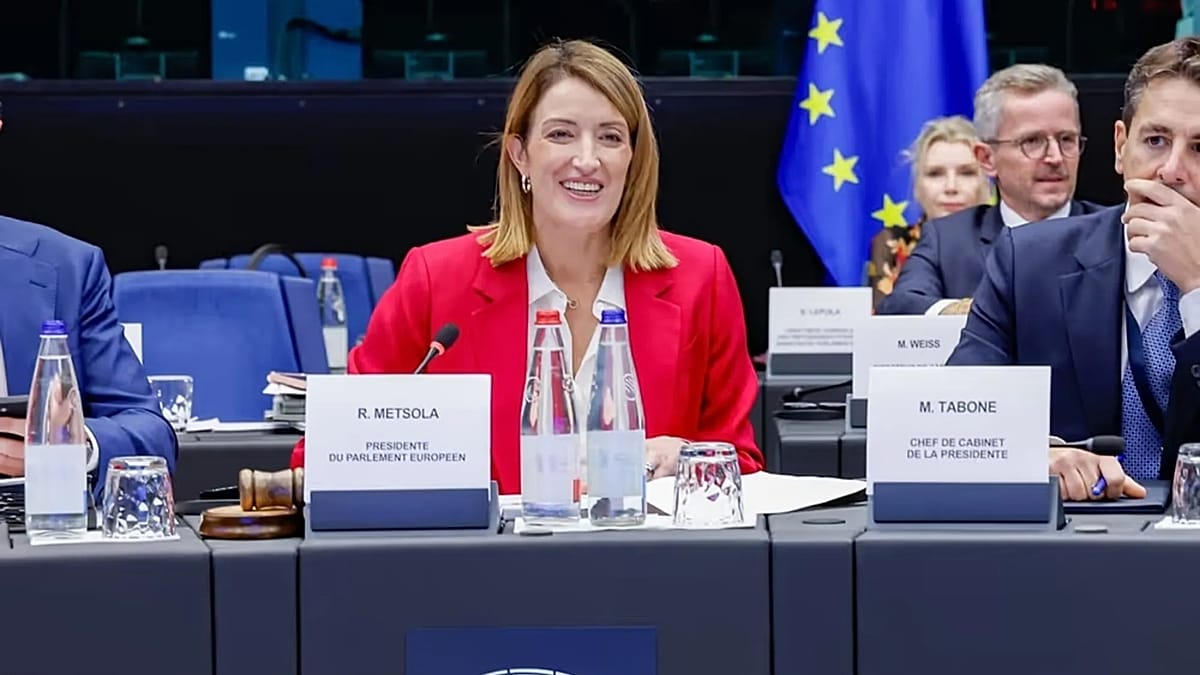
French MEP Chloé Ridel, who nominated the ICC, framed the award as a direct challenge to Washington. "This is a message of hope and resistance sent to Donald Trump. We will not abandon the rule of law and international justice. We will stand with the ICC for as long as it takes," she said.
A symbolic but powerful gesture
The award is largely symbolic, but it carries significant political weight. It comes as EU institutions explore concrete measures to shield the ICC from the impact of US sanctions. Last week, a cross-party group of MEPs urged European Commission President Ursula von der Leyen to activate the EU's Blocking Statute, a regulation that protects European companies and individuals from complying with foreign sanctions. The statute would allow EU entities to ignore US penalties and seek damages for any harm caused.
The Parliament's political group leaders selected the ICC from a shortlist of three candidates. The other finalists were Tanzanian lawyer Tundu Lissu, who faces political persecution at home, and Iranian sisters Taraneh and Romina Rahimi, nominated on behalf of those oppressed by Iran's authorities. The Socialists and Democrats (S&D) group put forward the ICC, and the nomination eventually gained broad support across the political spectrum. Some insiders had expected Lissu to win, making the outcome a surprise.
The decision reflects a growing consensus in Brussels that the EU must defend international legal institutions against what many see as unilateral US actions. The ICC, established by the Rome Statute in 1998, has 123 member states, including all EU countries. The court investigates and prosecutes genocide, war crimes, and crimes against humanity.
US opposition to the ICC is not new. Washington has long criticized the court for its potential to prosecute American citizens, and the Trump administration had previously imposed sanctions on ICC officials in 2020. Those sanctions were lifted by the Biden administration but reinstated under Trump's second term.
The EU's response has been cautious but firm. While the Blocking Statute has been invoked before—notably against US sanctions on Iran—its application to the ICC is unprecedented. Legal experts say the move would be a significant escalation in transatlantic tensions over international justice.
The Sakharov Prize ceremony is scheduled for December in Strasbourg. ICC President Tomoko Akane is expected to accept the award on behalf of the court. In a statement, the ICC welcomed the recognition, saying it "reaffirms the importance of international criminal justice and the need to protect it from political interference."
The award also resonates beyond the immediate dispute. It highlights the EU's commitment to a rules-based international order, a principle that has come under strain in recent years. As the bloc navigates its relations with both Washington and other global powers, the gesture serves as a reminder of its foundational values.
For the ICC, the prize is a morale boost amid mounting challenges. The court faces criticism from various quarters, including African nations that accuse it of bias, and it has struggled to enforce its rulings without a police force. Yet the EU's backing provides a measure of political cover and financial support.
The decision also sends a message to other countries that might consider undermining the court. By honoring the ICC, the European Parliament is drawing a line in the sand: attempts to intimidate international justice will not go unanswered.