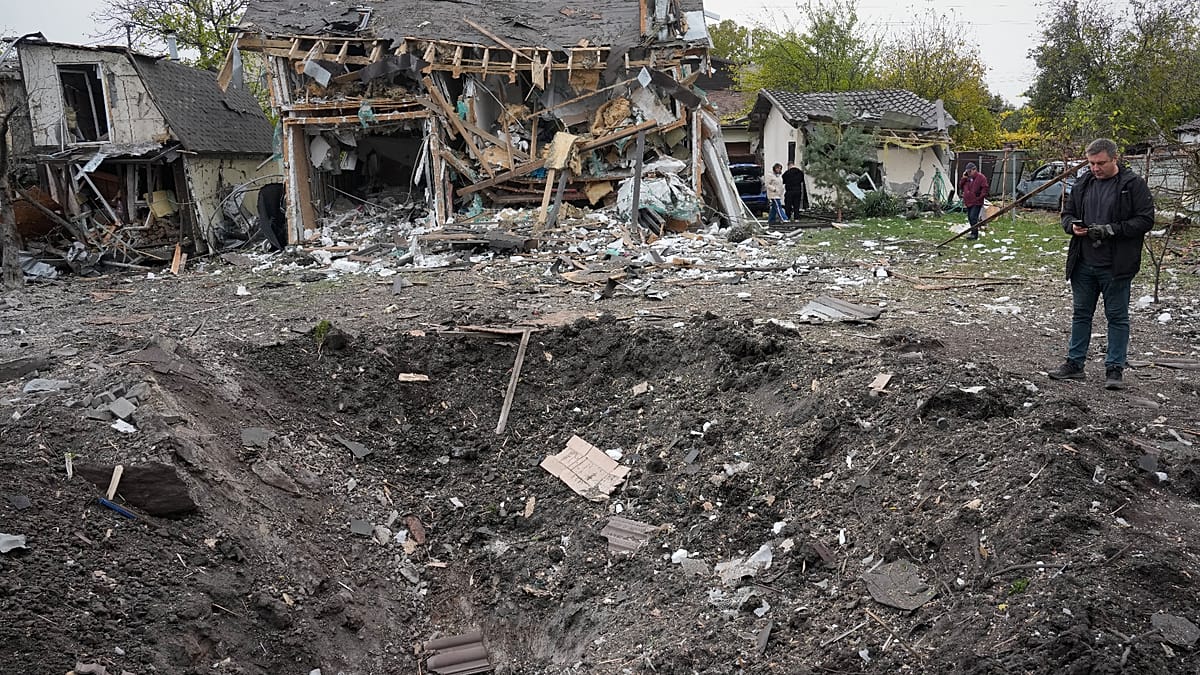
At least nine people were killed in Russian attacks across Ukraine over the past 24 hours, according to Ukrainian authorities. Overnight missile and drone strikes sparked fires in the capital, Kyiv, and in the northeastern Kharkiv region, adding to the mounting civilian toll of the ongoing war.
The attacks come as diplomatic efforts to end the conflict remain stalled, with European leaders increasingly concerned about the direction of US policy under President Donald Trump. EU foreign policy chief Kaja Kallas has accused Washington of pressing Kyiv to surrender on Moscow's terms, a sentiment echoed by other European officials.
Overnight strikes hit civilian areas
Ukrainian emergency services reported that the overnight barrage targeted residential neighborhoods and infrastructure. In Kyiv, falling debris from intercepted missiles ignited fires in at least two districts, while in the Kharkiv region, a series of strikes damaged homes and a local power substation, leaving thousands without electricity.
Local officials in Kharkiv confirmed that at least four of the nine deaths occurred in the region, with several others injured. In the southern city of Odesa, a drone attack damaged port facilities, though no casualties were reported there.
The Ukrainian air force said it intercepted a significant number of the incoming missiles and drones, but the sheer volume of the assault overwhelmed some defenses. This pattern has become all too familiar for residents, who have endured nightly bombardments for months.
European observers note that the attacks are not limited to the front lines. Finnish MEP Mika Aaltola has warned that Putin now targets all of Ukraine, including the capital, in a deliberate strategy to break civilian morale.
European response under strain
The latest casualties come as European Union member states grapple with how to sustain financial and military support for Ukraine. A widening funding gap has forced difficult negotiations over the bloc's multi-year budget, with some capitals reluctant to increase contributions.
Meanwhile, the human cost continues to mount. According to the UN, thousands of civilians have been killed since the full-scale invasion began in February 2022, and the recent uptick in strikes suggests no respite in sight.
In Brussels, officials are exploring new mechanisms to channel aid to Kyiv, including using frozen Russian assets. However, legal and political hurdles remain, and time is running short as winter approaches.
The attacks also underscore the broader security implications for Europe. The EU's Arctic strategy has shifted focus to security in response to increased Russian and Chinese activity, reflecting a continent-wide reassessment of defense priorities.
For now, Ukrainian cities brace for more strikes. In Kharkiv, residents have grown accustomed to the sound of air raid sirens, but each new attack brings fresh grief. As one local official put it, "Every night we hope for silence, but the explosions continue."
The international community has condemned the latest attacks, but concrete action remains elusive. With diplomatic channels largely frozen, the war grinds on, and the toll on civilians shows no sign of abating.