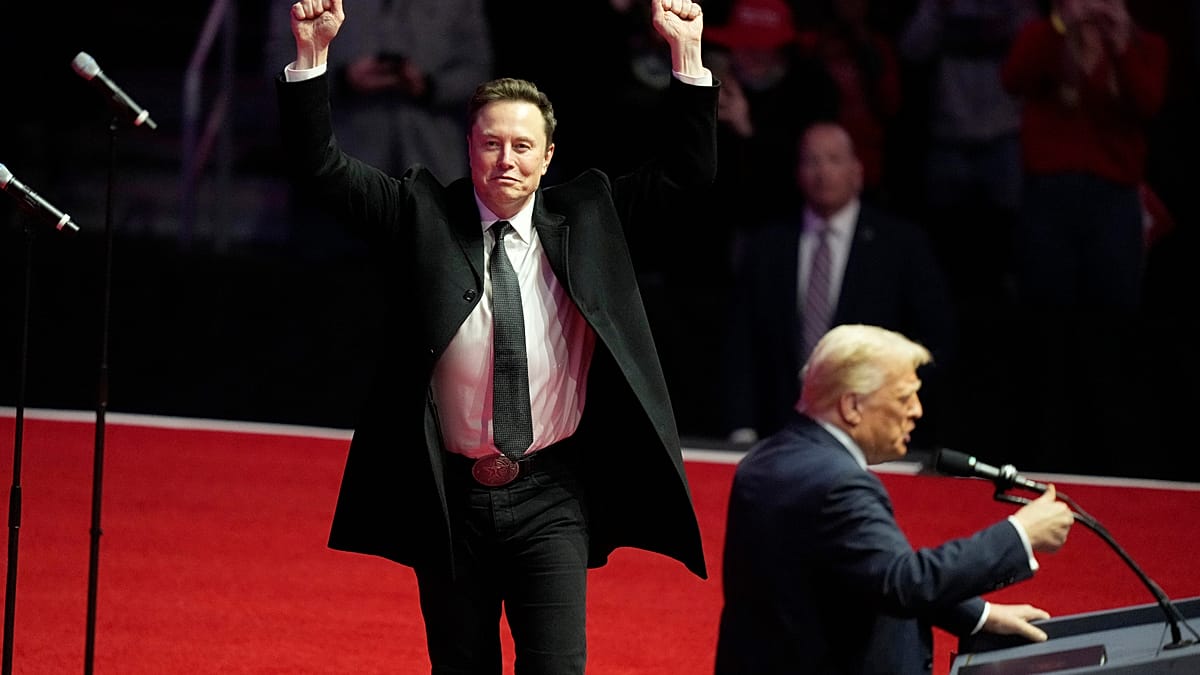
Elon Musk has confirmed that Tesla and SpaceX are exploring a merger, a move that would create a combined company worth roughly $3.5 trillion (€3.1 trillion) and rank as the largest corporate tie-up in history. According to Bloomberg, citing people familiar with the matter, the goal is to finalise the deal before Donald Trump's presidential term ends in January 2029.
The announcement came during SpaceX's earnings call on Tuesday, where Musk told analysts that both companies have set up committees of independent board members to study the merger. He called it "a good idea" while admitting he felt he was "tap dancing through a minefield."
This would be the latest chapter in a decade-long pattern of Musk folding his ventures together. In 2016, Tesla acquired SolarCity, a solar panel installer run by his cousins, a deal that only survived years of litigation. In March 2025, his AI start-up xAI absorbed X, the social network formerly known as Twitter, which Musk had bought for $44 billion (€39.1 billion) in 2022. Then in February, SpaceX absorbed xAI, valuing the rocket maker at $1 trillion (€890 billion) and the AI firm at $250 billion (€222 billion), ahead of SpaceX's initial public offering. Four months later, SpaceX listed on the Nasdaq, raising $85.7 billion (€76.3 billion) in the biggest stock market debut ever.
Why merge Tesla and SpaceX?
Musk argues that artificial intelligence will determine the future direction of both companies. They are already jointly developing Terafab, an AI chip factory in Texas, while Tesla's driverless cars and Optimus humanoid robots could benefit from the computing power SpaceX is racing to build, including planned data centres in orbit.
The financial logic is also compelling. SpaceX posted its first quarterly profit since listing, earning $4.4 billion (€3.9 billion) as revenue jumped 161%, but its capital spending reached $19.6 billion (€17.4 billion) in the quarter, mostly on AI. By contrast, a day later, Tesla reported that its net profit fell 43% to $787 million (€700 million) on flat revenue of $28 billion (€24.9 billion), as deliveries slipped 2%. In a combined company, SpaceX's surging revenue could help offset Tesla's weaker figures.
Merging the businesses would also allow Musk to run all operations under one roof, moving engineers and resources between companies without the disclosures or lawsuits that come with related-party deals. Control is another factor: Musk owns about 48% of SpaceX and holds more than 80% of its votes through special shares, but only about 20% of Tesla. Since 2024, he has said he is uncomfortable turning Tesla into an AI and robotics leader without at least 25% of the votes. A merger could also make him richer, as his Tesla pay package treats many performance goals as achieved if certain types of mergers go through.
Racing the political clock
Reportedly, the aim is to announce a merger deal in the first half of 2027 and complete it before Trump's term ends. Completing the deal while Trump is in office could give it a friendlier political reception, although it would still face regulatory and shareholder scrutiny. Musk, who led Trump's cost-cutting drive in 2025 before a public falling-out, has since made up with the president and returned to the administration.
He has also become the biggest known donor supporting Republican candidates in next month's US midterm elections, giving more than $276 million (€245 million) since July, according to a spokesperson for America PAC, Musk's conservative super PAC. A Democratic win could bring tougher scrutiny of SpaceX's federal contracts and Tesla's self-driving software. SpaceX itself warned in its listing documents that a shift in power in Congress could have a "material and adverse impact on our growth and competitive position."
The committees have yet to agree on terms, and any deal would need the backing of more than half of all Tesla shares, which Musk called "quite a high hurdle." He cautioned that a merger was not certain. Tesla shareholders meet on 3 December.
For European observers, the merger raises questions about the concentration of power in the hands of a single entrepreneur, especially as Musk's companies expand their footprint in Europe, from Tesla's Gigafactory near Berlin to SpaceX's Starlink services across the continent. The outcome of the US midterms could also affect transatlantic tech policy, as a Democratic Congress might push for stricter antitrust enforcement that could have ripple effects on European regulators.