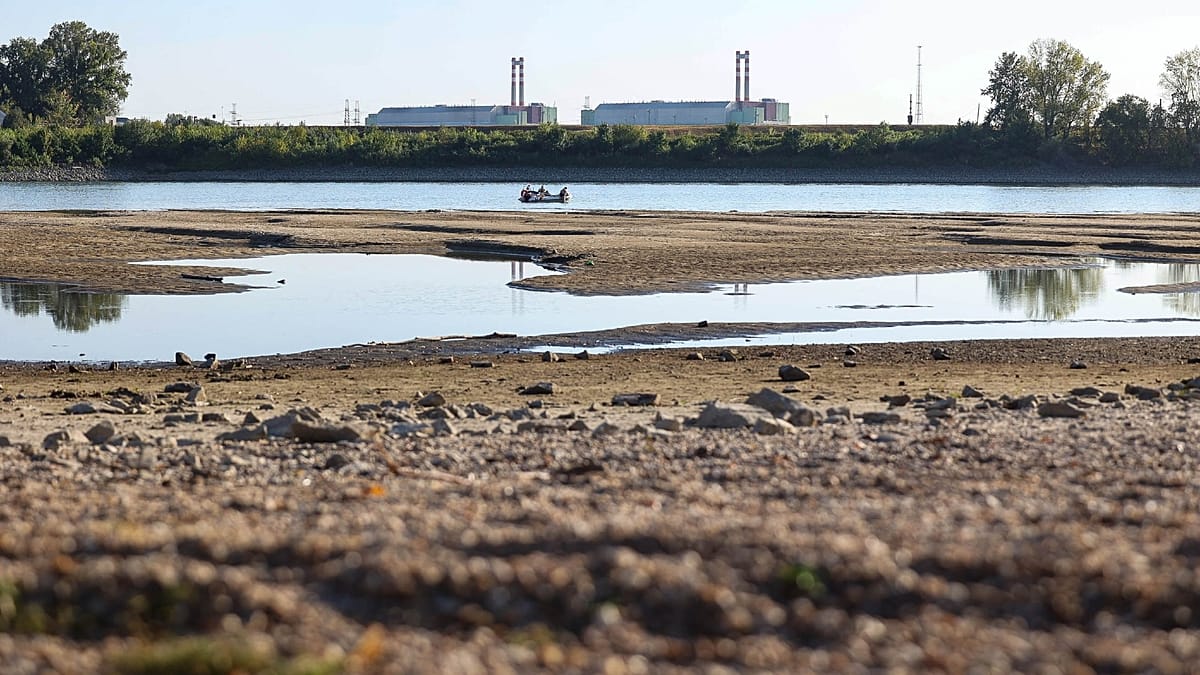
Europe's prolonged summer heatwave has pushed two of its most vital waterways—the Rhine and the Danube—to critically low levels, disrupting industrial supply chains from the North Sea to the Black Sea. The Rhine, which flows 1,230 kilometres from the Swiss Alps through Germany and the Netherlands, has seen its gauge at Kaub drop to 27 centimetres in late July, well below the 30-centimetre threshold that forces most cargo vessels to reduce loads or halt altogether. According to commodity intelligence provider ICIS, the level was forecast to fall further, effectively cutting off the Upper Rhine and Main rivers from the Amsterdam-Rotterdam-Antwerp (ARA) trading hub, as reported by Argus.
Chemical and steel sectors hit hardest
For the chemical and petrochemical industries, reduced navigable depths restrict deliveries of essential feedstocks such as naphtha and liquefied petroleum gas (LPG) from North Sea ports to inland factories. LyondellBasell declared force majeure on butadiene supplies from its Wesseling plant after low water disrupted feedstock deliveries. BASF also warned of possible force majeures or product shortages, as the company relies heavily on Rhine barges for raw materials. Steelmaker Thyssenkrupp has slightly reduced blast furnace production at its Duisburg plant because barges carrying iron ore and coal struggled to pass shallow chokepoints like Kaub. The company suspended its own barge operations and chartered shallower-draught vessels, though it said customer deliveries were not at risk.
Freight rates for shipping diesel and petroleum products upriver have soared, threatening inland distribution of fuels. Coal-fired power stations are also struggling to secure supplies as barge loads drop considerably. Rail and road networks in the region already operate near capacity, so they cannot fully replace lost barge capacity, raising the risk of broader economic disruption.
Danube crisis deepens in Hungary and Romania
The Danube, which flows through or borders ten countries including Germany, Austria, Slovakia, Hungary, Croatia, Serbia, Bulgaria, Romania, Moldova, and Ukraine, has also hit historic lows. In Budapest, the gauge reading fell to 23 centimetres on 27 July—10 centimetres below the previous record set in 2018—according to Hungary's official water-monitoring service. The Hungarian Construction and Transport Ministry reported that most cargo vessels had been halted along the Hungarian section, while those still operating carried only 10% to 20% of normal loads. Around 15 hotel ships were also stranded.
In Serbia, barges and tankers were operating at about 30% to 40% of normal capacity. The disruption is uneven: some stretches have seen a complete halt, while others continue with sharply reduced loads.
Nuclear power plants forced to cut output
The low water levels have directly impacted energy production. Hungary's Paks Nuclear Power Plant reduced output and shut down one of its four reactors, marking the first-ever shutdown of a complete block at the facility, according to operator MVM. Combined with earlier reductions, the plant's output fell to about 60% of capacity. In Romania, state-owned Nuclearelectrica shut down Unit 1 at the Cernavodă power plant on 26 July because of what it described as the “very low, unprecedented” level of the Danube. Romania's energy ministry said Unit 2 would be disconnected shortly after, leaving both reactors offline simultaneously.
Rising water temperatures have also made industrial cooling systems less efficient, further pressuring thermal and nuclear plants. This adds to the strain on energy grids already dealing with increased demand from air conditioning during the heatwave.
The broader context is that Europe has faced increasingly severe heatwaves in recent years, with droughts and wildfires across Spain, France, Italy, and elsewhere. The current crisis on the Rhine and Danube underscores how climate-driven extremes are disrupting not just agriculture and tourism but the very arteries of European industry. As water levels are not expected to improve soon, companies and governments may need to accelerate investments in alternative transport modes and water-efficient technologies to build resilience against future shocks.