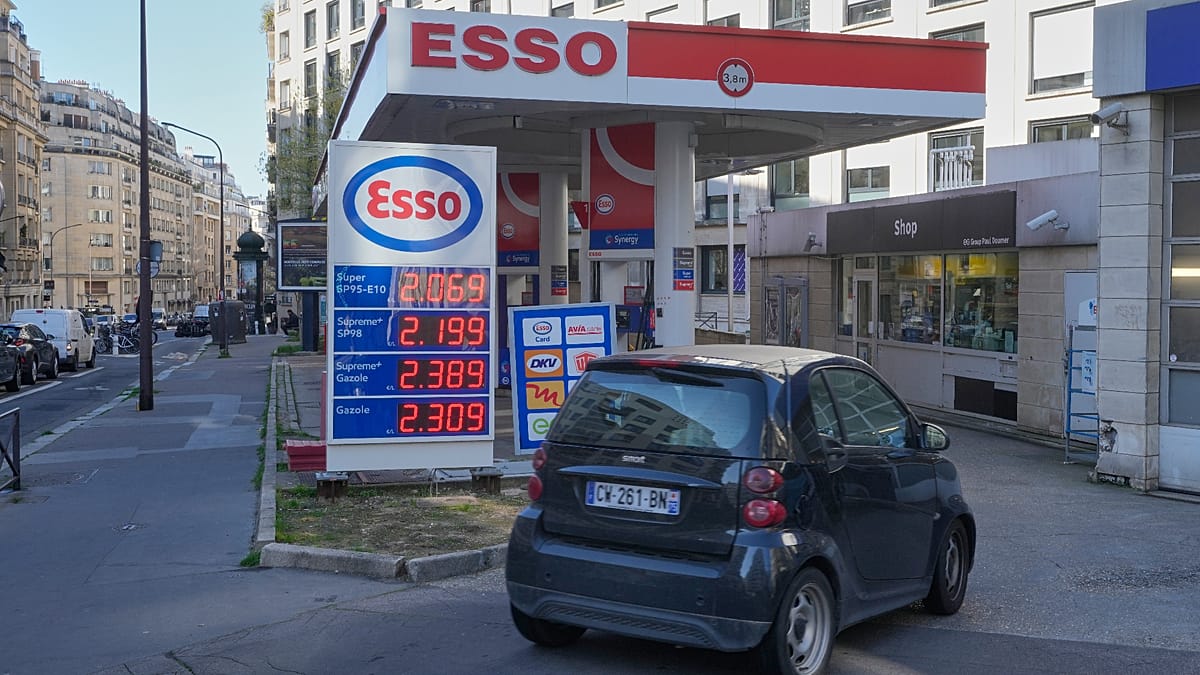
Filling up a car has never been more expensive across the European Union, according to European Commission data stretching back more than two decades. The latest weekly figures show that a 50-litre tank of petrol now costs around €103 on average, while diesel costs about €108.
Retail fuel prices have surged since the outbreak of the Middle East conflict, adding to inflationary pressures across the bloc. Eurozone energy inflation rose to 14.3% in August, up from 10.3% in July, according to the European Central Bank (ECB).
As of 14 September, the weighted EU average price for a litre of petrol stood at €2.063, while diesel reached €2.159 per litre. Both are the highest readings in the Commission's series, which began in 2005. Petrol's previous peak was recorded in 2022, while diesel last approached its current level in April this year.
Prices vary considerably across the EU. Petrol is cheapest in Malta at €1.34 per litre and most expensive in Denmark at €2.56. Diesel ranges from €1.21 per litre in Malta to €2.51 in Finland. These figures, published in the Commission's Weekly Oil Bulletin on 17 September, include taxes.
Why are fuel prices so high?
International crude prices have been climbing since the war with Iran began in late February, disrupting energy flows through the Strait of Hormuz. Brent crude rose above $126 a barrel at the height of the conflict and was trading at more than $104 for November delivery on Friday, compared with about $72 before the war.
European crude supplies face further disruption after Saudi Aramco told at least two European refiners they would receive no oil under long-term contracts in October, following an attack on the kingdom's key pipeline to the Red Sea. Bloomberg reported the decision applies to all European buyers.
But crude prices are not the only factor driving pump prices higher. Refining costs and margins—the difference between the cost of crude and the price of refined products like petrol and diesel—have also risen significantly. While petrol margins appear to have peaked, ECB experts told Euronews Business that diesel margins are not expected to reach their highest point until October.
“Looking ahead, based on refined diesel futures from LSEG on 16 September, the margin for diesel is expected to peak in October. Based on refined petrol futures from LSEG on 16 September, petrol margins peaked in August,” they said.
Since the start of 2026, the weighted EU average petrol price has risen by about 29%, while diesel has surged by almost 40%. Higher crude prices have also fuelled energy inflation across the eurozone and the wider EU. According to an ECB blog published in July, increases in crude-oil prices generally feed through fully to pre-tax pump prices within one or two months. Governments can temporarily cushion the impact through measures such as cuts to fuel duties.
Crude oil accounted for less than a quarter of the euro-area pump price in the ECB blog's July calculations. The remainder included refining and distribution costs and margins, excise duties and value added tax, helping to explain the significant differences between countries. The blog's calculations indicated that excise duties and VAT together represented around 44% of the euro-area diesel price and 52% of the petrol price in July.
ECB experts told Euronews Business that refining margins are now making a large contribution to diesel prices.
“At the current juncture, we have estimated that in the third week of September refining margins have contributed €0.41 (19% of the pump price) and €0.17 (8%) per litre to the retail diesel and retail petrol prices in the euro area, respectively.”
Could fuel prices rise further?
The ECB's monetary policy statement, published on 10 September, warned: “Renewed disruption of energy supplies could cause energy prices to rise further and for longer than currently expected.”
ECB experts said an end to the Middle East conflict and the restoration of energy and refining flows would be central to bringing prices down.
“For petrol and diesel prices to decline, the key factor would be a cessation of the war in the Middle East, a normalisation of flows through the Strait of Hormuz and a restoration of global refining activity to allow oil inventories to rebuild,” they said.
Such a normalisation could quickly lower crude oil and retail fuel prices. However, disruptions to Russian refining capacity could keep margins elevated even if the Middle East conflict were resolved. As recent calls to halt refinery strikes highlight, global diesel supply remains fragile. Meanwhile, EU finance ministers are weighing windfall taxes on energy firms to cushion the blow for consumers. The situation also adds to the broader economic pressures, as seen in Portugal's tax relief plan and Spain's housing affordability gap.