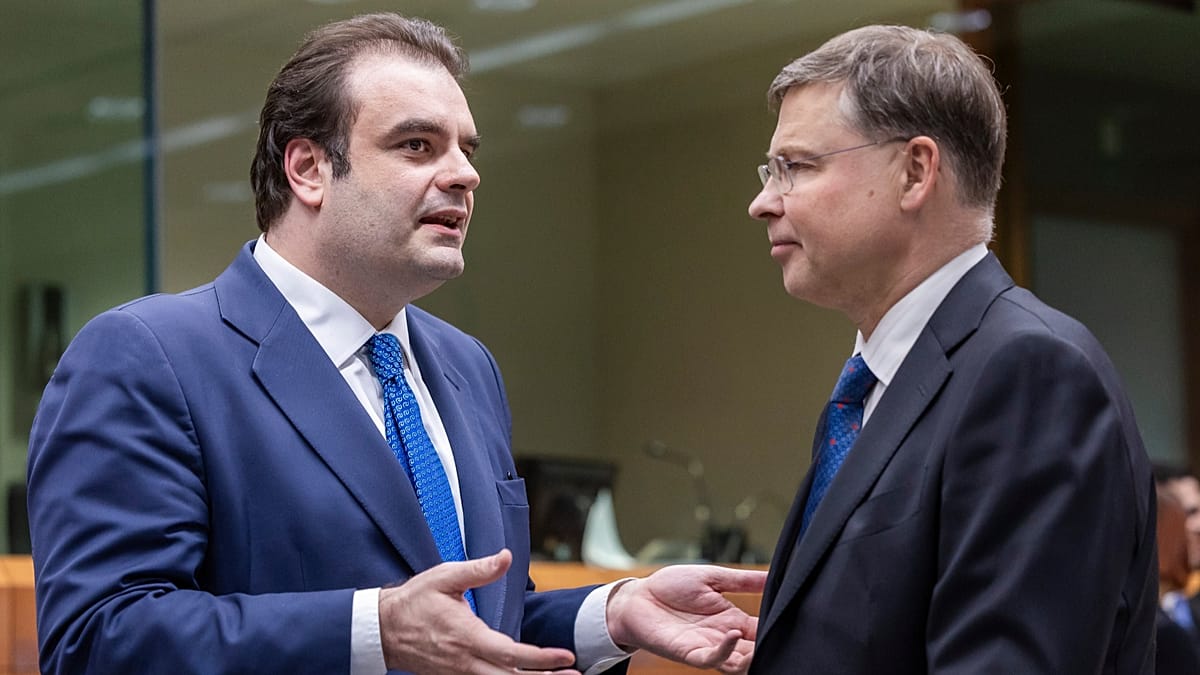
European Union finance ministers gathered in Dublin on Friday and Saturday for the regular Eurogroup and Economic and Financial Council meetings, with a windfall tax on energy companies emerging as a central topic of discussion. The proposal, floated by several member states, aims to capture excess profits from firms benefiting from the current volatility in energy markets.
Brent crude oil has climbed above $100 per barrel amid the ongoing conflict in the Middle East, and the resulting energy price swings are keeping inflation elevated across the bloc. The European Commission does not expect inflation to return to its 2% target before the end of 2027. While growth indicators remain relatively robust this year, the Commission projects a slowdown in 2027.
In this context, the EU is pressing member states to maintain prudent fiscal policies, while allowing flexibility within the existing framework—including a 1.5% of GDP allowance for defence spending, of which 0.3% can be used to cushion energy prices. Meanwhile, the European Central Bank is gradually raising interest rates to contain inflationary pressures.
Divergent national views
European Commissioner for Economy Valdis Dombrovskis confirmed that the windfall tax is part of the discussions. “There are several member states that put forward this initiative, it is part of our discussions,” he told reporters on Friday. He noted that member states can already implement such taxes at the national level, and the Commission is ready to support them by sharing best practices and finding a constructive way forward.
German Finance Minister Lars Klingbeil is pushing the Commission to present concrete models by the next Economic and Finance Council meeting in October. “You know that I have been fighting for this for a long time, together with other European finance ministers,” Klingbeil said on the sidelines of the Dublin talks.
Spain’s Finance Minister Carlos Cuerpo also voiced support, arguing that current measures to lower energy bills for households and businesses are funded by taxpayers. “We believe there may be fairer ways to distribute this cost,” he said.
France, however, remains more cautious. Finance Minister Roland Lescure stressed that the energy shock affects countries differently, pointing to France’s “bigger electricity mix.” He said he could not support a proposal before seeing the details: “I’ll see what the work comes out with, and then we’ll have a discussion.”
Taxes dominate pump prices
The debate over windfall taxes comes as diesel prices vary dramatically across the EU, largely due to national tax policies. According to EU data published on Thursday, Finland, Denmark, and the Netherlands impose some of the highest fuel taxes in the world, pushing retail diesel prices well above €2.40 per litre. In contrast, Bulgaria and Poland keep excise duties low, and Malta has the cheapest diesel in the bloc at €1.20 per litre.
The gap between pre-tax and post-tax prices is stark. In Finland, diesel costs €1.48 before taxes but €2.50 after; Denmark sees a similar jump from €1.43 to €2.50; and the Netherlands goes from €1.50 to €2.49. France, which has the third-highest government debt in the EU, has opted for targeted assistance rather than broad tax cuts. Prime Minister Sébastien Lecornu has asked ministers to extend support for the most exposed sectors until 31 December. French diesel prices stood at €2.29 per litre on 14 September, against €1.30 before taxes.
Beyond taxation, regional refining capacity plays a key role. All EU countries buy crude from the same volatile global markets, but the final price at the pump depends on the proximity of refineries, transport logistics, and the ability to process specific crude grades.
The discussions in Dublin are part of a broader effort to address the energy shock and inflation that continue to weigh on the European economy. As the EU seeks a coordinated response, the path to a common windfall tax remains uncertain, with national interests and economic structures shaping the debate.