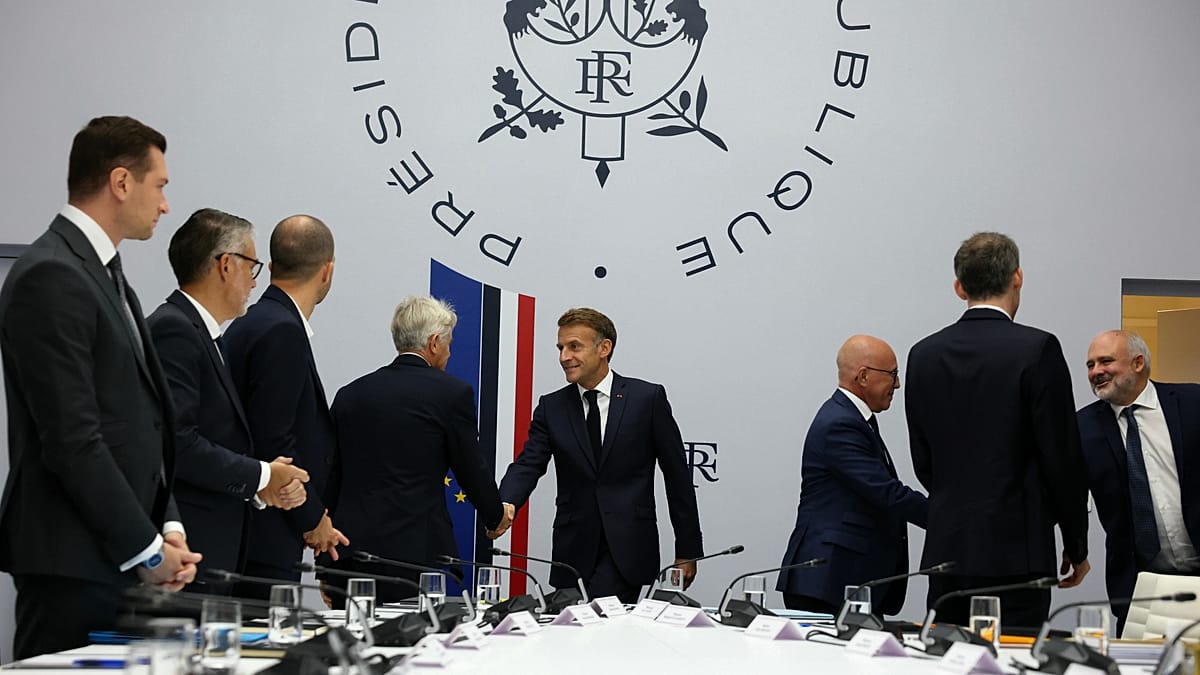
French President Emmanuel Macron has announced plans to convene a G7 meeting focused on energy security, warning that Russia's tactics against Europe are shifting. Speaking after a confidential gathering at the Élysée Palace with leading presidential candidates and their senior aides, Macron argued that Moscow's approach now combines sabotage, disinformation, and pressure on critical infrastructure.
"The nature of Russian aggression and threats in Europe is changing," Macron said, according to participants. He pointed to the discovery of an explosives-laden drone at Leipzig airport this summer as a concrete example of the new risks. "We are not intimidated because we know that what is at stake in Ukraine is our security today and tomorrow," he added.
A protection plan for critical infrastructure
Macron revealed that he has requested a "plan to protect our critical infrastructure" in response to what he described as "Russian hybrid attacks." The plan would cover energy grids, undersea cables, ports, and other assets that have become targets in recent months. The French president stressed the need to keep sending clear messages to Moscow while avoiding "entering into a state of belligerence" with Russia.
The call comes as Polish Prime Minister Donald Tusk has warned of Russian drone strikes on Poland and NATO allies, and as Poland scrambles jets in response to Russian strikes near its border. These incidents underscore the broader pattern of hybrid pressure that Macron is seeking to address at the G7 level.
Macron's initiative also reflects growing concern among European leaders about the resilience of energy systems. The G7, which includes Germany, Italy, Japan, Canada, the UK, and the US, has previously coordinated on sanctions and energy security, but this would be the first summit dedicated specifically to countering hybrid threats.
Fuel prices and the global supply chain
The meeting at the Élysée also focused on the sharp rise in fuel prices across Europe. Macron's inner circle said public opinion often overlooks the international roots of the crisis. The president reminded candidates for the 2027 presidential election that the price surge is "not the result of government decisions."
Macron highlighted disruptions in the Strait of Hormuz and the Bab-el-Mandeb Strait, which have "direct consequences for our daily lives," as he wrote on X. He argued that addressing the causes of higher petrol prices should come before "spending large sums of money," which would inevitably mean "either a bigger deficit or higher taxes."
The French president's push for a G7 meeting on energy comes as EU finance chiefs confront energy shock and inflation amid a sanctions deadlock. The bloc has struggled to agree on new measures against Russia, with some member states wary of further economic pain.
Macron's proposal is likely to be discussed at the next EU summit, where leaders will weigh the need for a coordinated response to hybrid threats against the risk of escalation. The French president has been a vocal advocate for European strategic autonomy, and this initiative fits that broader agenda.
Analysts note that the G7 format allows for a more flexible response than the EU's unanimity requirement. A dedicated summit could produce concrete commitments on intelligence sharing, cybersecurity, and protection of undersea infrastructure. However, some diplomats caution that the G7's effectiveness depends on US engagement, which remains uncertain ahead of the 2024 presidential election.
Macron's warning about Russian hybrid attacks is not new, but the Leipzig drone incident and recent strikes on Ukrainian cities have given it new urgency. Russian strikes on Odesa and Sumy have sparked fires and casualties, while a drone strike killed five people on a civilian bus in southern Ukraine. These events reinforce the need for a robust European response.
Macron's call for a "protection plan" is also a political signal to domestic audiences. With presidential elections in 2027, he is positioning himself as a leader who understands the security and economic challenges facing France and Europe. By convening the G7, he hopes to demonstrate that his approach goes beyond rhetoric.
The French president's initiative has received cautious support from some European partners, but others are waiting to see the details. A G7 meeting on energy would require careful preparation, including agreement on the agenda and the expected outcomes. Macron is expected to push for concrete measures, such as joint procurement of energy supplies and enhanced monitoring of critical infrastructure.
As Europe enters another winter, the combination of high energy prices and hybrid threats poses a serious test. Macron's proposal may offer a way to coordinate action, but it will require political will from all G7 members. Whether that will materialize remains to be seen.