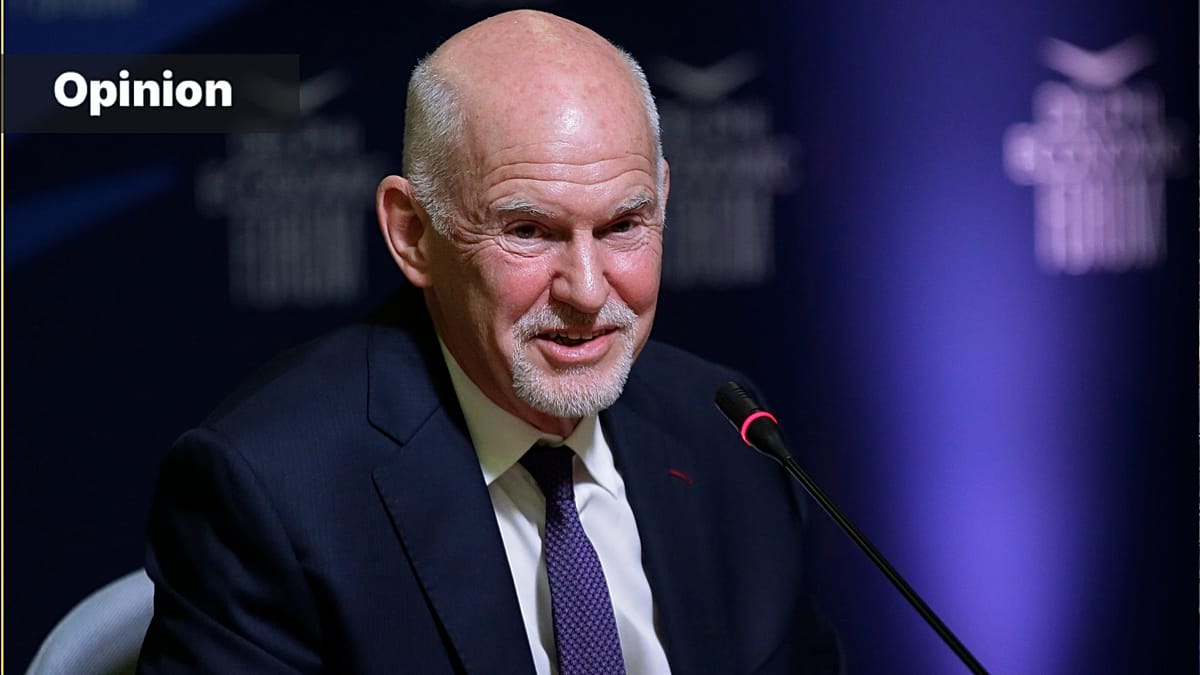
As Laura Kövesi prepares to step down as head of the European Public Prosecutor's Office (EPPO), her parting warnings about political interference in investigations have resonated far beyond Brussels. Former Greek Prime Minister George Papandreou has now added his voice, urging European institutions and national governments to strengthen safeguards that protect the office's independence.
In a commentary published this week, Papandreou argued that Kövesi's tenure exposed the fragility of the rule of law when powerful interests feel threatened. "An independent European Public Prosecutor's Office must be supported for doing its job, not weakened because its investigations make the powerful uncomfortable," he wrote. His remarks come after Kövesi reported that her team faced political pressure, particularly in Greece, while probing the misuse of EU funds.
The rule of law has no exceptions
Papandreou stressed that the principle of accountability applies to everyone—prime ministers, ministers, wealthy individuals, and politically connected groups alike. "Its fundamental purpose is to protect those with the least power," he said, pointing to ordinary citizens, farmers, and vulnerable members of society who ultimately bear the cost when public money is squandered and oversight is blocked.
The former premier did not mince words about the Greek government's conduct. He described efforts to discredit investigators and divert attention from the substance of the probes as "reprehensible" and tantamount to a cover-up. While acknowledging that every person is entitled to the presumption of innocence, he insisted that no government has the right to obstruct the search for truth.
Beyond national borders
Papandreou argued that the rule of law cannot stop at national frontiers, especially within a union built on shared values. "National sovereignty must never become a shield for impunity," he declared. Protecting European funds, he added, is inseparable from protecting citizens and the trust that underpins the EU.
Reflecting on Greece's debt crisis, Papandreou suggested that an operational EPPO with a leader like Kövesi could have changed the course of events. Had such an office existed before 2009, he believes it would have exposed the previous government's mismanagement and hidden truths, potentially waking up the European Commission from its inaction and preserving confidence in the Greek economy. "The Greek people would not have paid such a heavy price," he said.
Defending independence
Looking ahead, Papandreou called on the EPPO's new leadership to defend its independence with the same determination as Kövesi. The office must never yield to powerful lobbies, political pressure, or patronage networks, regardless of their origin or affiliation. Its duty, he said, is to follow the evidence and apply the law without fear or favour.
He also urged European institutions and national governments to provide the EPPO with the resources, powers, and practical support it needs. "Independence on paper is not enough when an institution is weakened through underfunding, delays, or obstruction of its work," he warned.
The debate over prosecutorial independence comes at a time when the EU is grappling with broader questions about the rule of law in member states. The recent resignation of Greece's basketball chief amid a widening match-fixing probe underscores the challenges of ensuring accountability in the country. Meanwhile, calls for a more honest UK-EU debate on free movement highlight the ongoing tensions between national sovereignty and European cooperation.
Kövesi's warnings have also drawn attention to the EPPO's role in protecting EU funds from fraud and corruption. As the office expands its operations, its ability to act without political interference will be crucial. Papandreou's intervention adds weight to the argument that the EPPO must be shielded from the very pressures it was designed to combat.
For now, the ball is in the court of EU leaders and national governments. Whether they heed Kövesi's warnings and Papandreou's call will determine whether the EPPO can truly serve as a guardian of the rule of law across the continent.