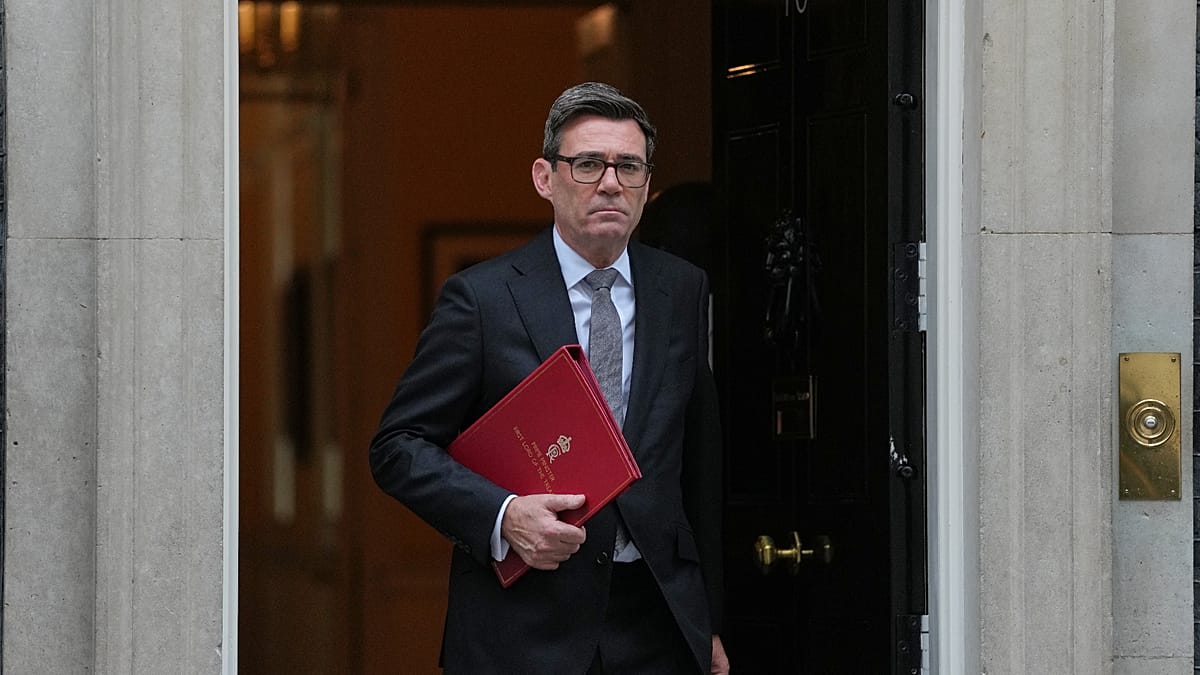
UK Prime Minister Andy Burnham has signalled a willingness to reconsider the European Union's free movement rules as part of a future UK-EU relationship, according to an interview published in the Sunday Times on 12 January. The Labour leader, in office since July, has promised to present options for closer ties with Europe around the time of the long-awaited UK-EU summit in Brussels next month.
Burnham, who has not ruled out Britain eventually rejoining the EU, said the country should have an "honest discussion" about how immigration has evolved since Brexit. Immigration was a central issue in the 2016 referendum, when Britons narrowly voted to leave the bloc, a campaign driven by the then-Conservative government.
Immigration 'different' since Brexit
Speaking to the Sunday Times, Burnham argued that immigration into Britain has been "different" since the country formally left the EU in early 2020. "It was a type of immigration that perhaps wasn't as difficult (as now)," he said. "Revolving door migration where people would come and then go back is different. The balance of migration has changed, hasn't it, since then? I think we've just got to have an honest discussion about those things."
Burnham's comments come as his government prepares to outline its approach to the EU at the upcoming summit. He has committed to the manifesto on which he was elected, which explicitly rules out rejoining the single market or a customs union. However, the question of reciprocal youth mobility has pushed free movement back onto the agenda.
Any significant shift in the UK's relationship with the EU would likely require a mandate at the next general election, which is not expected until 2029. Burnham told the Sunday Times that he "can't see myself ever recommending anything that would involve joining" the euro or the Schengen borderless area, which the UK was never part of even before Brexit.
The prospect of revisiting free movement has drawn sharp criticism from Nigel Farage, leader of the anti-immigrant Reform UK party, who called Burnham's remarks a "total betrayal of Brexit Britain." Farage's party has gained ground in opinion polls, and the issue remains politically sensitive.
Burnham's openness to discussing free movement reflects a broader shift in UK-EU relations under his premiership. His predecessor, Keir Starmer, had pursued a policy of "reset" with Brussels, but Burnham appears willing to go further. The UK and EU are also negotiating on issues such as trade, security, and youth mobility, with the summit in Brussels seen as a key moment for defining the future partnership.
Analysts note that any change to free movement would require significant legal and political hurdles, including potential treaty changes. The EU has insisted that the UK cannot cherry-pick the benefits of membership without accepting its obligations, including on freedom of movement.
Burnham's comments have also drawn attention to the changing nature of UK immigration. Since Brexit, net migration has remained high, driven largely by non-EU arrivals, while EU migration has fallen. This shift has altered the debate, with some arguing that the UK now has less control over who enters than it did under free movement.
The prime minister's stance has been welcomed by pro-European groups, who see it as a step towards re-engagement. However, it remains unclear whether he can build the political consensus needed to change course, given the deep divisions that Brexit has left in British society.
As the UK and EU prepare for the summit, the question of free movement is likely to be one of the most contentious issues on the table. Burnham's call for an "honest discussion" may be an attempt to shift the terms of the debate, but it also carries significant political risk.