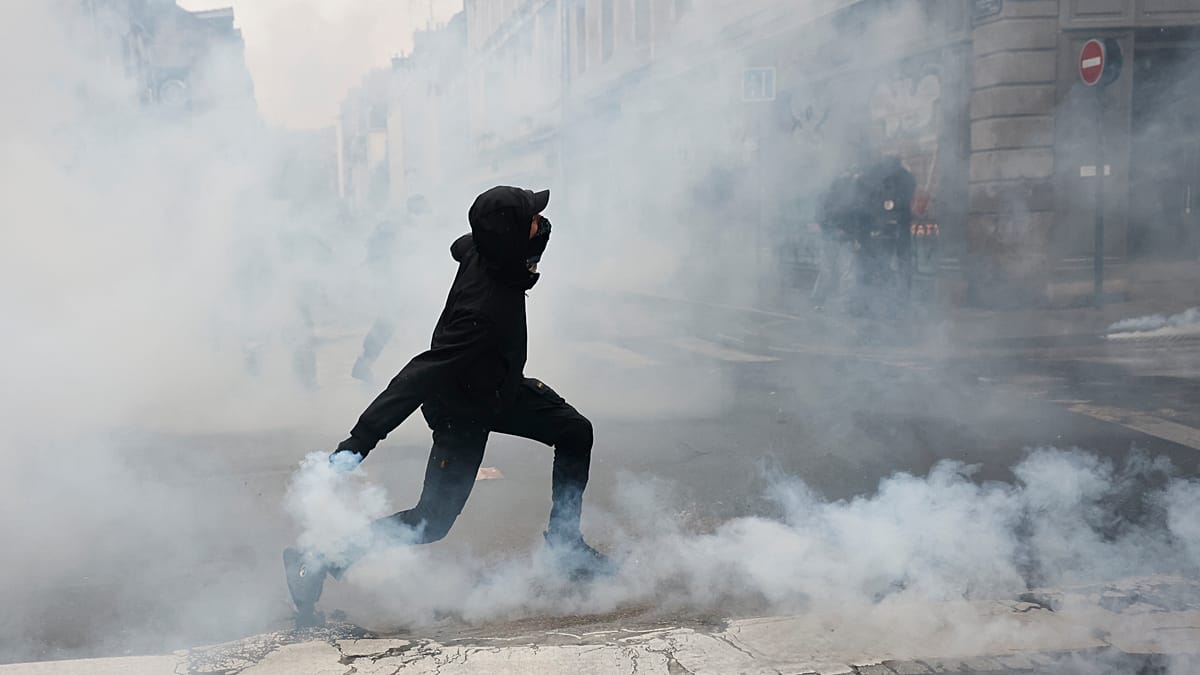
Across Italy on Saturday, tens of thousands of demonstrators took to the streets in a coordinated wave of protest against the rising cost of living, the policies of Prime Minister Giorgia Meloni's government, and the ongoing wars in the Middle East. While the vast majority of marches remained peaceful, the day was punctuated by moments of tension in several urban centres, including Turin, Florence, Bologna and Rome.
The protests came a week after violent scenes in Milan prompted the government to roll out a significantly expanded security operation. Police officers and soldiers were deployed in city centres across the country, with an additional 500 troops sent to Milan alone in response to attacks on shops the previous Saturday.
Decentralised marches and police cordons
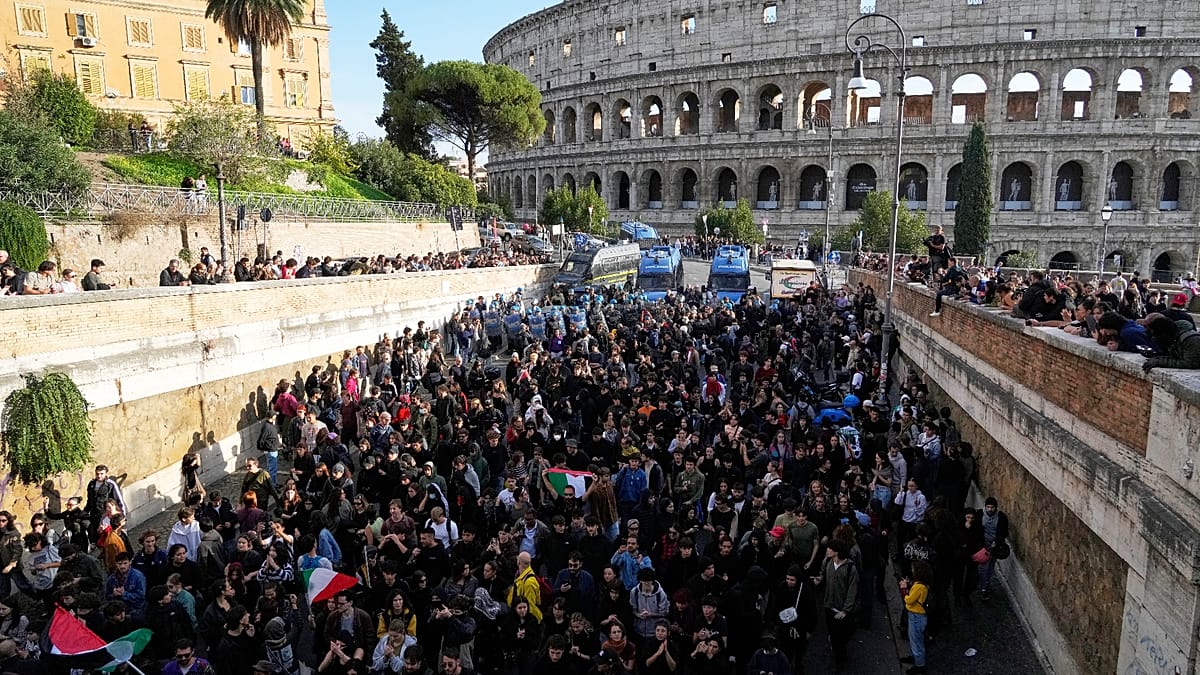
In Florence, Turin, Milan and Rome, organisers deliberately avoided a single main procession. Instead, small groups gathered in different neighbourhoods and later attempted to converge on central areas. Security forces repeatedly blocked these attempts, leading to sporadic confrontations.
In Rome, tensions flared when a small group broke away from the main march on Via Cavour and headed toward the Colosseum. There, they managed to enter the Flavian Amphitheatre, chanting slogans and holding placards before being escorted out by authorities. Later, a young demonstrator stood in front of a police water cannon truck, which advanced a couple of metres before the man nearly ended up beneath it. Officers then forcefully dragged him away, as videos circulating on social media showed.
In Florence, demonstrators tried to cross the Santa Trìnita bridge but were met with a police cordon. Officers used batons as protesters pushed to break through the barrier. In Bologna, a march was prevented from continuing toward Via Marconi and Via Reno; bottles and other objects were hurled at security forces, who responded with a water cannon and tear gas. One person was taken to hospital after being struck by police officers.
Milan saw a calmer day, with at least three marches merging and moving through the streets around the city centre. Verbal clashes occurred between protesters and some far-right activists, but no major incidents were reported.
Arrests and investigations
By the end of the day, the Department of Public Security reported nine arrests and 87 people referred to the authorities. A further 371 people were taken to police stations for checks, including 110 minors and 69 foreign nationals.
In Milan, 30-year-old Youssef Siher was detained and placed under investigation on suspicion of aggravated incitement to commit a crime. He is alleged to have been behind the "17 October Movement," a group through which thousands of people are said to have shared information about taking part in last weekend's protests.
Meloni defends security response
In a social media post on Saturday evening, Prime Minister Giorgia Meloni praised those involved in managing the demonstrations. "The right to demonstrate must always be guaranteed, just as the right of citizens to live in their cities in safety," she wrote. "Safety must be guaranteed for everyone. For those who want to protest peacefully, for those who work and for those who want to live in their city without fear. Without leaving room for those who seek only confrontation and violence."
The protests in Italy are part of a broader European wave of discontent over living costs and housing affordability. Similar rallies have taken place in Madrid, Lyon and other cities, reflecting a continent-wide squeeze on household budgets. As grocery prices remain elevated across the EU, governments are struggling to balance public safety with the right to protest.
Saturday's events also echo last week's clashes in Rome, where youth-led protests over living costs turned violent. The government's decision to deploy thousands of additional troops has drawn criticism from opposition parties, who argue that it criminalises peaceful dissent. However, Meloni's administration maintains that the measures are necessary to prevent the kind of vandalism and looting seen in Milan.
As the evening wore on, most demonstrators dispersed peacefully, but the underlying grievances remain unresolved. With inflation still outpacing wage growth in many sectors, and housing costs soaring in major cities, the potential for further unrest persists. The coming weeks will test whether the government's security-first approach can contain a movement that shows no signs of fading.