French authorities arrested nearly 1,000 people on Saturday as a fresh wave of demonstrations over the cost of living swept the country, with clashes breaking out in several major cities despite a massive security operation.
More than 400,000 people took to the streets nationwide, according to official estimates. While most marches remained peaceful, confrontations with police erupted in Paris, Marseille, Lyon, Bordeaux, Toulouse and Rennes.
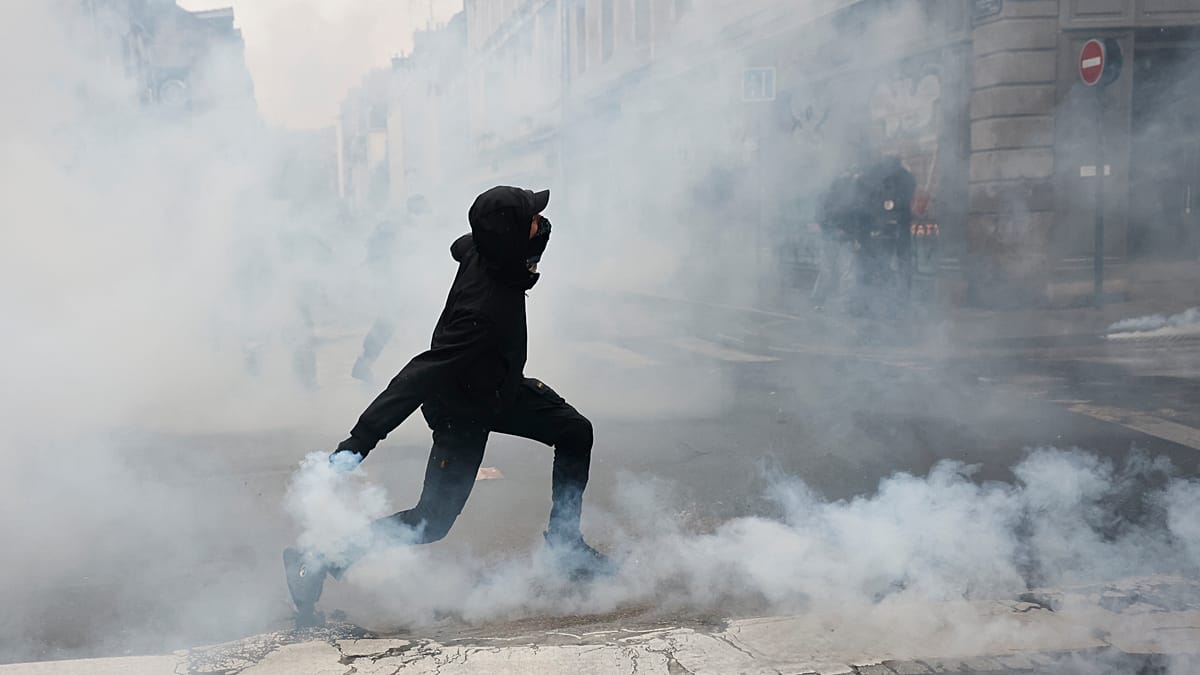
In the capital, a journalist on the ground saw riot police fire tear gas and charge crowds near Porte de Vincennes on the southeastern edge of the city. Some protesters hurled fireworks at officers. Police also deployed a water cannon to break up demonstrators and conducted identity checks around the nearby Nation square.
Heavy security deployment
The unrest followed last weekend's chaotic scenes, when cost-of-living protests descended into violence and looting. In response, authorities mobilised some 70,000 security personnel for Saturday's demonstrations, including military troops from Opération Sentinelle to guard key sites and free up regular police.
Interior Minister Laurent Nuñez thanked officers for their work but accused "individuals from the far-left and radical far-left" of having "once again sought to sow disorder, especially as the marches were dispersing." In a social media post, he described the acts as "unacceptable," citing incidents in Paris, Marseille, Lyon, Grenoble, Nantes, Angers and Lille.
The Yellow Vests movement, which has been at the forefront of recent protests, has called for further demonstrations on 31 October.
Meanwhile, to the south of the capital, authorities kept a close watch on the National Rally party's congress in Orléans, which drew both supporters and counterprotesters on Saturday. On Sunday, the party is set to hold a major rally to launch Marine Le Pen's presidential campaign.
The weekend's events highlight the persistent social tensions in France, even as the government faces mounting economic pressures. Analysts point to rising inflation and stagnant wages as key drivers of public anger, a trend visible across Europe. Grocery costs across Europe have become a particular flashpoint, with French households feeling the pinch acutely.
The protests also come amid broader European discontent over economic policy, as seen in recent demonstrations in other countries. In France, the government's handling of the crisis has drawn criticism from opposition parties, who argue that more must be done to shield citizens from the cost-of-living squeeze.
Police tactics have also come under scrutiny. In Lyon, officers used tear gas to disperse a banned protest near a university, echoing similar incidents in recent weeks. The heavy-handed approach has raised concerns about civil liberties, though authorities insist it is necessary to prevent violence.
With further demonstrations planned, the coming weeks will test the government's ability to maintain order while addressing the underlying grievances. The situation remains fluid, and European observers will be watching closely to see whether the unrest spreads beyond France's borders.