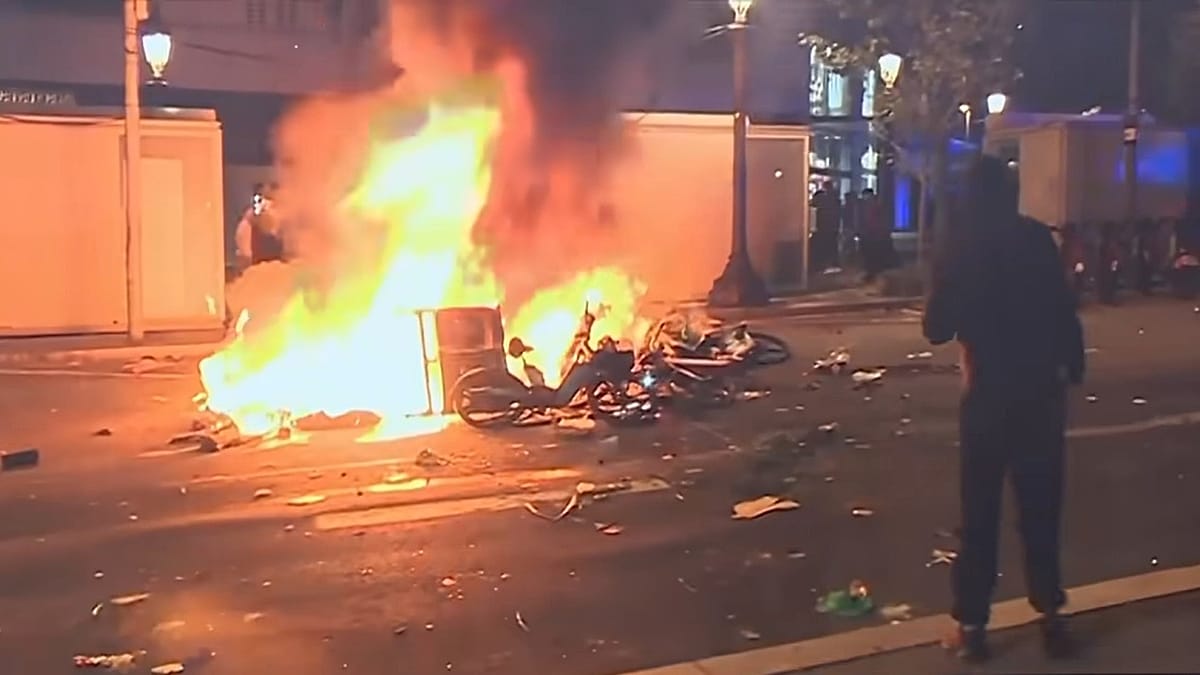
Barcelona's city centre was thrown into turmoil on Saturday evening as a youth-led protest spiralled into clashes with police, looting, and vandalism. Authorities reported around 100 arrests, with roughly a quarter of those detained being minors.
The trouble began in the late afternoon around Plaça de Catalunya, a central square that often serves as a focal point for demonstrations. The gathering, promoted on social media under the slogan "Instituts Indignats," was inspired by the French youth movement "Lycéens Indignés," which has seen students take to the streets in French cities in recent weeks. At its peak, the Barcelona protest drew an estimated 600 people, according to Spanish media.
By around 6 pm, groups of young people, many dressed in black and wearing hoods, began damaging street furniture. Riot police moved in, prompting demonstrators to scatter into adjoining streets, where the confrontations continued. Protesters hurled stones and other heavy objects at officers, erected barricades, set rubbish bins alight, and smashed shop windows. Police responded with charges in an effort to disperse the crowds and regain control of the area.
The violence caused significant damage. According to La Vanguardia, at least 14 shops were looted, and motorbikes, bicycles, and bus shelters were also damaged. Many businesses closed early, and the Guardia Urbana restricted access to Plaça de Catalunya. Train services at the square's station were temporarily suspended, adding to the disruption.
Political response and legal threats
The unrest drew swift condemnation from political leaders across Catalonia. Barcelona's mayor, Jaume Collboni, announced that the city council would join legal proceedings to seek accountability for the damage. "This will not be left as it is. We will go all the way," Collboni said, adding that parents or legal guardians of minors involved could face consequences.
Salvador Illa, president of the government of Catalonia, defended the police response while stressing the importance of peaceful protest. "Protesting is a democratic right," he said, "but violence cannot be justified as part of that right."
Catalonia's interior minister, Núria Parlon, described the incidents as "gratuitous violence and vandalism," insisting that those responsible were not defending any legitimate cause. Her remarks echo concerns across Europe about the spread of unrest from France, where similar youth-led protests have led to heavy police deployments and significant economic damage.
The Barcelona events also highlight a broader pattern of social media-driven mobilisation that has tested authorities in several European cities. In Brussels, retailers have been boarding up their shops amid fears of similar unrest, while French officials have warned of extremist calls to exploit the protests.
As the clean-up begins in Barcelona, questions are being asked about how to address the underlying frustrations of young people without allowing violence to take hold. The city's leaders have made clear they intend to pursue legal action, but the incident serves as a reminder of the fragility of public order in even the most stable European democracies.