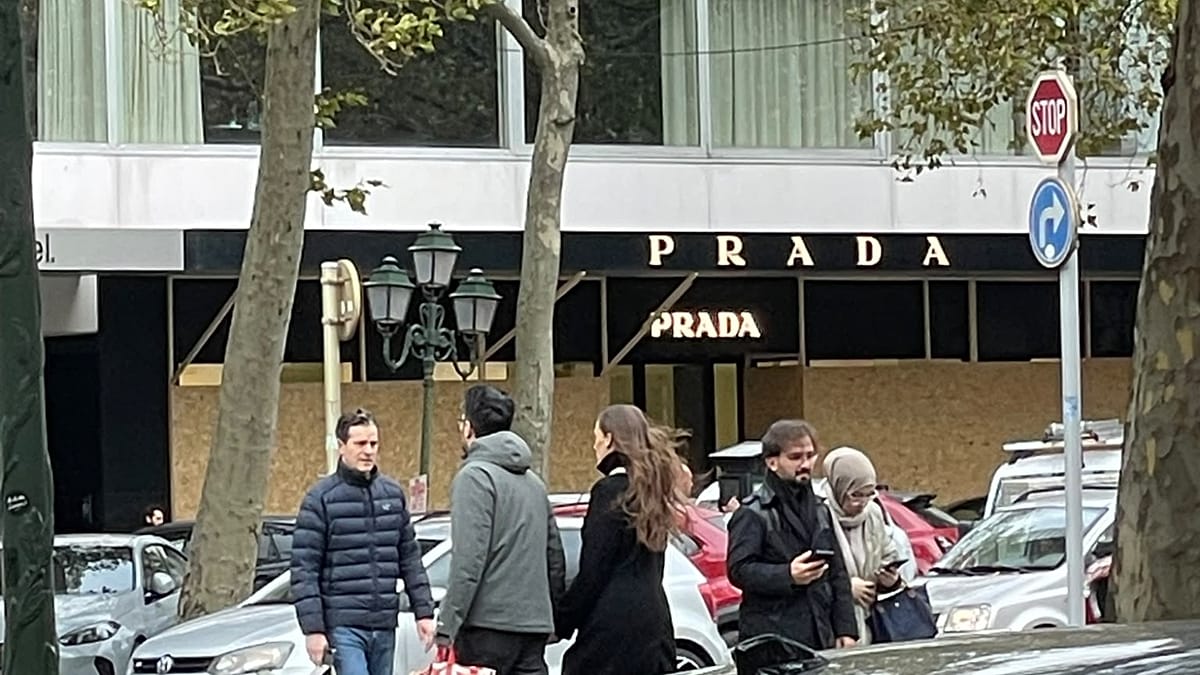
Central Brussels looked like a city under siege on Saturday as shopkeepers from luxury boutiques to high-street chains boarded up their windows, bracing for a repeat of the looting and violence that shook the Belgian capital a week earlier. The precautions turned stretches of the city's main shopping streets into blank wooden facades, a stark reminder of the fragility of public order.
Along Avenue Louise, Porte de Namur, and Rue Neuve, the city's prime retail corridors, wooden panels covered display windows and entrances. Among the brands taking protective measures were Tiffany & Co., Prada, Versace, and Ferragamo, alongside more accessible names like Lacoste, Nike, and Nespresso. Smaller independent businesses, including an optician and a phone repair shop, also sealed their premises.
The defensive preparations extended beyond retail. A Quick fast-food restaurant on Rue Neuve covered its windows and entrance with wooden boards, while some businesses chose to remain open despite the barriers. At Nike, customers could still enter through an uncovered doorway, and Quick displayed a small notice reading “open” on its boarded frontage. Pedestrians continued to walk past the shuttered storefronts, and traffic moved through the surrounding streets, giving the scene an air of uneasy normality.
Fresh calls for protest
The measures came in response to calls circulating on social media for a new gathering in Brussels on Saturday, raising fears of further disorder. The unrest on 17 October saw rioters clash with police in the city center, with officers deploying tear gas and water cannon. Several stores on Rue Neuve were looted during that violence, leaving shopkeepers anxious about a repeat.
While some clashes did occur on Saturday, they were limited in comparison to the previous week's chaos. The relative calm may offer some relief, but the economic toll of the repeated disruptions is mounting. For many small business owners, the cost of boarding up and the loss of trade during peak hours is a heavy burden.
The situation in Brussels is part of a broader pattern of unrest across Europe. In France, shopkeepers are counting the cost after a nationwide looting spree, and police operations have been stepped up in response. The French government has even imposed local curfews in some areas to prevent further violence. The parallels between the two countries highlight a wider challenge for European cities in maintaining public safety while addressing the underlying social tensions.
For Brussels, the immediate concern is the resilience of its retail sector. The city's shopping streets are not just commercial hubs but also key attractions for tourists and locals alike. The sight of boarded-up luxury stores is a blow to the city's image as a cosmopolitan capital. As one local shopkeeper put it, “We are used to protests, but this is different. We are protecting our livelihoods.”
The authorities have promised increased police presence in the coming days, but the uncertainty remains. For now, the wooden panels stand as a symbol of a city on edge, waiting to see whether the calm will hold.