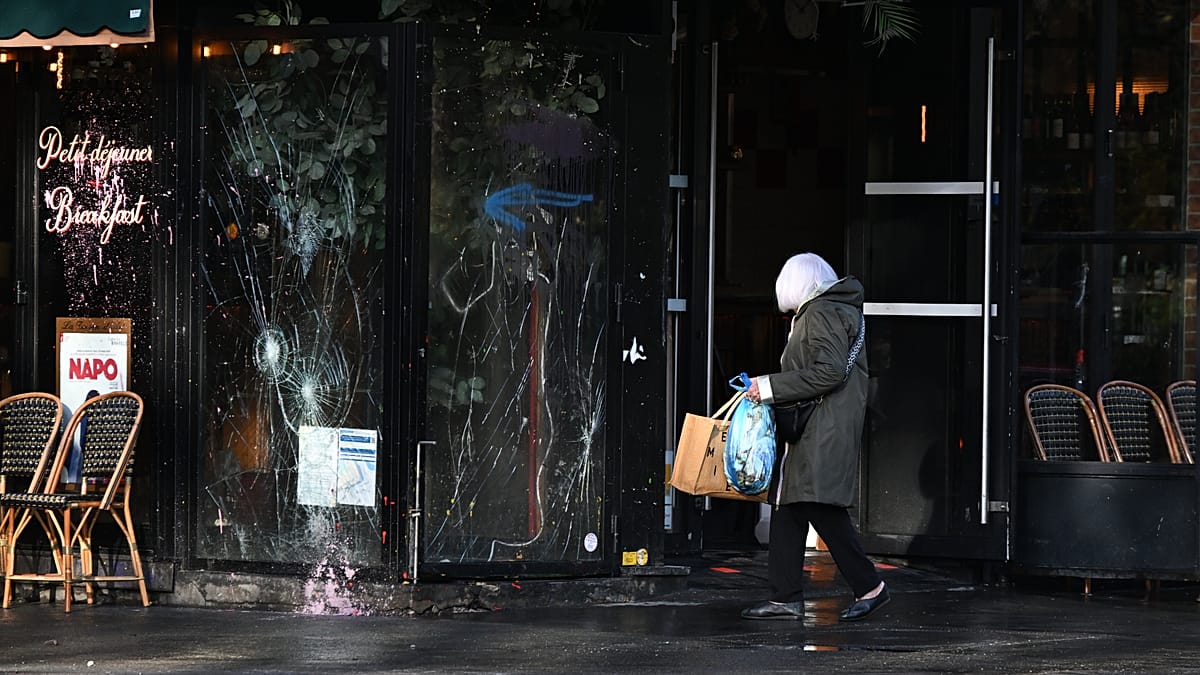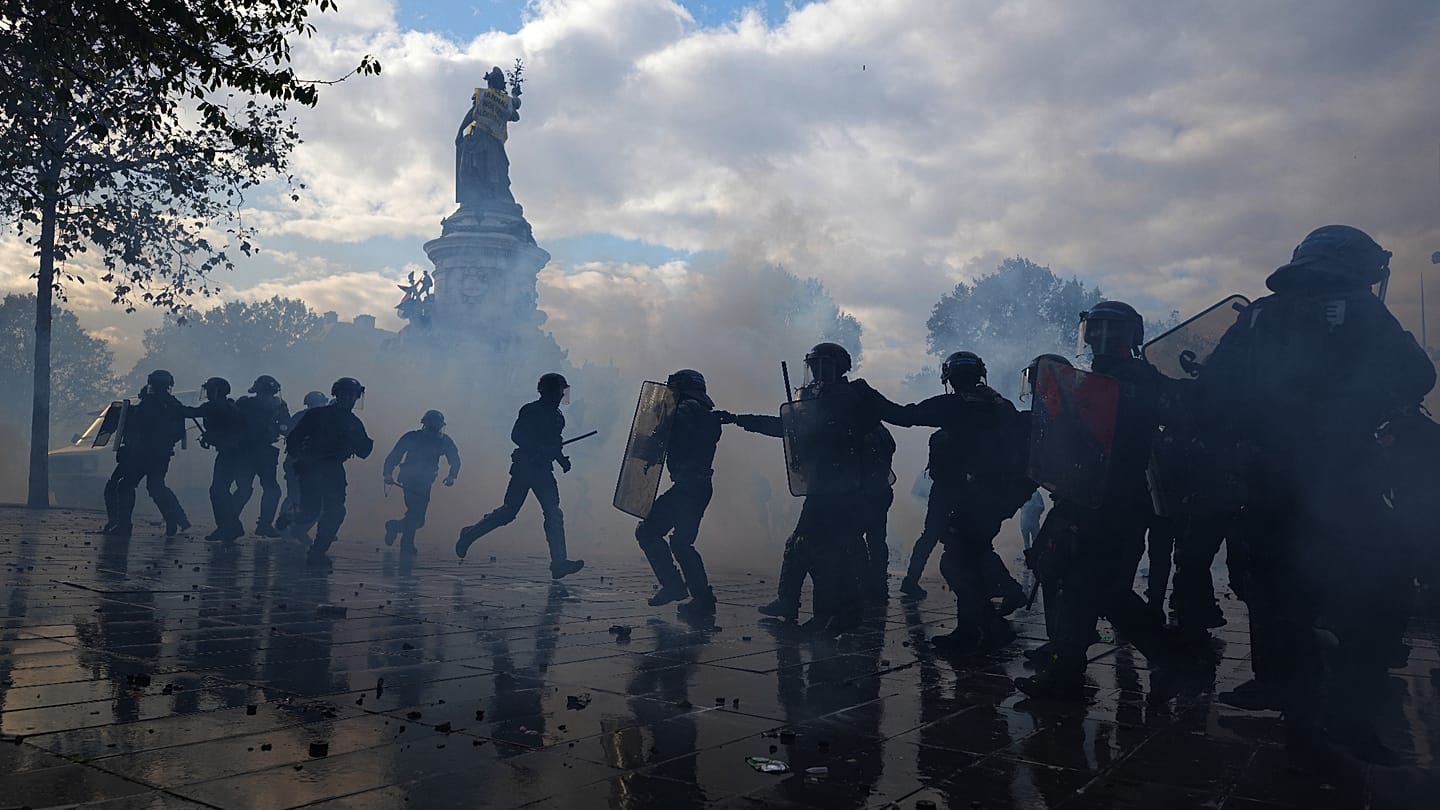
France has launched a sweeping law enforcement operation following a weekend of violent protests and looting that left businesses destroyed across Paris and other major cities. Prime Minister François Bayrou announced the crackdown on Monday, vowing that those responsible would be identified and brought to justice.
Speaking after an emergency security meeting at the Élysée Palace, Bayrou said the state would respond with "the full force of the law" to what he described as "unacceptable violence against the Republic." The operation involves thousands of additional police and gendarmerie officers, with a particular focus on commercial districts that were hit hardest.
In the Paris region alone, nearly 200 investigators have been assigned to analyze surveillance footage and social media videos from the weekend, according to Sébastien Lecornu, the minister for territorial communities. "We will find every single person who smashed a window, set a fire, or stole from a shop," Lecornu told reporters. "There will be no impunity."
The unrest began on Saturday as protests over rising living costs and education reforms spiraled into clashes with police. In the capital, storefronts along the Champs-Élysées and in the Marais district were ransacked, while in Lyon and Marseille, shopping centers and banks were targeted. The violence has drawn comparisons to the gilets jaunes movement of 2018, though the current protests have a broader, student-led character.
Political fallout and blame game
The government's response has already sparked a political storm. Opposition parties on the right have accused the administration of being too lenient, while left-wing leaders argue that the protests reflect deep social anger that cannot be policed away. Marine Le Pen, leader of the National Rally, called for a state of emergency, while Jean-Luc Mélenchon of La France Insoumise blamed the government for "provoking" the unrest through austerity measures.
Bayrou rejected both extremes, insisting that the priority is public safety. "We will not be intimidated by a minority of thugs who exploit legitimate grievances," he said. The government has also announced local curfews in several affected areas, including parts of the Paris suburbs, to prevent further violence.
The economic cost is mounting. The French retail federation estimates that damage and stolen goods could exceed €100 million, with hundreds of small businesses facing weeks of closure. In the 11th arrondissement, a family-run bookshop was burned to the ground, while a pharmacy in the 18th was stripped bare. "We have lost everything," said Karim Benali, owner of a electronics store in Lyon. "We are not a big chain; we cannot absorb this."
Insurance companies have promised expedited claims, but many shopkeepers fear they will never fully recover. The government has pledged emergency funds for affected businesses, though details remain vague. Local chambers of commerce are calling for tax relief and rent suspensions.
Investigations and surveillance
The investigative effort is unprecedented in scale. In addition to the 200 analysts in Paris, regional units have been set up in Lyon, Marseille, and Lille. Police are using facial recognition software and cross-referencing social media posts to track down suspects. Lecornu said that "hundreds of arrests" have already been made, and more are expected in the coming days.
The crackdown has raised concerns among civil liberties groups, who warn against mass surveillance. "We understand the need for order, but this must not come at the cost of fundamental rights," said Claire Nouvian, a spokesperson for the human rights league. The government has defended the measures as proportionate, noting that the violence endangered lives.
The unrest has also had international repercussions. The European Commission has expressed solidarity with France, while neighboring countries are monitoring the situation closely. In Brussels, diplomats are discussing whether the protests could signal broader social instability across the continent, particularly as inflation continues to bite.
Meanwhile, the Louvre museum was forced to close on Sunday as a precaution, and several universities have suspended classes. The student movement, which began over exam reforms, has now merged with broader economic grievances, creating a volatile mix that the government is struggling to contain.
As the investigation continues, the government is also trying to address the root causes. Bayrou has announced a series of town-hall meetings with young people and business owners, but critics say these are too little, too late. "The state has lost touch with the people," said political analyst Anne-Marie Le Gloannec. "This is not just about policing; it's about social cohesion."
For now, the streets of Paris are quieter, but the tension remains palpable. Police checkpoints are visible at major intersections, and shopkeepers are boarding up their windows again. The coming days will test whether the government's show of force can restore calm, or whether the anger will flare up once more.