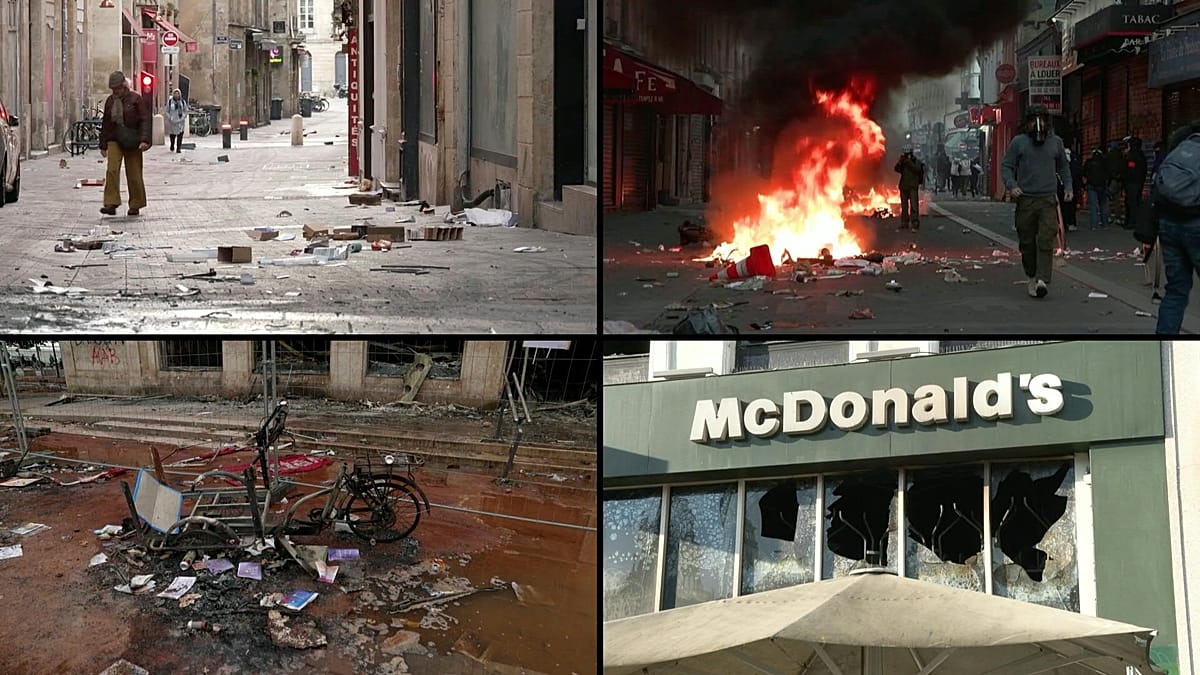
The morning after the worst night of unrest in France in years, shopkeepers from the boulevards of Paris to the Canebière in Marseille were sweeping up broken glass and tallying their losses. Nationwide protests over the cost-of-living squeeze and deteriorating school conditions had spiralled into clashes with police, arson attacks and widespread looting.
In the capital, the Champs-Élysées and the Marais bore the scars of a night that left dozens of storefronts boarded up. In Lyon, the city's historic Presqu'île district saw windows smashed at independent boutiques and national chains alike. Lille and Marseille reported similar scenes, with burnt-out cars and debris littering central squares.
Shopkeepers speak out
For many small business owners, the destruction was not just an inconvenience but a direct threat to their livelihoods. “We have been here for thirty years, and we have never seen anything like this,” said Karim Benali, who runs a family-owned electronics shop in the 3rd arrondissement of Marseille. “They took everything—the stock, the cash register, even the security cameras. How are we supposed to recover from this?”
His sentiment was echoed in Lille, where a bookshop owner, Claire Fontaine, described the scene as “heartbreaking”. “We are not big corporations. We are the people who live in these neighbourhoods, who employ local staff. When they smash our windows, they are smashing our futures,” she told European Pulse.
The violence has also strained the relationship between protesters and the wider public. Some demonstrators insisted that the looting was carried out by opportunistic criminals, not by those marching for higher wages or better school funding. But others acknowledged that the chaos had overshadowed their message. “We are fighting for a fairer society, but this destruction makes us look like vandals,” said Marie Dupont, a teacher from Lyon who joined the protests over school conditions.
Economic impact and recovery
The financial toll is still being calculated, but early estimates suggest tens of millions of euros in damage across the affected cities. Insurance claims are expected to surge, and many small businesses fear that payouts will be delayed or insufficient to cover lost stock and repairs. Local chambers of commerce have called for emergency government support, including tax breaks and low-interest loans.
In Paris, the mayor's office announced a fund to help affected shopkeepers, while the national government has promised to fast-track compensation for those with valid insurance. However, some business owners remain sceptical. “We have heard promises before,” said Benali. “We need action, not words.”
The unrest has also reignited debates about policing and public order. The government has faced criticism for both the heavy-handed tactics used against protesters and the failure to prevent looting. Interior Minister Gérald Darmanin has defended the police response, but opposition politicians have called for an independent inquiry.
Wider European context
The protests in France are part of a broader wave of discontent across Europe, as rising energy prices and stagnant wages squeeze household budgets. Similar demonstrations have taken place in Germany, Italy and Spain, though none have reached the level of violence seen in France. The wage-price squeeze has become a defining issue of the autumn, and governments across the bloc are watching closely.
For now, French shopkeepers are left to pick up the pieces. Cleanup crews worked through the night, and by dawn many streets had been swept, but the psychological scars remain. “We are resilient,” said Fontaine. “But we need to know that this will not happen again. We need to feel safe in our own shops.”
The government has announced additional police patrols in city centres, and local authorities are considering curfews for minors in some areas. Whether these measures will restore confidence remains to be seen. As the country assesses the damage, one thing is clear: the road to recovery will be long, and for many small businesses, the future is uncertain.