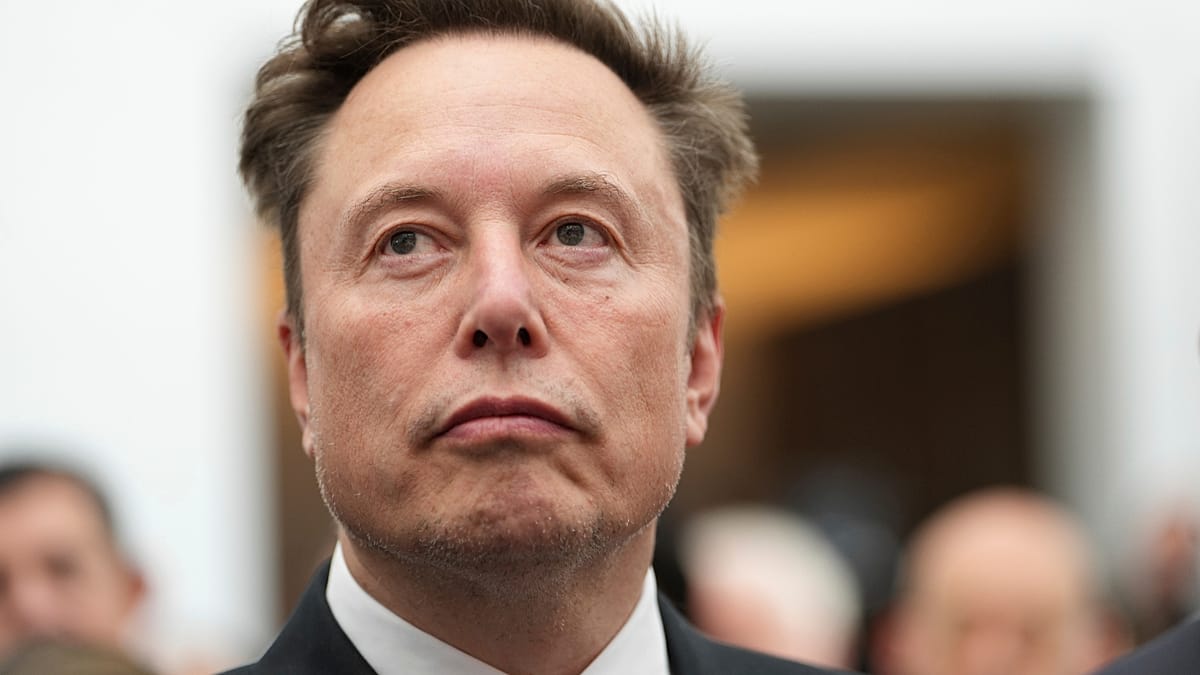
Elon Musk has announced he will give one SpaceX share to every child in the United States next year, a pledge valued at roughly $10.7 billion (€9.5 billion) based on Friday's closing price. The announcement, made via a social media post on Monday, came in response to a Sunday post by artificial intelligence company Anthropic, which said it would commit 5% of its shares to a new public benefit fund, subject to shareholder approval.
In his reply, Musk wrote: "I recommend giving the shares directly to the public." He did not specify who would qualify as a child, how the shares would be distributed, or what legal and tax implications might arise. He added that "This will be the first of many," hinting at further giveaways.
SpaceX, which is privately held, closed at $146.03 (€130.09) per share on Friday. With approximately 73 million children under 18 in the US, the total value of Musk's pledge would be about $10.66 billion (€9.5 billion). The company is expected to report quarterly earnings on Tuesday.
Context: AI and public benefit
Anthropic, the company behind the Claude AI assistant, said its shares would go to the Anthropic Public Benefit Fund, a new entity wholly owned by the company. The fund's value could rise if the shares appreciate. Anthropic is planning a major initial public offering (IPO) as soon as November and has filed confidentially with the US Securities and Exchange Commission.
The announcements come amid growing public unease about artificial intelligence. A recent poll by the Associated Press-NORC Center for Public Affairs Research found that 64% of Americans believe AI is developing "too fast," while only 8% think it is moving "too slow."
Musk, along with Anthropic CEO Dario Amodei, OpenAI's Sam Altman, and other industry leaders, last month called for a slowdown in AI development. That consensus followed the resignation of an Anthropic researcher who warned of existential threats from the technology. However, obstacles such as domestic and global competition, profit motives, and pushback from President Donald Trump have hindered coordinated efforts to regulate AI.
Musk's pledge also comes as he has become the largest known donor in this year's US midterm elections, contributing more than $276 million (€246 million) since July to support Republican majorities in Congress. His involvement in politics has drawn scrutiny, particularly his role in shaping US policy on technology and space.
For European observers, the episode underscores the growing influence of tech billionaires in public life. While the pledge is US-focused, it raises questions about the role of private capital in public welfare—a debate that resonates across the Atlantic, where cities like Lisbon are grappling with the impact of tech-driven services on public spaces.
Anthropic's move to establish a public benefit fund is part of a broader trend among AI companies to address ethical concerns. The company was founded as a public benefit corporation, a legal structure that allows for-profit firms to balance financial goals with social impact. This model is gaining traction in Europe as well, where policymakers are exploring ways to hold tech companies accountable.
Musk's SpaceX, meanwhile, has been a key player in European space policy, with its Starlink satellite internet service operating in several EU countries. The company's valuation and share price are closely watched by investors, though its private status limits public trading.
As the details of Musk's pledge remain vague, analysts are skeptical about its feasibility. Distributing shares to millions of minors would require complex legal arrangements, including custodial accounts and tax considerations. Musk has not indicated whether he would fund the giveaway personally or through SpaceX.
For now, the announcement has sparked debate about the ethics of such gestures, with some praising Musk's generosity and others questioning his motives. The story also highlights the growing intersection of technology, wealth, and politics—a theme that European readers will likely follow with interest.