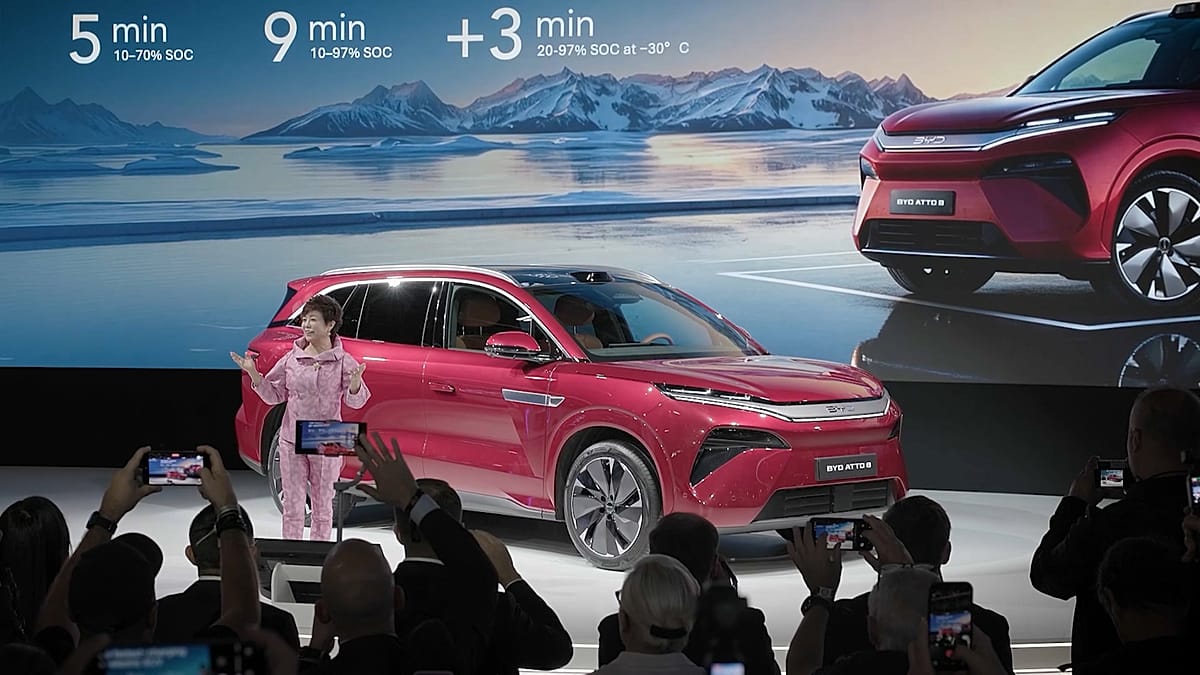
The Mondial de l'Auto in Paris drew around half a million visitors this year, but the real attraction was not the latest Ferraris or the familiar German heavyweights. Instead, the buzz centered on the 25 Chinese carmakers that filled the halls, offering many Europeans their first close-up look at vehicles from brands such as Zeekr, Changan, Denza, and AITO.
For these newcomers, the Paris show was more than a display of shiny metal. It was a strategic launchpad into a market that is both lucrative and demanding. With the European Union's push toward electric mobility and stricter emissions rules, Chinese automakers see a window of opportunity to challenge established players from Germany, France, and Italy.
A first encounter for many visitors
Walking through the exhibition, it was hard to miss the crowds clustered around the Chinese stands. Visitors touched interiors, asked about battery ranges, and compared prices. For many, it was the first time they had seen these models in person, and the curiosity was palpable.
“I came to see the new Zeekr 001,” said a visitor from Lyon, who asked not to be named. “I've read about it online, but I wanted to see the build quality and the tech up close. It's impressive.”
The Chinese brands are not just offering low-cost alternatives. They are showcasing advanced features like ultra-fast charging, sophisticated driver-assistance systems, and distinctive design languages that aim to stand out in a crowded market. Changan, for instance, presented a sleek SUV with a minimalist cabin, while Denza, a joint venture with Mercedes-Benz, highlighted its premium positioning.
This influx comes at a time when Europe's auto industry is undergoing a profound transformation. The shift to electric vehicles has upended traditional hierarchies, and Chinese manufacturers, with their deep experience in battery production and software, are well placed to compete. Their presence in Paris is a clear signal that they intend to be more than niche players.
However, challenges remain. European consumers are brand-loyal, and trust in new names takes time to build. Regulatory hurdles, including type approval and safety standards, add another layer of complexity. And the recent political tensions over trade and technology could influence consumer sentiment.
Still, the mood at the show was largely positive. “This is the future,” said a dealer from Brussels, pointing to a bright orange AITO sedan. “If they can deliver on quality and service, they will find buyers.”
The Paris show also highlighted broader trends in the European auto market, including the growing interest in energy independence and the rise of new mobility services, such as driverless robotaxis in Zagreb. These developments are reshaping how Europeans think about car ownership and transportation.
For the Chinese brands, the road ahead is not without obstacles. They must navigate the complexities of the European market, from establishing dealership networks to providing after-sales support. But if the enthusiasm at the Mondial de l'Auto is any indication, they have already won the first battle: capturing the imagination of European car fans.
As the show closed its doors, the question was no longer whether Chinese cars would come to Europe, but how quickly they would become a common sight on the continent's roads.