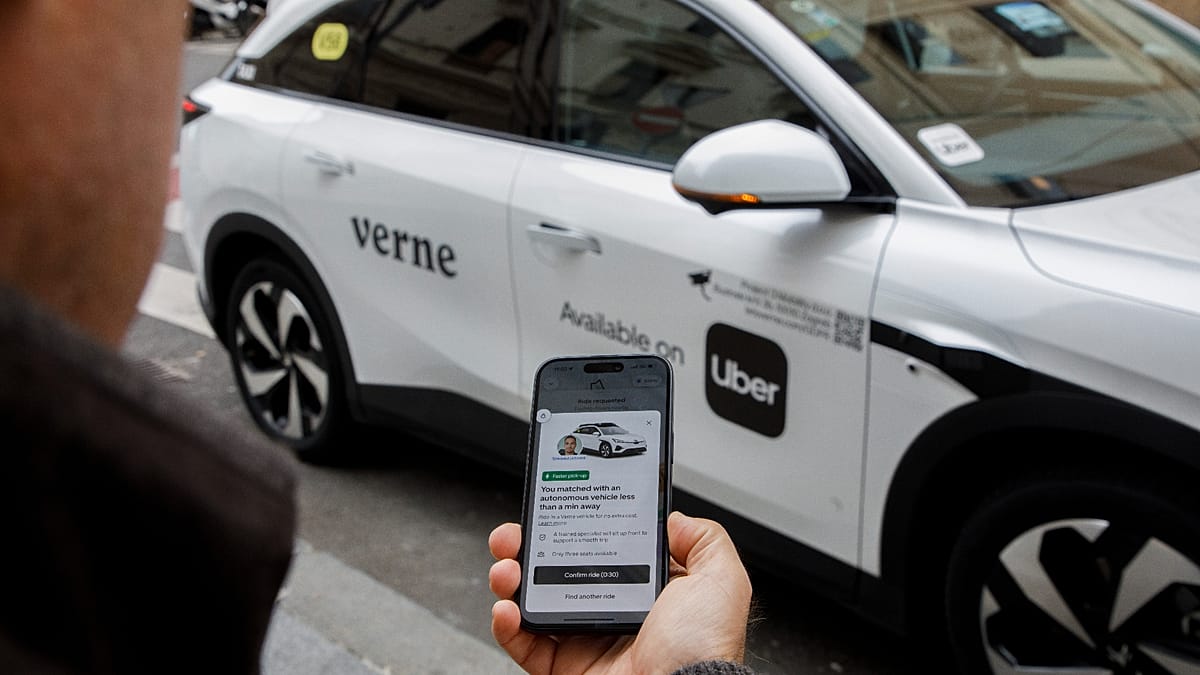
Zagreb has become the first city in Europe where passengers can hail a fully driverless taxi. On 10 September, Uber and its local partner Verne began offering rides without a safety operator behind the wheel, on a 22-kilometre route linking Verne's headquarters to Franjo Tuđman Airport. The service is currently limited to invited users, but it marks a significant step in the continent's slow embrace of autonomous vehicles.
The launch builds on a partnership that began in April, when Uber deployed robotaxis in the Croatian capital with Verne, a local startup co-founded by Mate Rimac, and Pony.ai, a Chinese AI firm. Since then, the fleet of about 30 electric SUVs has logged 200,000 kilometres on Zagreb's roads, with safety operators – often former taxi drivers – sitting in the driver's seat. Now, for the first time, those operators are gone.
A cautious continent takes a leap
Europe has been more hesitant than the US and China when it comes to letting autonomous vehicles loose on public roads. Regulatory frameworks are fragmented across the 27 member states, and public trust remains fragile. Yet the Zagreb experiment shows that progress is possible when a local player understands the regulatory landscape.
Verne, named after the sci-fi writer Jules Verne, has been developing robotaxis since 2019. It acts as the fleet owner and operator, handling everything from cleaning to maintenance at a central hub the company calls a “mothership”. It also leads the conversations with local and national authorities, securing the approvals needed to operate.
“You have Verne, which is an incredible local company in Zagreb, with fleet expertise and vehicle operations, and then you have Pony.ai, which has world-class AV technology, and you have Uber which helps bring that all together in terms of the mobility platform, rider experience,” said Annie Duvnjak, Uber's global head of autonomous mobility operations. “So, it's really everyone bringing the best of what they do together.”
The partnership is an unusual one, given the geopolitical tensions between the US, China and Europe over technology and trade. But Uber argues that the shared goal of expanding autonomous mobility outweighs the differences. The company already runs more than 30 such partnerships across Europe, and the Zagreb model is the most advanced.
What it feels like to ride without a driver
For a first-time passenger, the experience is disorienting. From the rear seat, you watch the steering wheel turn on its own as the car navigates traffic, stops at every stop sign – even when the road is empty – and pulls over to avoid aggressive human drivers. The ride is smooth, almost boring, which is exactly what the designers intended.
“We call it a little bit magically boring, meaning, you get in and first you're like ‘oh, no one's hands are on the wheel’ and then all of a sudden you're in a car like you normally would be,” said Duvnjak.
The vehicles used in Zagreb are BAIC Arcfox Alpha T5s, Chinese electric SUVs. The front passenger seat has been removed to create more luggage space. Riders unlock the car with their phone and have access to Uber support throughout the trip.
This is a level 4 autonomous system, meaning the car can drive itself without human intervention but only in a defined geographic area. No one in the world operates a level 5 system, which would allow unrestricted driving anywhere.
The next steps for the partnership include expanding the fully driverless service to more of Zagreb, then rolling out in Manchester, where tests have already begun, and London, where Pony.ai and Uber plan to launch. The company also has its eyes on other European cities, though it has not named them yet.
For now, Zagreb is the testbed. And for a continent that has been cautious about letting go of the wheel, it is a significant milestone. As Duvnjak put it, “It's a learning process.”