European equities started the week on a cautious note as investors weighed the fallout from a weekend of violent protests and looting in France. The pan-European Stoxx 600 slipped more than 0.6% in early trading, while the Euro Stoxx 50 edged down 0.1%. France's CAC 40 fell 0.5%, dragged by shares in Carrefour, which dropped over 2% after the retailer said about 50 of its stores had been targeted by looters.
The unrest also weighed on French government bonds. The yield on the 10-year OAT rose to 4.86%, near its highest level since 2002, as a divided parliament debates the 2027 budget. The spread over German Bunds, a key gauge of investor confidence, stood at 143.5 basis points, having briefly exceeded 150 earlier this month—the widest since the eurozone debt crisis. Moody's is set to review France's Aa3 rating, which carries a negative outlook, on Friday.
Businesses count the cost
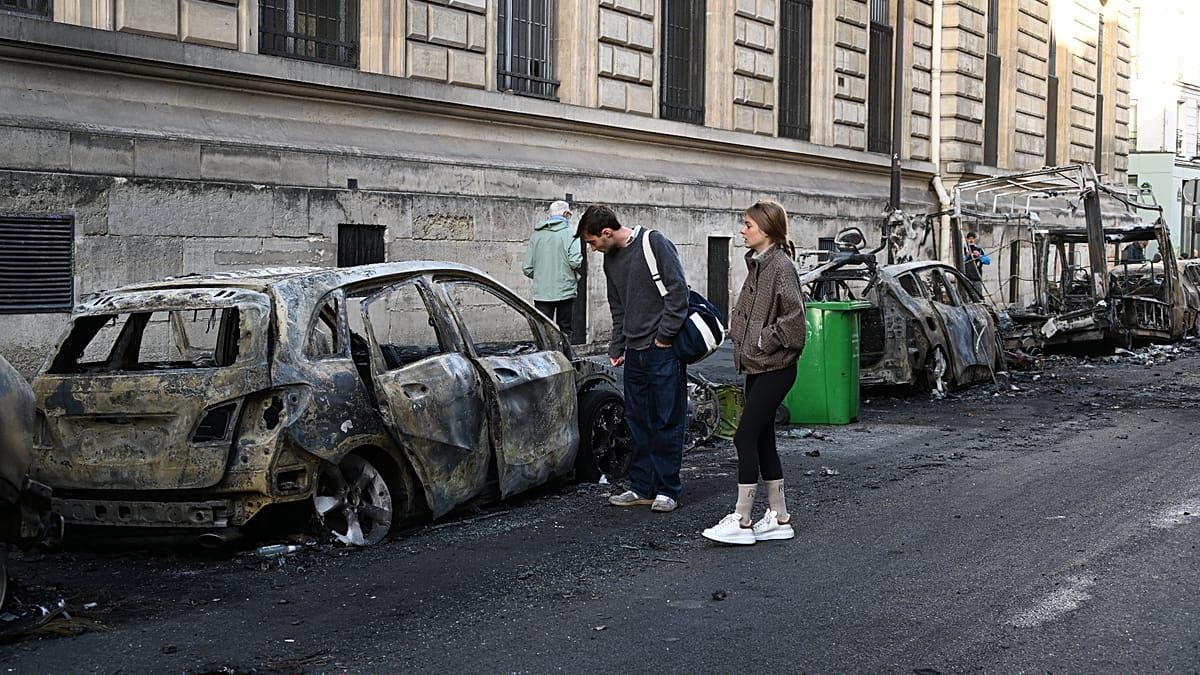
Authorities estimated that around 550,000 people took part in Saturday's nationwide marches against rising living costs and underfunded schools. The demonstrations turned violent in Paris, Lyon, Marseille, Bordeaux, and other cities, with rioting and looting reported. Interior Minister Laurent Nuñez said 2,400 people were arrested, and between 500 and nearly 1,000 police officers, gendarmes, and firefighters were injured. Nuñez admitted a lack of anticipation and a loss of control in some cities and offered to resign, but President Emmanuel Macron refused, according to his office, arguing that the security forces needed unbroken command.
Business leaders were quick to voice their anger. Alexandre Bompard, CEO of Carrefour and head of the French retail federation FCD, said about 1,500 shops were hit, with damages running into hundreds of millions of euros. At Carrefour alone, the cost of repairs will exceed ten million euros, he said. Thierry Guibert, CEO of Lacoste, whose stores were looted, urged the state to act without delay to protect businesses and staff. Thierry Cotillard, head of supermarket chain Intermarché, expressed deep anger on social media, while Patrick Martin, president of employers' group Medef, called the looting unacceptable.
Smaller traders were even more blunt. The owner of outdoor retailer Snowleader said he alerted police as looters forced open the door of his Lyon shop, only to be told to wait and follow up on Tuesday if no one came. The head of Marseille's city-centre traders' association said shopkeepers had been abandoned by the authorities.
Prime Minister Sébastien Lecornu was set to chair a crisis meeting on Monday, and Commerce Minister Serge Papin planned to meet trade federations, banks, and insurers. Meanwhile, unions have called a national strike for 5 November.
The unrest has also had a political dimension. Macron has vowed to punish those who tried to 'bring down the Republic', and the interior minister has been asked to develop new tactics. The political blame game is intensifying, with opposition parties criticising the government's handling of the protests.
Beyond France, other European indexes also traded lower. Germany's DAX dropped over 0.8%, while the UK's FTSE 100, Italy's FTSE MIB, and Spain's IBEX 35 were all down between 0.4% and 0.6%. The Netherlands' AEX was the outlier, rising more than 0.4%.
The euro weakened 0.2% against the US dollar to around $1.121 and fell a similar amount against the British pound to roughly £0.841. Last week, the single currency sank to its lowest level against the dollar since mid-May 2025 and against the pound since early June 2025, as France's debt troubles and a stronger US dollar outweighed two European Central Bank rate hikes this year. The ECB's next meeting is scheduled for 29 October.
The violence has also drawn international attention. Hungarian politician Magyar linked the riots to migration, defending a hardline stance, while other European leaders expressed solidarity with France. The destruction of the historic Limoges town hall, gutted by fire during the protests, has become a symbol of the damage.
As French shopkeepers begin to count their losses, the economic impact is likely to be felt for months. The government faces the dual challenge of restoring order and addressing the underlying grievances that fuelled the protests.