A proposal to build a regional gas network across Central Asia is gaining attention as a way to ease winter energy shortages and reduce dependence on single suppliers. The so-called Gas Ring would link Kazakhstan, Kyrgyzstan, Tajikistan, Turkmenistan and Uzbekistan through more than 3,000 kilometres of new and upgraded pipelines, allowing gas to flow more flexibly across borders.
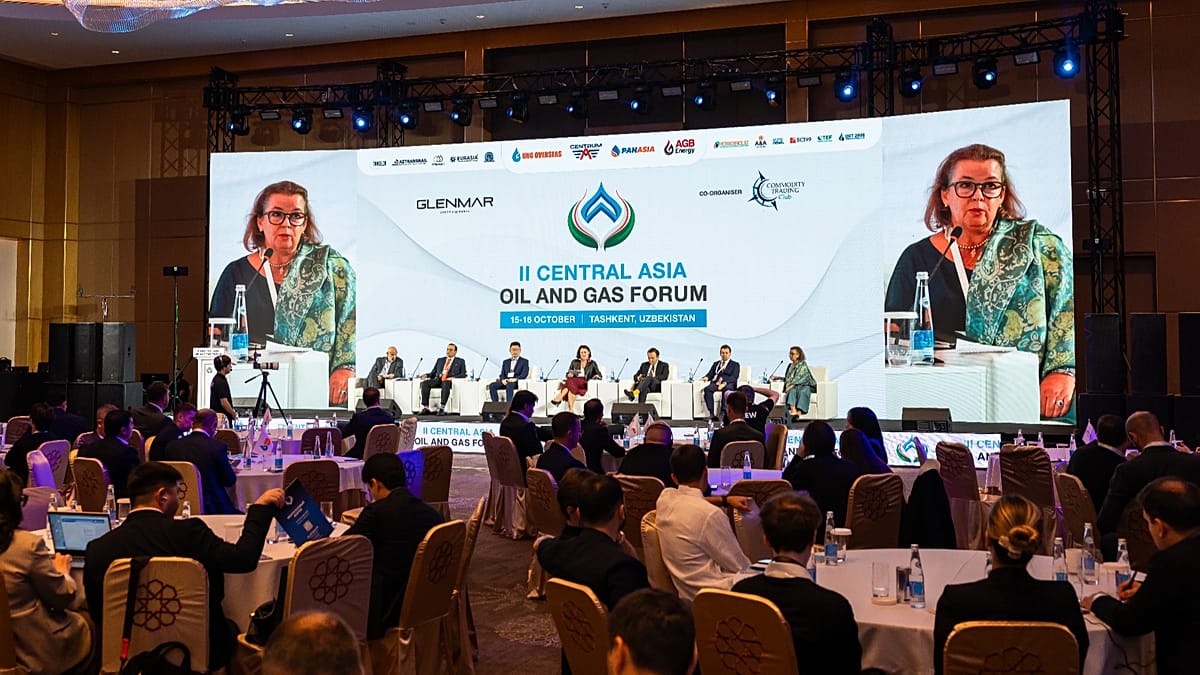
The idea was first presented by Kazakh energy expert Askar Ismailov at the inaugural Central Asia Oil and Gas Forum in 2025, and discussed again at the second edition held in Tashkent. Ismailov, who now advises the Geneva-based Global Gas Centre, estimates the core infrastructure would cost around $5bn (€4.45bn), with $2bn (€1.78bn) for new construction and $3bn (€2.68bn) for modernisation and digitalisation. The network could carry roughly 20 billion cubic metres of gas annually, he says.
Why a ring makes sense
The five countries have very different energy profiles. Turkmenistan holds substantial reserves and could gain new regional customers. Uzbekistan is both a major producer and consumer, with demand spiking in winter. Kazakhstan produces gas but mostly in the west, far from its main population centres. Kyrgyzstan relies on imports, while Tajikistan, though heavily dependent on hydropower, also imports gas—126.4 million cubic metres from Uzbekistan in the first half of 2026, according to its energy ministry.
Cross-border gas trade already exists, but the ring would build on those links, adding new sections and upgrading existing pipelines to allow more flexible flows. “When Uzbekistan or some other Central Asian countries like Kyrgyzstan or Tajikistan demand more gas during winter time, we can do it in reverse mode,” said Assylbek Jakiyev, chairman of PetroCouncil Kazakhstan, an oil and gas industry association. He was describing the potential for reverse flows, not an agreed operating arrangement.
Valérie Ducrot, executive director of the Global Gas Centre, called the project “very interesting” because it would “enhance the security of supply of all these countries.” The centre is actively involved in advancing the proposal.
From proposal to investment
Ismailov said Uzbekistan's national oil and gas company, Uzbekneftegaz, had expressed interest after preliminary talks. The Global Gas Centre also signed a memorandum of understanding in May with authorities in Karakalpakstan, an autonomous republic within Uzbekistan. Discussions with prospective investors from China and the Middle East have been reported.
But significant hurdles remain. The project would require agreements on supply volumes, transit rules, and the operation of interconnected pipelines, including which sections could carry gas in both directions. No final financing structure, agreement among all five governments, or construction timetable has been publicly announced. The projected cost and capacity are still estimates from the proposal's backers.
Uzbekistan is meanwhile trying to boost domestic production. Large industrial enterprises produced 24.2 billion cubic metres of natural gas in January–August 2026, down 16.3% year on year, according to national statistics. At an October review, Uzbek authorities reported five new gas-condensate fields discovered this year and 80 wells drilled between January and September, with 40 more planned for the final quarter. “Natural gas remains a cornerstone of Uzbekistan’s energy system,” said Denis Borodenok of UNG Overseas, a wholly owned Uzbekneftegaz subsidiary and co-organiser of the Tashkent forum. The government is also pursuing deeper exploration in the Ustyurt region and measures to improve output from existing fields.
Domestic drilling and cross-border connections address different aspects of energy security: increasing production and making supplies easier to distribute.
Wider links with Azerbaijan and Europe
The Tashkent forum also explored opportunities to strengthen energy ties between Central Asia, Azerbaijan and European markets. Jakiyev said closer cooperation with Azerbaijan and the EU could help Central Asian producers expand hydrocarbon exports. Some partnerships are already taking shape: Azerbaijan's SOCAR, Britain's BP and Uzbekneftegaz are partners in an oil and gas exploration project in Uzbekistan's Ustyurt region.
Azerbaijan already supplies natural gas to EU countries through the Southern Gas Corridor, with deliveries reaching 12.5 billion cubic metres in 2025, according to the European Commission. The EU and Azerbaijan reaffirmed their wider energy partnership in March 2026. For Europe, the Gas Ring could eventually support efforts to diversify energy imports, though the project remains in its early stages. As Uzbekistan signs major energy deals and plans new nuclear plants, the region's energy landscape is clearly shifting. But whether the Gas Ring becomes reality depends on political will and investment decisions that have yet to be made.