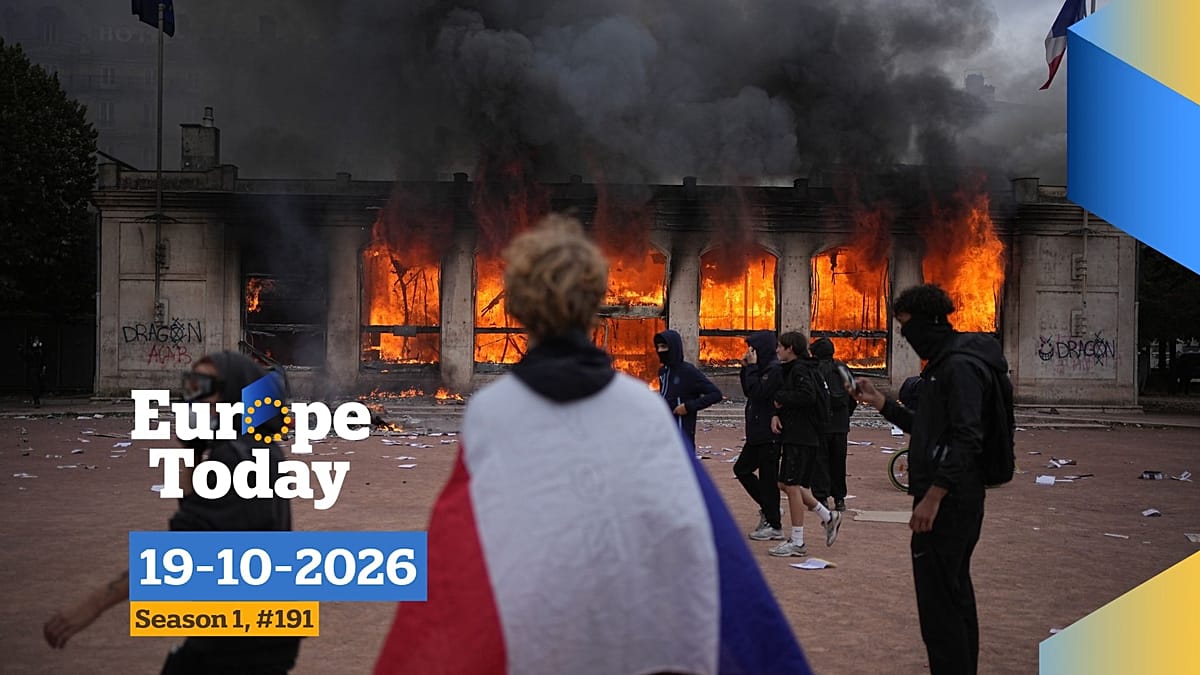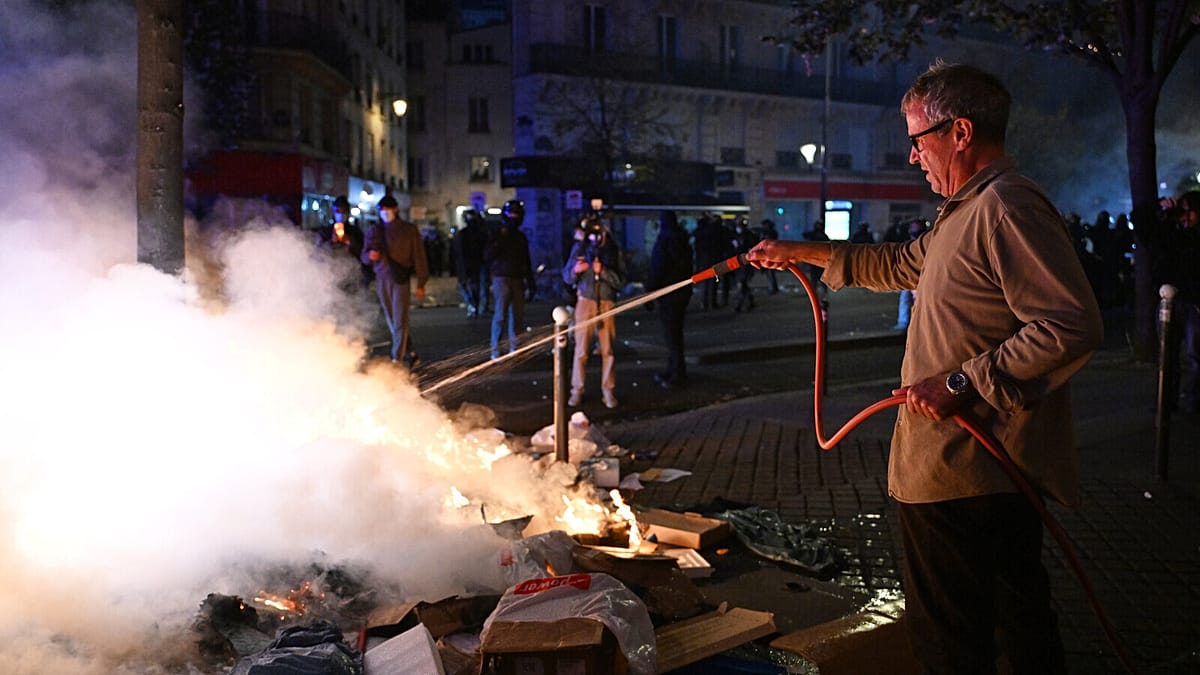
France is waking up to a sobering reality this Monday morning after a weekend of protests that spiraled into some of the worst urban violence the country has seen in years. What began as peaceful demonstrations against austerity and the rising cost of living morphed into chaotic scenes of arson, looting, and clashes with police in cities from Marseille to Paris to Lyon. Around 2,000 people were arrested, and more than 500 police officers, gendarmes, and firefighters were injured, according to official figures.
The protests on Saturday were initially driven by demands for increased public spending to repair dilapidated schools and improve education standards, as well as measures to address the soaring cost of living. But the marches were quickly hijacked by masked groups who set fires, smashed storefronts, and erected barricades, turning central districts into battlegrounds. Journalists were not spared: Estelle Nilsson-Julien, France correspondent for Euronews, described being surrounded by masked individuals who attacked her camera operator in central Paris. “The calmer protests earlier in the day descended into complete anarchy,” she said.
A nation in shock, a president under pressure
In a televised address to the nation on Sunday night, President Emmanuel Macron acknowledged the collective trauma, saying the country felt “shame and anger” and pleading for unity. But his words did little to quell the political storm. The material damage is estimated in the hundreds of millions of euros, according to trade bodies, but the deeper scars may be political and social, coming just months before the April presidential election.
The government is facing pointed questions about its handling of the crisis. Critics argue that the executive failed to make sufficient concessions to address the grievances of students, who have been demonstrating for weeks. Interior Minister Laurent Nuñez tendered his resignation on Monday morning, but President Macron rejected it, a move that some read as an attempt to project stability while others see as a sign of internal discord.
Opposition leaders have been quick to capitalise. Marine Le Pen, the far-right National Rally (RN) candidate and frontrunner in the polls, spoke of a “crisis of confidence” and a “threat to democracy.” On the far left, Jean-Luc Mélenchon of France Unbowed (LFI) has come under fire from government figures and right-wing leaders, with centrist candidate Édouard Philippe accusing his party of bearing “considerable responsibility” for the violence.
Echoes across Europe
The unrest has not been confined to France. Similar demonstrations over the weekend turned violent in Belgium, Italy, and Portugal, suggesting a broader unease with economic pressures and political inertia across the continent. In Brussels and Liège, clashes broke out as cost-of-living protests escalated, a reminder that the grievances fueling the French riots are not unique.
Hungarian Prime Minister Péter Magyar has sought to link the riots to immigration, claiming the “shocking scenes” vindicate his government’s tough migration policies. His remarks, reported by my colleague Sándor Zsiros, have drawn criticism from those who see them as an opportunistic attempt to exploit a complex social crisis.
Ukraine: Trump’s taunts and Kyiv’s resilience
Meanwhile, across the Atlantic, US President Donald Trump has again berated Ukrainian President Volodymyr Zelenskyy, claiming in a blistering Truth Social post that Zelenskyy “doesn’t want to end this war, and probably never did.” Trump’s comments came after Kyiv launched a major drone attack on an oil terminal in Saint Petersburg over the weekend, a strike that underscored Ukraine’s growing reach.
Despite the harsh rhetoric, there are signs of a possible thaw. Zelenskyy said on Sunday that he had held talks with US negotiators Steve Witkoff and Jared Kushner to discuss next steps in diplomatic efforts to end Russia’s war. He also revealed that Washington had restored intelligence-sharing on incoming Russian ballistic missiles after a three-day interruption. “We are very thankful for this,” he told NBC News. “Now it works.”
But in a separate interview with Bloomberg, Zelenskyy painted a dire picture of the relationship, saying he believed “steps have been taken to convince Ukraine to capitulate” to Russia, and suggesting Washington was slowing down Patriot missile deliveries via NATO’s PURL scheme. His comments reflect a growing anxiety in Kyiv about the reliability of US support, a theme that resonates across European capitals.
On the ground, Russia continues its relentless bombardment. Overnight, successive ballistic missile attacks hit Kyiv, damaging a metro station and nearby railway infrastructure. Unlike the previous evening’s strikes, residents received advance air-raid warnings this time. The EU’s ambassador to Ukraine, Katarína Mathernová, described Kyiv as a “true frontline city” in an exclusive interview with my colleague Sasha Vakulina, highlighting the growing disruption to everyday life.
Brussels faces the funding gap
In Brussels, the focus is shifting to the aftermath of last week’s summit, where EU leaders committed to addressing Ukraine’s request for an additional €70 billion in financial and military support for next year. The European Commission has been tasked with presenting options to fund this gap, which comes on top of the €90 billion loan agreed less than a year ago. Commission President Ursula von der Leyen acknowledged the challenge: “At the time when we planned for the €90 billion, we could not foresee what 2027 would look like, but now it is clear that we have a gap of €70 billion that has to be covered.”
Issuing a new round of joint debt appears the easiest and fastest option, though it will be costlier both financially and politically. Some countries, including Germany, Spain, and the Netherlands, prefer to tap into the €210 billion of immobilised Russian assets. But Belgian Prime Minister Bart De Wever made clear during the summit that his objections still stand. The debate is set to dominate EU discussions in the coming weeks, as the bloc grapples with how to sustain its support for Ukraine while managing domestic fiscal constraints.