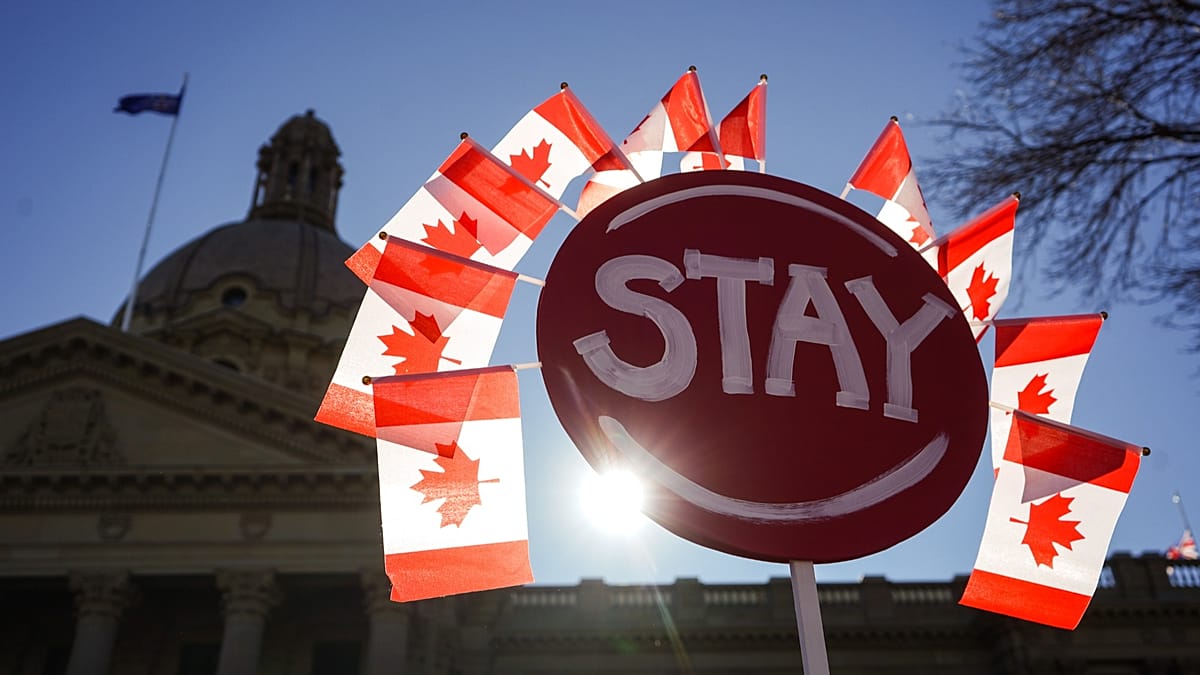
On Monday, voters in the western Canadian province of Alberta will decide whether to take the first formal step toward secession from Canada. The non-binding vote asks whether the province should pursue a binding referendum on independence, a move that Prime Minister Mark Carney has called a dangerous distraction while Canada faces punishing tariffs and annexation threats from the United States.
Polls suggest that fewer than one in four Albertans support outright independence, but the outcome hinges on turnout. Carney, who grew up in Alberta, told a rally on Thursday: "Don't let anyone tell you this is already decided. Turnout will determine the outcome." He urged voters to "vote like Canada depends on it, because it does."
The referendum comes at a delicate moment. US President Donald Trump has imposed steep tariffs on Canadian goods and has repeatedly suggested that Canada should become the 51st state, rhetoric that has rattled Ottawa and boosted Canadian patriotism. Carney, who led the Bank of England through the Brexit turmoil, warned Albertans about the economic consequences of a separatist vote. "It wasn't clear what 'Brexit' meant at the time," he told a Calgary television station. "For the next few years, while that was being determined, there was huge uncertainty, investments stopped, the economy started to underperform."
Oil and resentment
Alberta sits on the world's fourth-largest proven oil reserves, and separatist sentiment has been fueled by anger over Ottawa's management of the energy sector. Many Albertans resented former Prime Minister Justin Trudeau, whom they accused of trying to curb oil production to advance a climate agenda. Alberta Premier Danielle Smith told the Canadaland podcast this month: "If you want me to pinpoint who is responsible for the separatist sentiment, I think it's Justin Trudeau."
At a separatist rally in Edmonton on Saturday, 61-year-old Sandy Martel said people connected to the oil industry feel "robbed, cheated (and) mistreated." She told the AFP news agency: "It's time to stand up and say stop."
The vote comes days after a fire at a military base in Alberta killed at least four soldiers and wounded dozens, prompting a national outpouring of condolences. The incident has added an emotional layer to an already charged political atmosphere.
A risky strategy
Premier Smith, a conservative, says she wants Alberta to remain in Canada but called the referendum to settle the divisive issue. If a majority votes to separate, she has pledged to move forward with a binding referendum. If federalists win, she says the secession question should be considered closed. Analysts have compared her tactics to those of former UK Prime Minister David Cameron, who called the 2016 Brexit referendum hoping to end the debate over Britain's EU membership—only to see the country vote to leave.
Carney has urged "a decisive result," but experts worry about a contested outcome no matter the numbers. Aengus Bridgman, director of the Media Observatory at McGill University, said: "A very likely result of this referendum is going to be a community that sees this election as stolen or at least unfair." The pre-referendum period has been clouded by avalanches of manipulated AI content, raising concerns about disinformation.
Close Trump allies have also inserted themselves into the discussion. Treasury Secretary Scott Bessent described Alberta in January as a "natural partner" for the United States. After a separatist party won Quebec's provincial election on 5 October, tech billionaire Elon Musk posted on X that Quebec "would be better off" if it seceded, adding: "Alberta and Saskatchewan should separate too."
The referendum features ten questions, including several related to immigration, but the focus is on question 10, which asks whether Alberta should remain a province of Canada or take the legal steps required for a definitive independence vote. Alberta's election authority says ballots for question 10 will be counted first, with results expected in the early hours of Tuesday.
For Canada, the stakes are high. A separatist win, even if non-binding, would embolden the movement and could trigger a constitutional crisis. For Europe, the echoes of Brexit are unmistakable, and the outcome will be watched closely in Brussels and beyond. As Canada pitches itself as the EU's reliable partner beyond CETA, the stability of its federation matters for transatlantic relations.