Albanian police fired water cannon and tear gas on Sunday as violent anti-government protests entered a sixth day, with Prime Minister Edi Rama rejecting demonstrators' demands that he step down. The unrest, which began over poor university conditions, high tuition fees and corruption, has escalated into some of the most intense clashes Tirana has seen in years.
Hundreds of protesters gathered at noon outside the education ministry, chanting “Rama, resign” amid a tense standoff with police. After officers attempted to disperse the crowd, the protests spread across the city centre, leading to hours of violent confrontations.
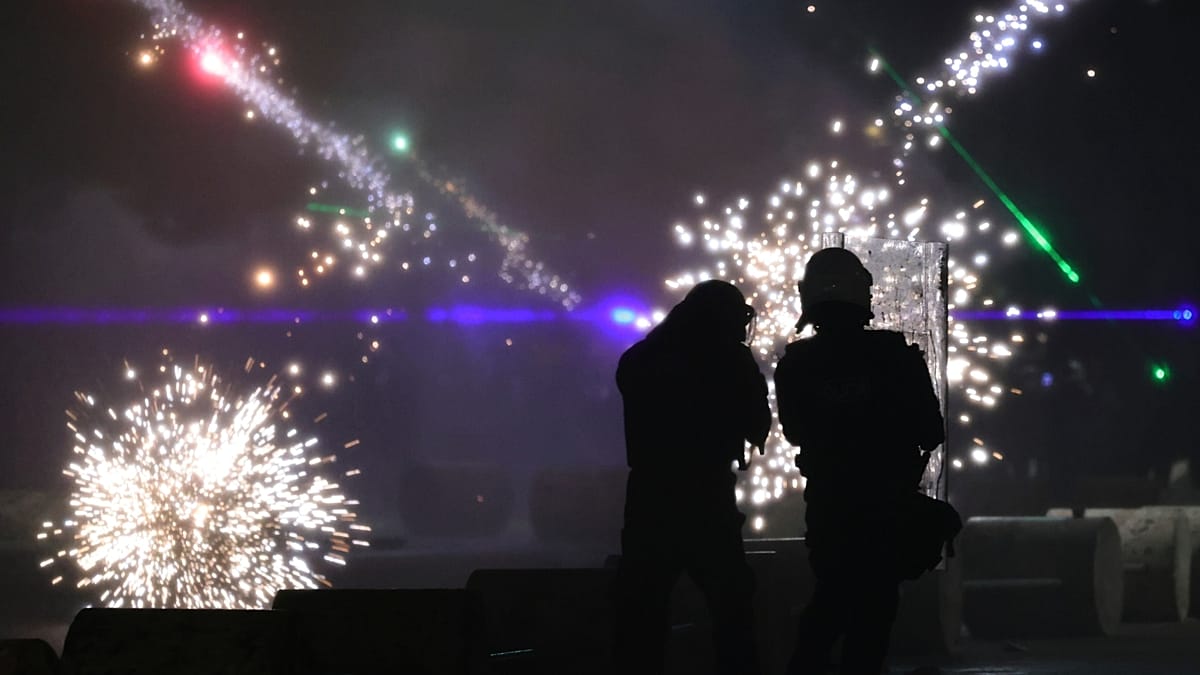
Protesters set rubbish bins alight, smashed windows—including at the headquarters of the governing Socialist Party—and set fire to a police station and the entrance of the interior ministry. Clashes extended to the main boulevard and square, with demonstrators throwing rocks, Molotov cocktails and firing pyrotechnic devices, while police responded with rubber bullets and tear gas, according to an AFP journalist at the scene.
Injuries and damage mount
Ambulances were seen rushing in and out of the clash sites to pick up the injured. The Ministry of Health reported that 16 police officers were injured on Sunday, 14 of them when protesters attacked a police station. Albert Nushi, from the police public security department, said the station was attacked with Molotov cocktails and pyrotechnic devices that endangered both officers and people held in custody.
“An attack on a police station is not a protest. Violence against police officers, attacks on institutions, and actions that endanger human lives cannot be tolerated,” Nushi said. He urged protesters to stay away from masked individuals behind the violence and to “assemble in a peaceful manner”.
According to the Ministry of Health, 28 people were injured on Sunday: 19 police officers, four protesters, four passers-by and a journalist. Since Tuesday, 272 people have been injured in the clashes, including 169 police officers.
Saturday saw the harshest violence, with protesters throwing rocks, Molotov cocktails, metal objects and pyrotechnic devices at police, and torching cars and rubbish bins to use as barricades. Buildings including a court, banks and a post office were set on fire or severely damaged. A health ministry report said 65 people were injured on Saturday, including 37 police, with 12 hospitalised.
In a video broadcast lasting more than an hour, Rama ruled out resigning, describing the protests as the “work of an outside hand”. His official visit to Austrian Federal Chancellor Christian Stocker, scheduled for Monday, was cancelled by the Albanian side, according to the Austrian federal press service.
Writer and activist Lura Elezi, 38, told AFP she was protesting for “a better life, rule of law and against crime and corruption”. “I love my country, but my government does not respect us, it defies us. Every citizen must take responsibility for their country, taking on the duty to lead, to love, and not to destroy one's own nation,” she said.
The unrest follows months of anti-government protests in the Balkan nation, initially sparked by a controversial resort development in an ecologically protected area linked to US President Donald Trump's family. The current wave of demonstrations has drawn parallels to cost-of-living protests across Europe, though the triggers here are specific to Albania's political and educational grievances.
Albania's close ally the United States reacted late on Saturday, with its embassy in Tirana urging “restraint and calm on all sides”. The European Commission, in a written statement, “condemned the use of violence in Tirana and other cities”, adding that the response to it “must remain proportionate”.
“In a candidate country firmly committed to the EU accession process...grievances should be handled through constructive dialogue and in a peaceful manner,” the statement said. The EU has repeatedly stressed the importance of rule of law and democratic dialogue for Albania's path towards membership.
As the protests continue, the situation remains tense. The government has shown no sign of yielding, while demonstrators vow to keep up the pressure. The coming days will test whether Albania can navigate this crisis without further escalation, and whether the EU's calls for peaceful dialogue will be heeded.