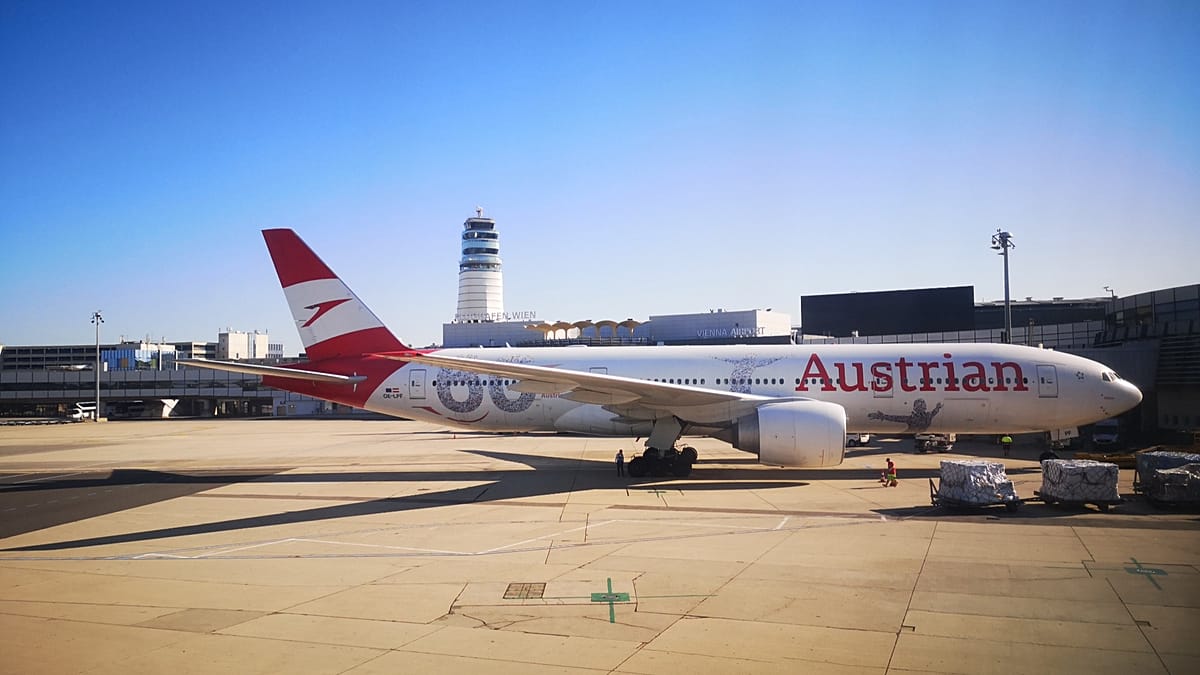
An Austrian Airlines flight bound for Vienna from Tel Aviv was forced to divert to Sofia on Sunday evening after the crew received a bomb threat, according to Bulgarian authorities and the airline. The Airbus A320, carrying 51 passengers and six crew members, made an emergency landing at Sofia Airport shortly after the threat was reported.
Bulgaria's transport ministry said the crew decided to divert as the aircraft approached Romanian airspace. The Bulgarian air force scrambled a MiG-29 fighter jet to escort the airliner, a standard procedure in such incidents. The plane landed safely in Sofia about half an hour after the threat was communicated, and passengers were evacuated from the aircraft.
In a statement, Austrian Airlines confirmed the security search of the aircraft was underway. "Once the search of the aircraft is complete, the passengers will be rebooked onto alternative flights as quickly as possible," the airline said. The carrier also noted that all passengers and crew were safe.
Flight tracking data from Flightradar24 showed the aircraft, registered OE-LZE, entered Romanian airspace at around 9:10 pm local time before turning south and heading back towards Bulgaria. ADS-B Exchange data indicated that the aircraft transmitted squawk code 7700, a general emergency signal, at roughly the same time.
Investigation launched
Bulgaria's transport ministry said a crisis response team has been set up and relevant authorities have launched an investigation into the incident. The ministry did not provide details on the nature of the threat or any potential suspects.
The incident is the latest in a series of security scares affecting commercial aviation in the region. Late last month, the co-pilot of a flydubai flight from Dubai to Tel Aviv attacked the captain and allegedly planned to intentionally crash the plane, but was subdued by the captain, passengers, and crew. Last week, Croatia and Germany both scrambled fighter jets after a commercial flight from the Greek island of Corfu to Nuremberg accidentally sent out a hijacking alert.
These events underscore the heightened security environment for airlines operating in and around Europe, a concern that has been growing amid broader geopolitical tensions. The European Union has been exploring ways to bolster security cooperation, including proposals for a European Security Council to counter hybrid threats. For airlines, the threat landscape extends beyond physical attacks to include cyber and other disruptive tactics, as highlighted in a recent analysis of security threats facing European firms.
Bulgaria, which has been active in regional security discussions, has also faced its own challenges, including recent incidents involving drones in the Black Sea. The country's prime minister has been vocal about such threats, as seen in his comments on ships hit by drones in the Black Sea.
The diversion to Sofia, a city not typically associated with major aviation incidents, highlights the readiness of Bulgarian authorities to respond to emergencies. The airport's location in the Balkans makes it a strategic diversion point for flights heading between the Middle East and Central Europe.
Passengers affected by the diversion are expected to be rebooked on alternative flights once the security sweep is completed. Austrian Airlines has not yet provided a timeline for when passengers might reach Vienna.
This incident comes at a time when airlines are increasingly vigilant about security threats, particularly on routes to and from the Middle East. The quick response by Bulgarian authorities and the crew's decision to divert underscore the importance of established protocols in ensuring passenger safety.