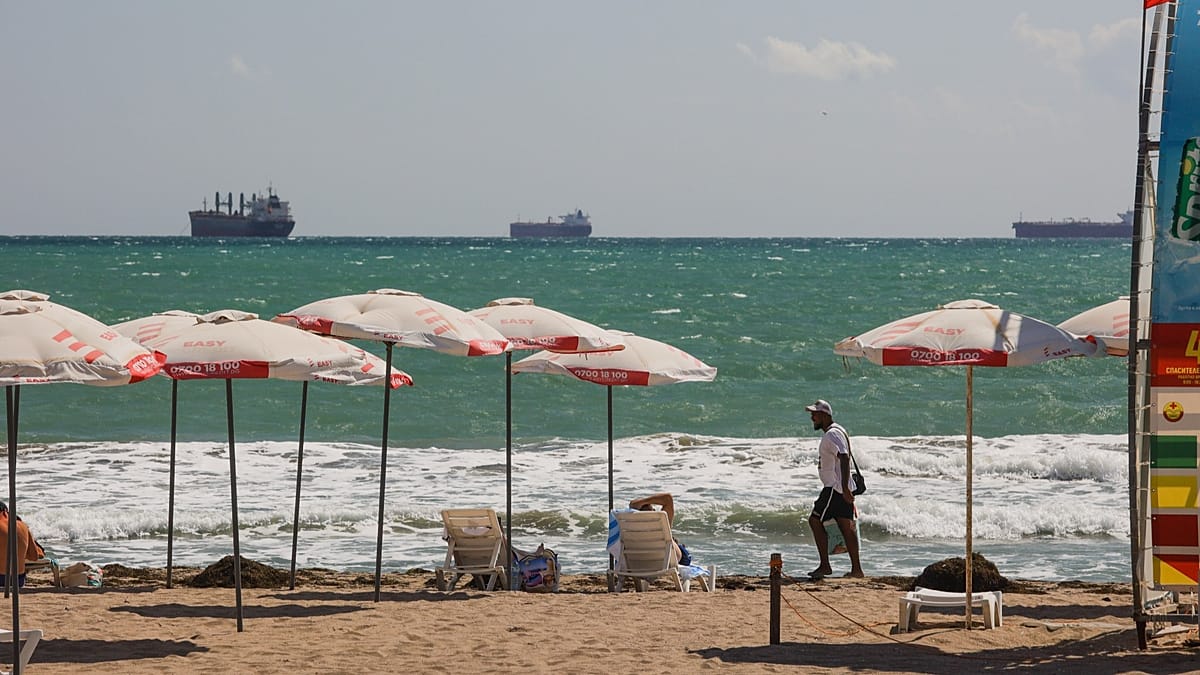
Bulgaria's Prime Minister Rumen Radev reported on Tuesday that two ships had been struck by drones in the Black Sea, with one vessel sinking. The incident occurred approximately 24 kilometres off the Bulgarian coast, though Radev provided no further details about the ships' origin, cargo, or the source of the drones.
This is not the first such occurrence in the region. Earlier this month, Radev condemned a drone attack on 6 October, about 130 kilometres offshore, as "absolutely unacceptable." In that incident, one merchant ship sank and another was damaged. An investigation is still underway, and no blame has been officially assigned.
The latest attack comes amid heightened tensions in the Black Sea, where commercial shipping has increasingly become a target. Romanian Foreign Minister Oana-Silvia Țoiu described a deadly incident off Romania's coast a day earlier as "a flagrant violation of international law."
Escalating attacks on civilian shipping
In a separate but related development, a Turkish-owned cargo ship carrying Ukrainian grain caught fire and sank off the Romanian coast. Ukrainian President Volodymyr Zelenskyy stated that the vessel had been attacked by Russian drones, resulting in the deaths of two crew members.
European Commission President Ursula von der Leyen condemned both incidents, saying, "The situation in the Black Sea is increasingly concerning. Attacks on civilian shipping are unacceptable."
These attacks have renewed scrutiny of Europe's ability to protect shipping and critical infrastructure in the Black Sea, more than a year after the EU launched a strategy to bolster regional security. The gaps in EU maritime defence plans have become more apparent as drone strikes continue to disrupt vital trade routes.
The Black Sea is a crucial corridor for grain exports and energy supplies, and any disruption has global implications. The recent incidents have prompted calls for stronger naval patrols and better coordination among NATO allies in the region.
Meanwhile, the EU has been working to enhance its maritime surveillance capabilities. The release of €1.24 billion for Ukrainian-made drones and munitions is part of broader efforts to counter such threats, though questions remain about the effectiveness of current measures.
As investigations continue, the human cost of these attacks is becoming clearer. Eighteen sailors were rescued after a previous drone strike on a cargo ship, highlighting the dangers faced by crews in these waters.
The international community has expressed alarm, with the United States and NATO reaffirming their commitment to maritime security. However, the repeated nature of these incidents suggests that a more robust response may be needed to deter further aggression.
For now, the Black Sea remains a volatile and dangerous environment for commercial shipping, and the latest drone attacks serve as a stark reminder of the ongoing instability in the region.