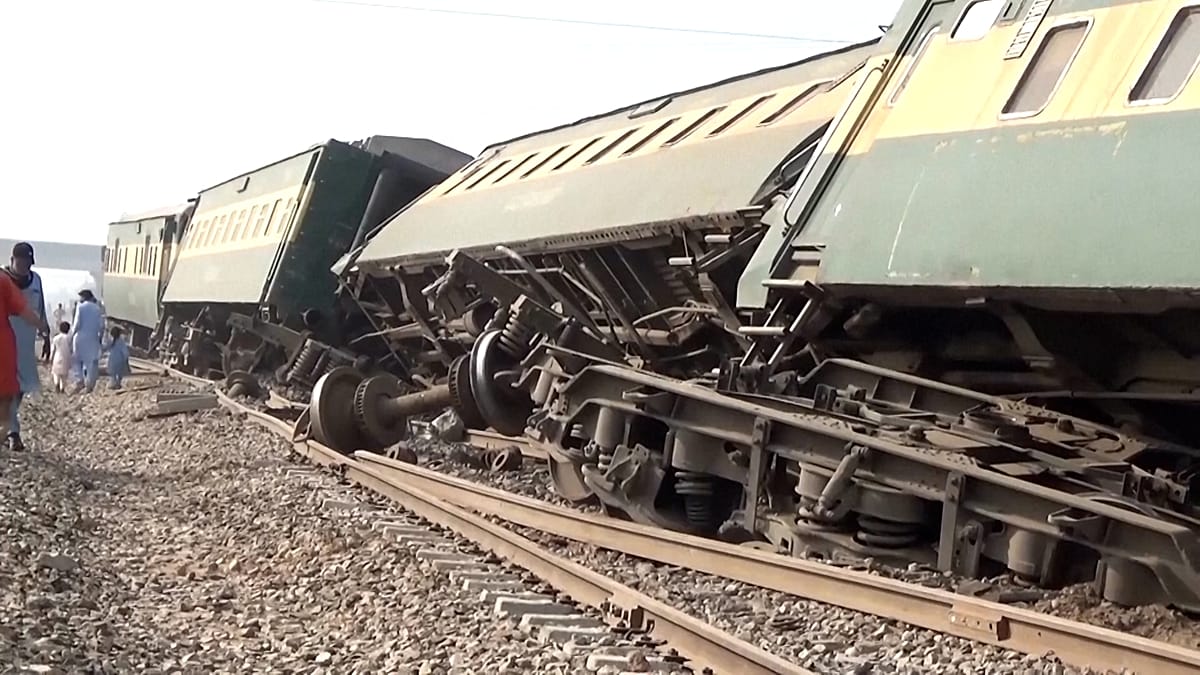
At least five passengers were killed and more than 30 others injured when the Rehman Baba Express derailed near the city of Multan in Pakistan's Punjab province in the early hours of Tuesday. The accident occurred at approximately 6:30 a.m. local time, according to railway officials, who have since launched an investigation into the cause.
The train, which was travelling from Karachi to Peshawar, left the tracks near the town of Nawabshah, about 30 kilometres from Multan. Rescue teams and emergency services arrived at the scene within minutes, working through the wreckage to free trapped passengers. Local hospitals were placed on high alert, and the injured were transported to nearby medical facilities, with several reported to be in critical condition.
Investigation underway
Pakistan Railways has announced a formal inquiry into the derailment, with a senior official stating that a technical fault or track defect is suspected. "We are examining all possibilities, including the condition of the track and the train's speed," said a spokesperson. The Rehman Baba Express, named after the Pashtun Sufi poet, is a popular service on the Karachi-Peshawar route, carrying hundreds of passengers daily.
The incident has once again highlighted the chronic underinvestment in Pakistan's railway infrastructure, which has suffered from decades of neglect and a string of deadly accidents. In 2021, two trains collided in Sindh province, killing at least 40 people, and in 2019 a fire on a train near Rahim Yar Khan claimed 74 lives. These tragedies have prompted repeated calls for modernisation and better safety measures, but progress has been slow.
While this story is centred in Pakistan, it resonates with broader concerns about rail safety that are also relevant in Europe. The European Union has made rail safety a priority, with the European Union Agency for Railways (ERA) overseeing common safety standards across member states. Recent initiatives, such as the planned cross-Channel train services by Virgin, aim to expand and improve rail connectivity, but they also underscore the importance of robust safety protocols.
In the wake of Tuesday's derailment, Pakistan's Prime Minister expressed condolences to the victims' families and ordered a full report. "We will not spare those responsible for any negligence," he said in a statement. Meanwhile, local residents and relatives of the passengers gathered at the scene and outside hospitals, anxiously awaiting news of their loved ones.
The injured are being treated at the District Headquarters Hospital in Multan and the Civil Hospital in Nawabshah. Medical teams have been mobilised, and blood donors have been urged to come forward. The railway authority has also announced compensation for the victims' families, though details have yet to be finalised.
As the investigation continues, questions are being raised about the age of the rolling stock and the frequency of track maintenance. Pakistan Railways operates a fleet that is largely outdated, with many locomotives and carriages dating back several decades. Experts argue that without significant investment, such accidents are likely to recur.
For Europe, the tragedy serves as a reminder of the importance of maintaining and upgrading rail networks. The EU has invested heavily in cross-border rail projects, such as the efforts to ease carbon rules that could affect rail operations, and the rescue of a cruise passenger in the Ionian Sea highlights the need for robust safety measures across all modes of transport. While Europe's rail systems are generally among the safest in the world, the continent is not immune to accidents, and continuous vigilance is required.
The Rehman Baba Express derailment is a stark reminder of the human cost of infrastructure neglect. As Pakistan mourns the victims, the international community, including Europe, can offer support and expertise to help improve rail safety in the region. The hope is that lessons will be learned, and that such tragedies will become a thing of the past.