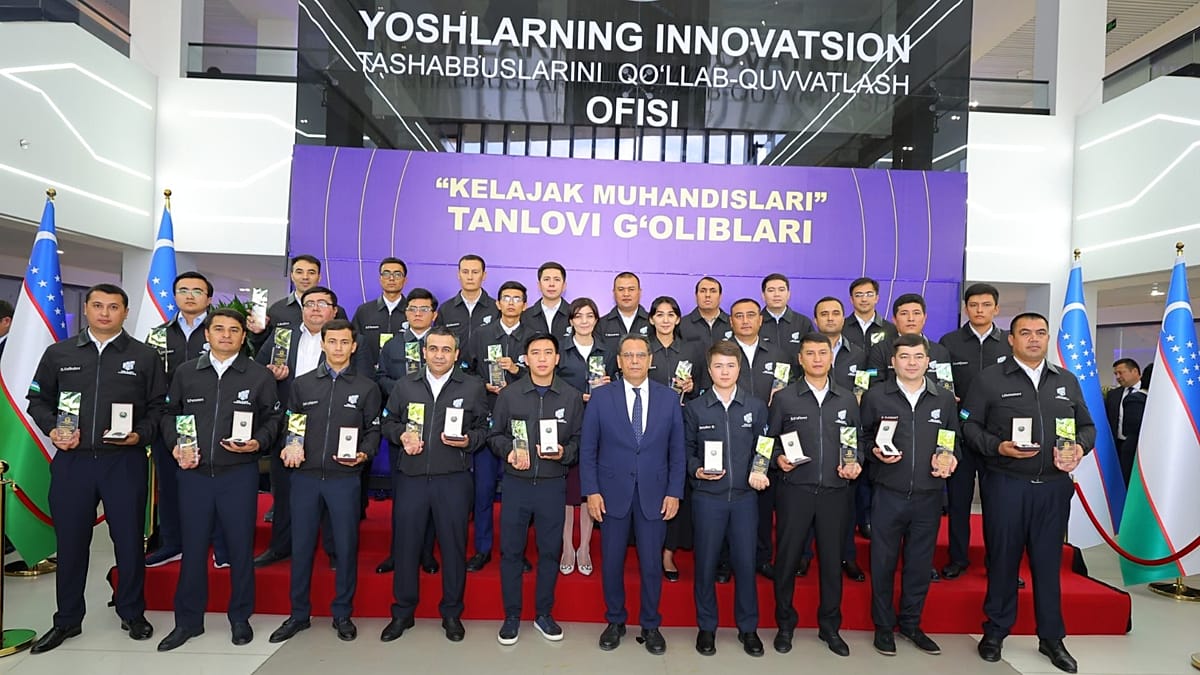
In Tashkent, Uzbekistan, a national engineering competition has highlighted the inventive spirit of the country's youth. The event, named Kelajak muhandislari (Engineers of the Future), drew 1,925 applications, with 90 finalists advancing to the finals held on 29 September. The winning projects range from early-stage prototypes to devices already deployed in clinics and industrial sites, according to their creators.
Sign-language glove bridges communication gap
Among the awardees was Abduqodir Latifjonov, an engineering student whose project ImoVox took second place in the student category for Best Idea. The sensor-equipped glove converts sign language gestures into spoken words, addressing a challenge Latifjonov witnessed firsthand: sign language users often struggle to communicate with those who do not understand them.
“I started thinking: in this age of technology, why can’t we create a solution that understands their signs and turns them into speech that everyone can understand?” he told Euronews.
The prototype, adapted to Uzbek sign language, uses sensors to track finger and hand movements in three dimensions. Individual gestures are recorded and assigned meanings, allowing the device to recognize them and convert them into speech. Artificial intelligence then helps combine individual signs into more natural sentences.
Rapid health check: 'robot doctor'
Another standout is the Body Tester, a device developed by Asadbek Urunov, a master's student at Turin Polytechnic University in Tashkent. The machine measures height, weight, pulse, blood oxygen levels, body temperature, and blood pressure in about 90 seconds, storing results digitally and offering preliminary recommendations. Urunov notes that the same measurements taken separately with conventional equipment can take 20 to 25 minutes.
“This is only a preliminary assessment. We should not use it to make a final medical conclusion,” he told Euronews. According to Urunov, the device is already in use in around 30 organizations, including public institutions and clinics.
Mining innovation cuts energy use
Bekzod Gafforov, a master's student at the Graduate School of Business and Entrepreneurship, won first place in the student Best Invention category for a redesigned lining used in industrial ball mills, which grind ore before further processing. Inside these rotating machines, heavy metal balls crush and grind the ore; the lining protects the machinery from wear and influences how the balls move, affecting grinding efficiency.
Gafforov developed the new lining with specialists from Navoi State University of Mining and Technologies, combining wear-resistant steel and cast iron. He says it is already in use at facilities operated by Navoi Mining and Metallurgical Company. “According to the results, its service life increased by between one and a half and two times, grinding efficiency improved by 30 to 35%, and energy consumption fell by 5 to 10%,” he told Euronews.
Robotic platform and drone interceptor
Dilmurod Rustamov of Turin Polytechnic University in Tashkent won second place in the student Best Project category for BARLOS, a hybrid unmanned ground vehicle that can run on electricity or petrol. Its modular design allows different equipment to be fitted for various tasks. Rustamov says the platform was demonstrated to the head of Uzbekistan's State Security Service and has been publicly described as military technology. His team has produced nine vehicles after receiving an order for eight units in four configurations, and has been tasked with producing 100 units by 2027.
The competition's first prize in the student Best Project category went to Biloliddin Ismoilov, a second-year student at Tashkent University of Information Technologies, for Shunqor-8, a locally developed drone interceptor. “We are creating something new, something that has not been done here before,” Ismoilov said. The system can reportedly reach speeds of up to 450 km/h and intercept targets 8–10 kilometres away, according to information released by Uzbekistan's Ministry of Higher Education, Science and Innovation. Ismoilov says the technology has undergone eight rounds of field testing.
These innovations reflect a broader trend in Central Asia, where young engineers are increasingly turning to practical solutions for local challenges. The competition, organized by the ministry, aims to foster a culture of invention and entrepreneurship among Uzbekistan's youth, with potential spillover effects for the wider region.