Rome and Prague have joined forces to press Brussels to soften the EU's climate rules for industry, warning that the bloc's manufacturing base risks lasting damage unless it gets relief from high energy and carbon costs. The joint initiative, confirmed in a letter seen by Euronews, comes ahead of the EU leaders' summit in Brussels next week and reflects growing anxiety among member states about competitiveness.
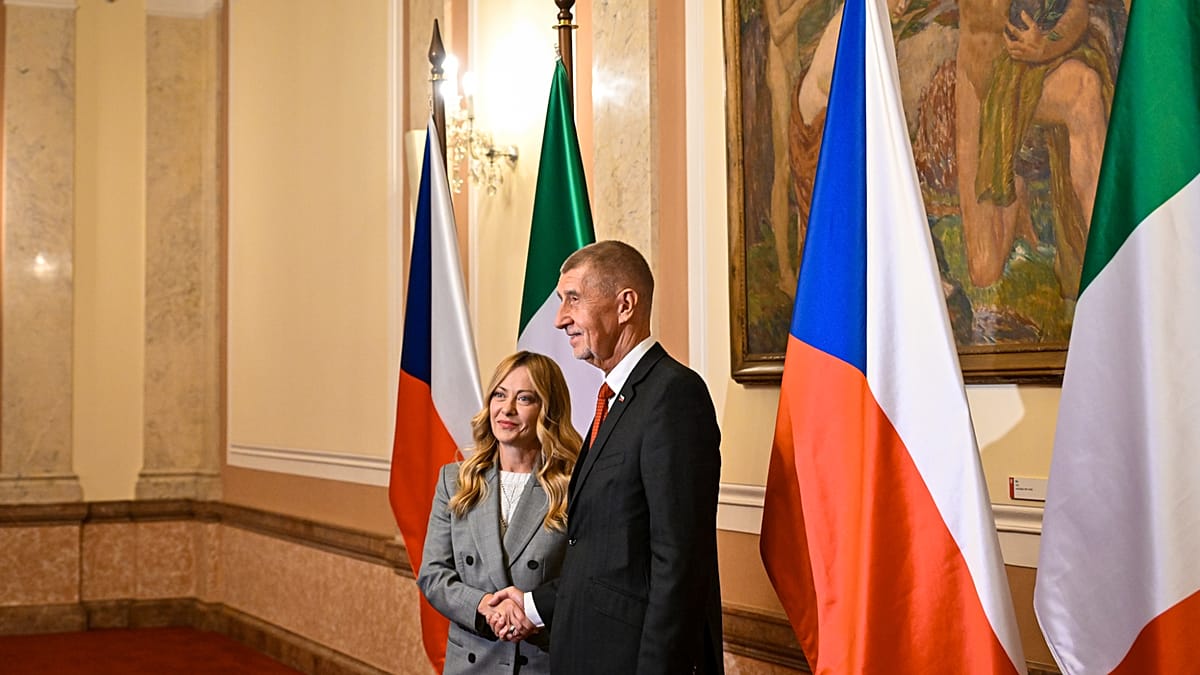
The letter, coordinated after Italian Prime Minister Giorgia Meloni visited her Czech counterpart Andrej Babiš in Prague last week, argues that the combination of some of the world's highest energy prices, high carbon costs, and exceptional fuel prices is accelerating the relocation of production and investment out of Europe. "While security of supply remains the immediate priority, the combination of some of the world's highest energy prices, high carbon costs and exceptional fuel prices risks further weakening European manufacturing and accelerating the relocation of production and investment," the letter reads.
Rome and Prague are targeting the EU's Emissions Trading System (ETS), which is already under political scrutiny, as well as the recently weakened methane rules. Their proposal includes extending free carbon allowances for heavy industry and freezing the phase-out of free allocations for sectors covered by the bloc's carbon border tax. They frame these measures as "temporary" interventions that "preserve long-term climate objectives," but several demands would amount to significant changes in how the EU applies its climate rules to industry.
The push comes amid a broader debate about European competitiveness, which is set to feature prominently on the agenda when EU leaders meet on October 15. The letter suggests that a "temporary suspension of the EU ETS" would provide immediate relief, but acknowledges that such an option may lack support. Instead, it proposes a number of targeted and immediately actionable alternatives that the European Council could promote to alleviate the impact of the current shock and complement measures already announced at European level.
Growing calls for industrial relief
Italian Defence Minister Guido Crosetto has gone further, arguing that the ETS should be suspended until economic conditions improve. "There would be better times" to reintroduce the carbon market, he said, adding that "a tax like the ETS today is unjust, absurd, unsustainable in international competition, and creates inequalities because it falls indiscriminately and equally on all European end consumers." His comments on X reflect a hardening stance in Rome.
The Meloni-Babiš initiative is the latest sign of a broader push among EU capitals to give greater weight to industrial competitiveness when implementing climate policies. Austria's Energy Minister Wolfgang Hattmannsdorfer made a similar case on the sidelines of a competitiveness ministers' meeting in Brussels on 24 September. He called for "economic patriotism" to keep industries and jobs in Europe, arguing that maintaining European production is crucial for regional wealth, welfare, and environmental standards.
These developments come as the EU grapples with the dual challenge of meeting its decarbonisation targets while shielding its economy from the energy crisis. The debate over the ETS is likely to intensify as leaders prepare for the summit, where competitiveness and the green transition will be key topics. For more on the EU's approach to energy security and climate, see the EU's COP31 strategy.
Industry groups have welcomed the Italian-Czech push, arguing that the current rules place European manufacturers at a disadvantage compared to competitors in the US and Asia. However, environmental NGOs warn that any rollback of the ETS could undermine the EU's credibility as a global climate leader. The European Commission has so far resisted calls for a full suspension, but has signalled openness to targeted adjustments.
The summit on October 15 will be a test of whether the EU can balance its climate ambitions with the need to protect its industrial base. As Brussels challenges capitals on EU reform, the outcome of this debate could shape the bloc's economic and environmental trajectory for years to come.