The European Commission has put forward a bold set of internal reforms designed to make the European Union more efficient as it prepares to welcome new members. The proposals, which include reducing the size of the executive and limiting the use of unanimity, are likely to test the appetite of national governments for change that stops short of treaty revision.
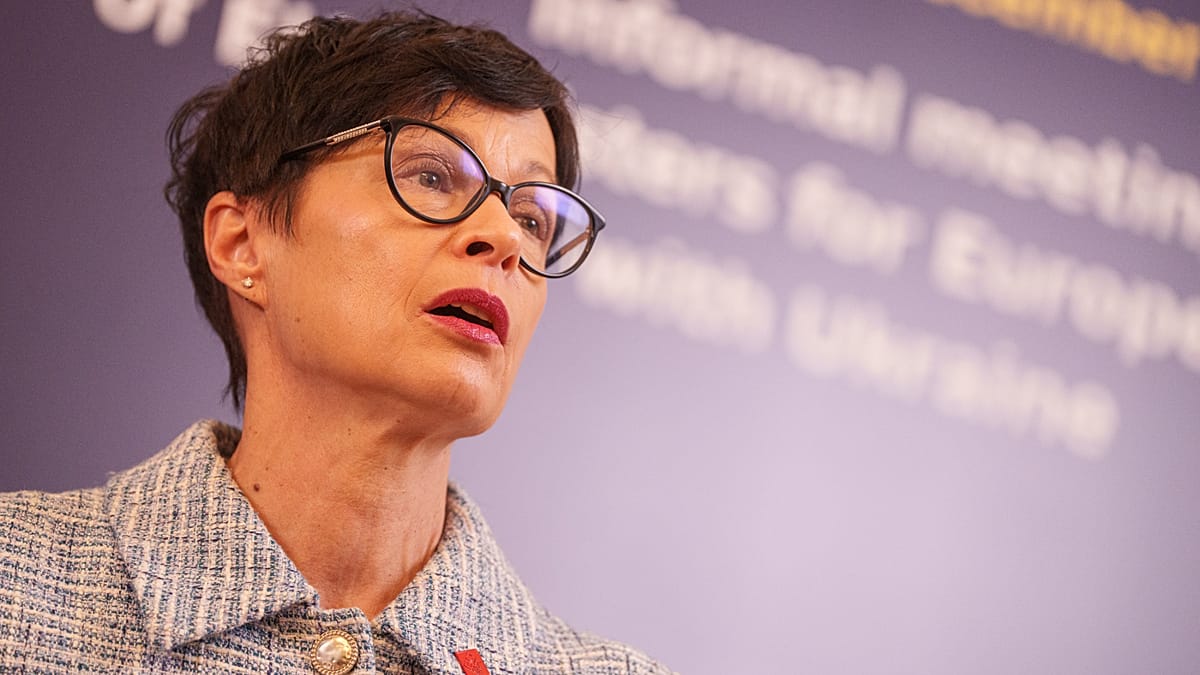
Enlargement Commissioner Marta Kos presented the package as a necessary step to ensure the bloc can function effectively with 30 or more members. "The main question has been: is the EU fit for another enlargement? And there is a clear yes, a future enlargement is possible. Our assessment shows that in most policy areas, the EU is already fit for enlargement," she told reporters.
Moving away from unanimity
One of the most contentious proposals is the greater use of qualified majority voting (QMV) in areas where unanimity currently applies. The Commission suggests activating so-called passerelle clauses, which would allow the Council to switch from unanimity to QMV. However, activating these clauses itself requires unanimity, creating a paradox that critics are quick to point out.
The idea is not new, particularly in foreign and security policy, where a single veto can paralyse the EU's ability to act on the global stage. Last month, eleven countries, including France and Germany, issued a joint letter calling for the bloc to explore ways to curb obstructive foreign policy vetoes, notably through greater use of constructive abstention.
Kos acknowledged that member states are divided on the issue. "It will not be easy, but it is worth trying," she said. She identified the accession process itself as a specific area where unanimity could be reduced. "Our proposal is to make our decision-making process more effective. We suggest using more QMV, which is nothing new. What is new is that we are suggesting that we will reduce the number of unanimity decisions in the accession process," she explained.
Currently, unanimity is required to grant candidate status and to close negotiations, but in between, any member state can veto any of the 150 steps in the accession process. The Commission also wants to make more use of enhanced cooperation, which allows at least nine member states to pursue deeper integration on matters of strategic interest where blockages persist. Recent examples include the Ukraine Support Loan, from which Hungary, Czechia and Slovakia opted out, and the European Public Prosecutor's Office.
However, this approach may face resistance from capitals, particularly the so-called "Friends of the Western Balkans", a group that includes Italy and Austria, who have pushed back against differentiated membership and regulatory asymmetry.
Institutional changes
The Commission is also proposing to abandon the principle that every EU country has a commissioner, a move that could prove problematic in a Union of 30 or more members. Under the Lisbon Treaty, the Commission should have a number of members equal to two-thirds of the member states, chosen by "strictly equal rotation" that reflects the demographic and geographical range of all EU countries.
This system never took effect. In 2013, the European Council unanimously decided to keep one commissioner per member state, a concession to Ireland to secure a yes vote in its second referendum on the Lisbon Treaty. Ireland was merely the most vocal opponent of losing a permanent presence in the Commission. Small member states widely fear their voice would be harder to hear in Brussels.
Rotation could also be hard to swallow for large countries such as France and Germany, which might find themselves left out of the College of Commissioners while the likes of Malta or Luxembourg are included. Kos noted that some candidate countries are open to the idea, while others prefer to wait and see. "There are some candidates who say, no worries, this country can represent us. Other countries who say, yes, but not at the beginning. We would like to see how it [the Commission] works," she added.
The proposal for a leaner EU executive is well timed. The Commission is undergoing a so-called "large-scale review", and capitals are in intense talks on the bloc's next long-term budget, in which the EU administration is likely to face deep cuts. A group of six frugal states has already demanded deeper cuts to the budget, as reported in our earlier coverage.
Sceptical reception
Proposals that mainly affect candidate countries, such as safeguards against democratic backsliding and gradual integration, are likely to meet less resistance. However, supporters of the reforms point out that, as candidates edge closer to joining the bloc, the question of how to keep an enlarged Union effective will be harder to dismiss.
Still, the suggestion is sure to raise eyebrows among European governments. Four EU diplomats who spoke to Euronews on condition of anonymity said these internal reforms are unlikely to fly. The first test will come next week, when the enlargement reforms will land on the table of the EU leaders gathered for the European Council on 15-16 October.