Six of the EU's wealthiest member states have intensified their campaign to cut the size of the bloc's next seven-year budget, warning the Irish presidency that the current proposals are unaffordable for the countries that foot most of the bill.
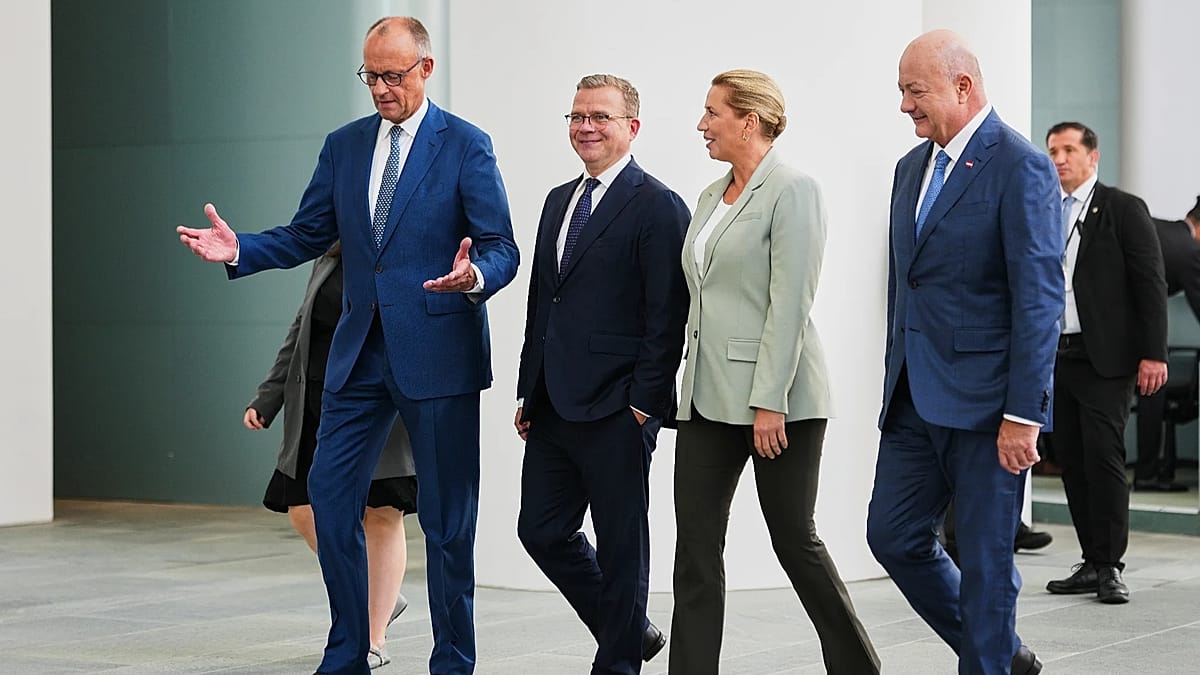
In a letter dated 28 September and addressed to Irish Taoiseach Micheál Martin, the leaders of Germany, Austria, Denmark, the Netherlands, Finland and Sweden said the upcoming compromise text must set an overall figure that net contributors can realistically finance. The signatories are Chancellor Friedrich Merz, Chancellor Christian Stocker, and Prime Ministers Mette Frederiksen, Rob Jetten, Petteri Orpo and Ulf Kristersson.
Dublin holds the rotating presidency of the Council of the European Union and is expected to table a revised negotiating box in the coming days, ahead of a European Council summit on 15-16 October. The six capitals describe this as the decisive phase of talks on the Multiannual Financial Framework (MFF), with a deal still targeted for the end of the year.
A 2% trim is not enough
In June, the Cypriot presidency floated a 2% reduction to the European Commission's draft MFF for 2028-2034, a package worth close to €2 trillion. The frugal group dismissed that as far too modest. The Commission's original proposal represented a nominal increase of roughly 60% over the current framework, a figure the six leaders call simply unrealistic.
"Almost every EU member state is making painful efforts to consolidate its public finances. There will be no European sovereignty without sound public finances," the letter states.
The signatories also repeat a complaint they first aired in Berlin on 27 August, when they called for cuts of "several hundred billion euros" without naming a precise target. They argue the negotiations are marked by a fundamental asymmetry: the six countries alone cover almost 40% of all member states' contributions to the EU coffers.
That arithmetic matters because any deal requires unanimity among the 27. A blocking minority of frugal states can force the presidency back to the drawing board, and Dublin knows it. The letter warns that if the Irish negotiating box is to serve as a basis for discussion, it must address the overall volume head-on. "This issue cannot be postponed," it says.
Redirecting money towards defence and competitiveness
Beyond the headline figure, the six want to reshape what the budget actually pays for. They are pressing to move resources away from traditional cohesion policy and the Common Agricultural Policy towards what they call modern priorities: common investment in security and defence, competitiveness, innovation and the fight against irregular migration.
That agenda overlaps with broader debates in Brussels about how to fund rearmament and industrial policy without inflating the next MFF. It also puts the frugal camp on a collision course with southern and central European states that rely heavily on cohesion funds, and with farming lobbies that defend the CAP. France, Poland and others have signalled they will resist deep cuts to those headings.
The letter also criticises plans to expand staffing at the EU institutions as "out of step with the times", noting that most national administrations are themselves shrinking. That view is shared by a majority of member states, even if they disagree on the overall size of the budget.
The pressure from the frugal six comes as the EU faces competing financial demands, from support for Ukraine to defence industrial capacity and the green transition. How the MFF is settled will shape the bloc's room for manoeuvre for most of the next decade, and the October summit is likely to show whether Dublin can bridge the gap between net payers and net recipients.