Belgian trade unions brought tens of thousands of demonstrators into central Brussels on Friday, turning the capital into the latest stage of Europe's running argument over austerity. Police put the crowd at roughly 30,000, a figure that underscores how quickly the government's planned spending cuts have become a flashpoint.
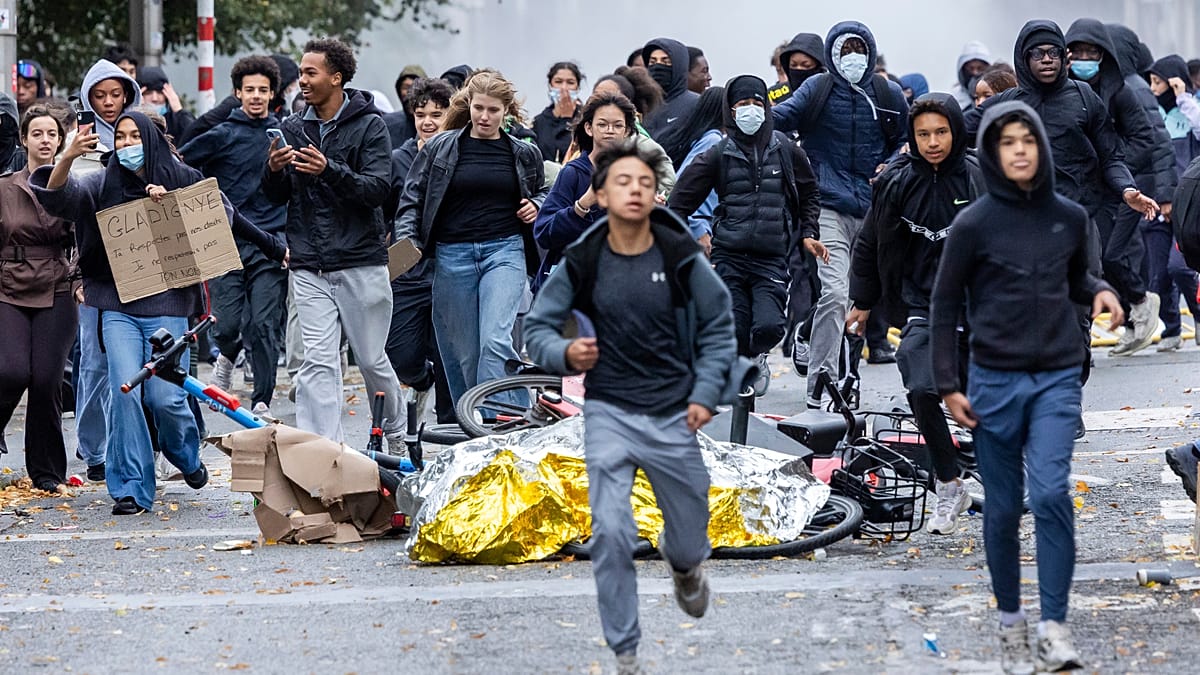
The march was largely peaceful for much of the day, but skirmishes broke out between officers and groups of protesters, with police deploying crowd-control measures as the demonstration wore on. The unrest followed a pattern seen elsewhere in Europe this year, where union-led rallies against austerity have drawn large numbers and, at times, turned confrontational.
A widening front against cuts
The Belgian action is part of a broader wave of labour unrest across the continent. In France, student protests in Paris have also ended in tear gas and arrests, while a French MEP has argued that police, not students, drive most protest violence — a claim that cuts to the heart of how European capitals handle dissent.
Belgium's fiscal squeeze is being felt against a difficult backdrop. The country's federal government has been searching for savings to bring its deficit under control, and the measures under discussion touch on public services, pensions and social spending — areas where Belgian unions have historically drawn firm lines.
"We are not here to cause trouble. We are here because the government is asking ordinary people to pay for a crisis they did not create," one union representative told demonstrators, according to local reports.
Friday's turnout suggests the unions retain significant mobilising power. But it also raises questions about how long the government can press ahead with cuts without provoking further disruption in a country already known for its fragmented politics and delicate coalition arithmetic.
Brussels as a stage
There is a particular symbolism to protests in Brussels. The city hosts the European Commission, the Council of the EU and NATO, and demonstrations there are often read as a barometer of sentiment well beyond Belgium's borders. When Belgian unions fill the streets, the message travels to the Berlaymont and to national capitals watching how austerity plays out in one of the EU's founding member states.
The clashes also revive a familiar debate about policing in European cities. Authorities in Brussels, as in Paris and elsewhere, face pressure to maintain order while avoiding the kind of heavy-handed response that can inflame crowds. The line between the two is rarely clean, and Friday's scenes will feed arguments on both sides.
For now, the immediate question is what happens next. Union leaders have signalled that further action is possible if the government does not adjust its plans. The Belgian government, for its part, has framed the cuts as necessary to keep public finances credible — a position echoed by finance ministries across the eurozone as they confront sluggish growth and rising borrowing costs.
What Friday made clear is that the austerity debate in Europe is not abstract. It is being fought in the streets of Brussels, in the corridors of the Élysée and the Bundestag, and in every member state where budgets are being trimmed. The Belgian protest is one chapter in a longer story about who pays, and how much, when the money runs short.



