Ukraine's parliament passed a law on Monday that strengthens the rights of ethnic minorities, a move that is set to unlock progress in the country's stalled EU accession talks. The legislation, approved by 266 of the 450 deputies in the Verkhovna Rada, bolsters protections for minority languages in schools and at cultural events, addressing a long-standing grievance from Budapest.
The dispute centered on the estimated 100,000 ethnic Hungarians living in Ukraine's Transcarpathia region. For years, their linguistic and cultural rights were a source of friction between Kyiv and Hungary, with the previous Hungarian government under Viktor Orbán blocking Ukraine's EU accession process since 2023 over the issue.
After Péter Magyar became prime minister in May, he adopted a more pragmatic stance. In June, he agreed an 11-point action plan with Ukraine and lifted Hungary's veto on the first two negotiating clusters. However, Budapest made further progress conditional on Kyiv formally adopting the minority rights legislation.
With Monday's vote, diplomats now expect Hungary to approve the opening of two additional clusters—covering the internal market and competitiveness—at an intergovernmental conference scheduled for Tuesday. This would mark a significant step forward in Ukraine's long path toward EU membership.
Potential meeting between Magyar and Zelenskyy
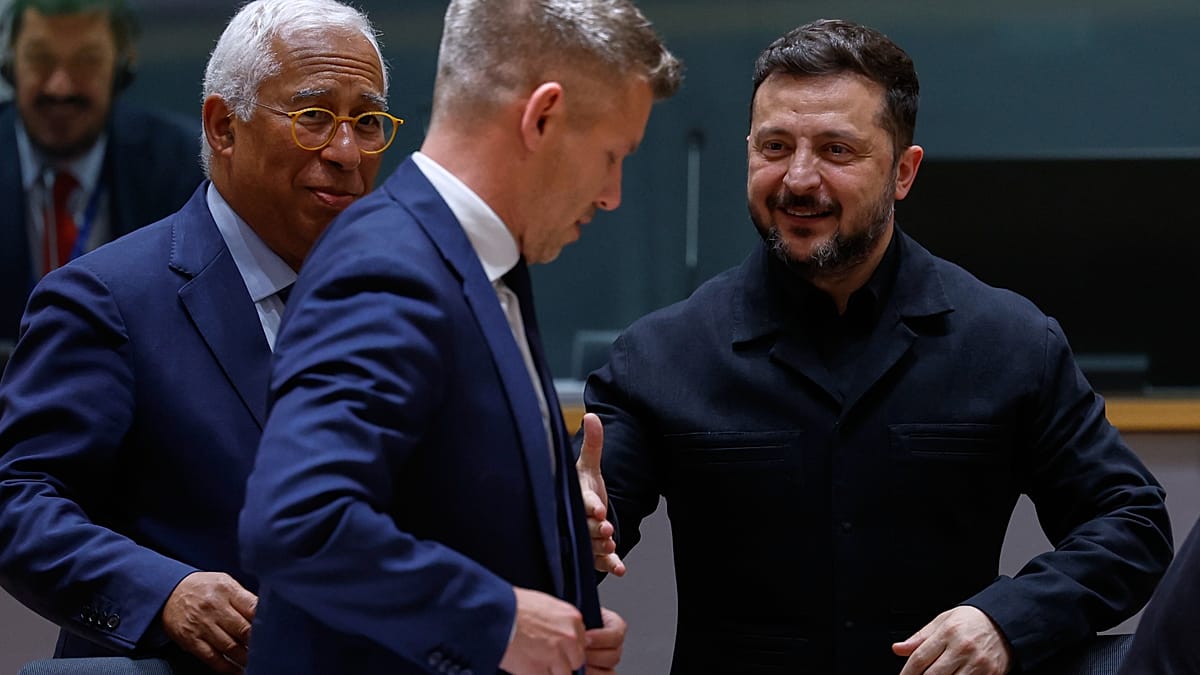
The breakthrough could also pave the way for the first bilateral meeting between Magyar and Ukrainian President Volodymyr Zelenskyy. Magyar said over the weekend that the two leaders might meet on the sidelines of the European Council summit in Brussels on Thursday. An earlier meeting had been postponed after Magyar made it conditional on progress over minority rights.
Relations between Hungary and Ukraine deteriorated sharply under Orbán, whose government repeatedly clashed with Kyiv and obstructed its EU membership bid. Orbán also ran a fiercely anti-Ukraine election campaign, portraying Kyiv as a threat to European security. His departure from the premiership has opened a new chapter in bilateral ties.
Magyar, who won a landslide election victory in April, has promised a more constructive approach toward Ukraine. Yet tensions resurfaced in September when he clashed with Ukrainian Foreign Minister Andrii Sybiha over Hungary's participation in Zelenskyy's Carpathian summit, an initiative aimed at boosting development in the region.
The minority rights law is seen as a crucial confidence-building measure. It not only addresses Hungarian concerns but also signals Ukraine's commitment to aligning with EU standards on minority protection, a key criterion in the accession process.
The development comes at a delicate time for Ukraine, as it faces ongoing Russian aggression and questions about the sustainability of Western support. The limits of EU support have become a pressing issue, and progress in accession talks offers a tangible sign of European solidarity.
Meanwhile, the broader geopolitical context remains fraught. Recent discussions around a ceasefire proposal have highlighted the complexities of international diplomacy, with Kyiv wary of being sidelined in negotiations.
For now, the focus is on Tuesday's intergovernmental conference, where Hungary's approval is expected to be formalized. If all goes as anticipated, Ukraine will have opened four of the six negotiating clusters, a significant milestone in its EU journey.
The law's passage also underscores a broader shift in Hungarian foreign policy under Magyar, who has sought to repair ties with both Ukraine and the EU. Whether this pragmatic approach will endure remains to be seen, but for the moment, it has created a window of opportunity for Ukraine's European integration.



