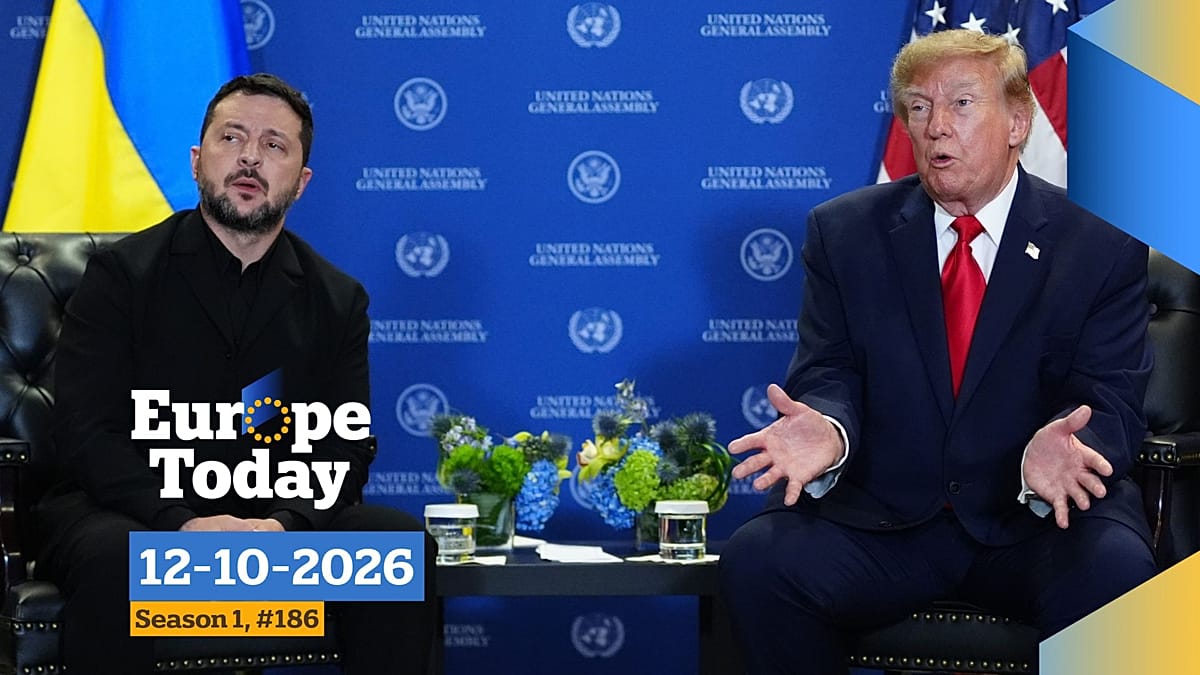
In a surprise announcement, US President Donald Trump claimed that Russia and Ukraine had agreed to an immediate ceasefire on energy infrastructure. Speaking to reporters, Trump said the deal would halt strikes on power plants and other energy facilities, a move he described as a first step toward broader peace talks. However, Ukrainian President Volodymyr Zelenskyy quickly pushed back, telling journalists that he had not been informed of any such agreement. "I don't know anything about it," Zelenskyy said, adding that Kyiv would only accept a ceasefire that was negotiated with its direct participation.
The confusion highlights the growing disconnect between Washington and Kyiv over the conduct of the war. Trump has repeatedly called for a swift end to hostilities, and his recent suggestion that Ukraine should hold elections and potentially replace Zelenskyy has further strained relations. In a social media post, Trump wrote that Ukraine's leader was "a dictator without elections," a remark that drew sharp criticism from European officials and from Zelenskyy himself, who responded that "Ukraine's leader is for Ukrainians to choose."
Baltic states on high alert
As the diplomatic back-and-forth unfolded, the Baltic states remained on edge. Latvia's Foreign Minister Baiba Braže, speaking at the Warsaw Security Forum, warned that Russia's hybrid campaign against NATO members was intensifying. "We are seeing increased drone activity, airspace violations, and cyberattacks," Braže said. "This is a deliberate strategy to test our resolve and to destabilize our societies."
Her comments come amid reports of Russian drones entering NATO airspace and a series of incidents targeting undersea cables and infrastructure in the Baltic Sea. Poland has also been on alert after police warned of a possible attack on Prime Minister Donald Tusk and the defence minister. The threats have prompted NATO to bolster its eastern flank, with additional troops and air defense systems deployed to the region.
Zelenskyy's address to the Warsaw Security Forum was aimed at shoring up European support. He reiterated Ukraine's need for more air defense systems and long-range weapons, and he criticized recent deals that allow Russian diesel to flow to Europe, calling them "a betrayal of our common values." His speech was met with applause, but European leaders are increasingly divided over how to respond to Trump's peace overtures and Russia's continued aggression.
The energy ceasefire announcement, if it were to hold, would be a significant development. But as Russian strikes continue on Ukrainian cities, including a deadly attack on Zaporizhzhia that killed eight people, including three children, skepticism is high. Ukrainian officials note that Moscow has repeatedly violated previous ceasefire agreements, and they question whether Putin is genuinely interested in peace.
Meanwhile, the human cost of the war remains staggering. The attack on Zaporizhzhia was just one of several recent strikes that have targeted residential areas and critical infrastructure. In Kyiv, residents have grown accustomed to nightly air raid sirens, and the city's energy grid is under constant threat. The latest wave of Russian strikes has also hit Sloviansk, while Ukrainian drones have reportedly targeted a Yandex data centre in Russia, underscoring the war's expanding scope.
In Doha, Qatar, the aftermath of a deadly attack on King Khalid International Airport in Riyadh has raised concerns about regional security. The Houthi rebels, suspected of carrying out the strike that killed at least 12 people and injured more than 300, have warned airlines and passengers to avoid Saudi airports. The attack has implications for global travel and energy markets, as Saudi Arabia is a key oil producer.
Back in Europe, France is facing its own crisis. Thousands of students have taken to the streets, demanding more resources and better conditions, while the government struggles to repair public finances under severe pressure. Economist Nicolas Bouzou described the situation as "a dangerous balancing act," noting that the state's debt levels are unsustainable and that political instability could undermine investor confidence. The protests have drawn parallels to the gilets jaunes movement, and President Emmanuel Macron's government is under increasing scrutiny as it tries to push through reforms.
The energy ceasefire announcement has also had an immediate impact on global markets. Oil prices fell following Trump's statement, as traders bet on a potential easing of supply disruptions. However, analysts caution that the ceasefire is far from guaranteed, and that any breakdown could send prices soaring again.
For now, the situation remains fluid. Zelenskyy is expected to meet with European leaders in the coming days to discuss next steps, and the EU is considering new sanctions on Russia. But with Trump's unpredictable diplomacy and Putin's willingness to escalate, the path to peace is anything but clear. As Baiba Braže put it, "We must be prepared for the worst while hoping for the best."



