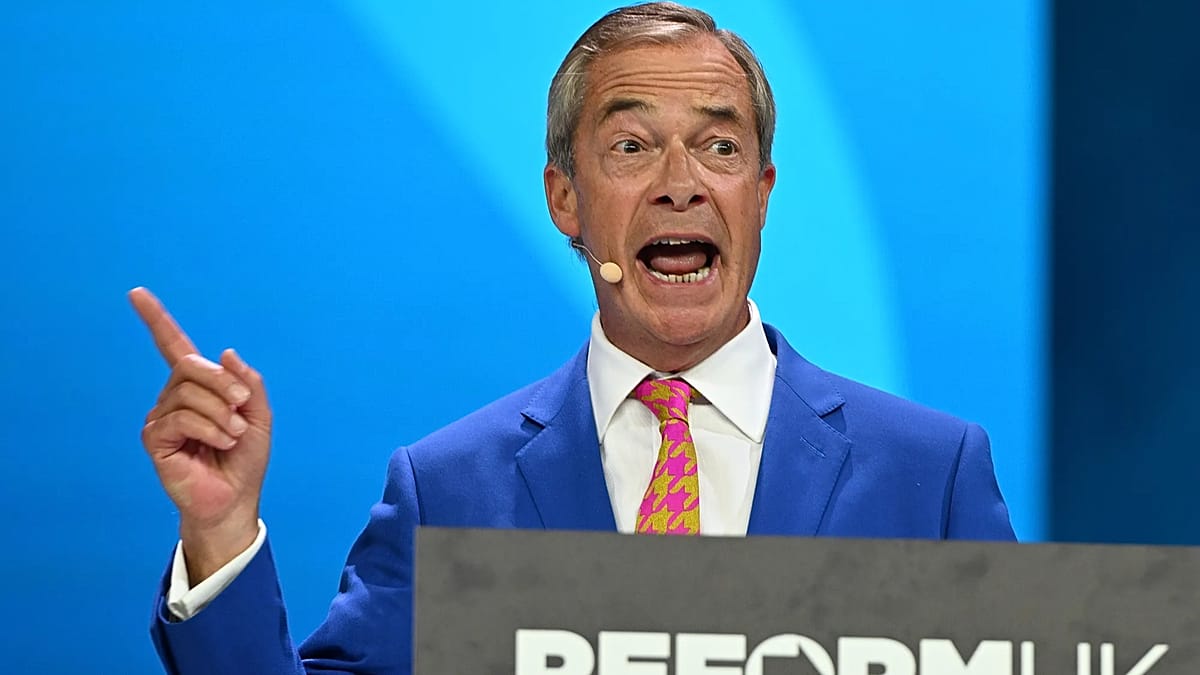
Reform UK leader Nigel Farage has announced that his party would suspend the United Kingdom's asylum system for up to five years if it were to win the next general election. Speaking at a press conference in Kent on Monday, Farage framed the proposal as a necessary response to what he called a "terrible mess" in border management.
"We will end the asylum system for up to five years," Farage told reporters. "Why are we going to do that? Because we are in the most terrible mess as a country. We literally have no idea who is here, and we frankly can’t afford to take the risk."
He added that the goal was to return Britain to being "a normal country" that prioritises national security and protects its citizens. "A country that detains and deports people that come illegally," he said.
Small boat crossings remain a flashpoint
The issue of migrants crossing the English Channel in small boats has become one of the most polarising topics in British politics. Reform has accused the governing Labour Party of having "totally lost control" of the borders, while Labour insists that crossing numbers have fallen in recent years—a claim Farage dismissed as "extraordinary."
Home Office figures show that 1,066 migrants arrived in the UK on 15 boats since 5 October. Late last month, a department spokesperson said the government had "made progress tackling the small boats," noting that "crossings are down significantly, and we have just recorded the lowest number of summer arrivals since 2020." The spokesperson added that authorities "must go further" with countermeasures.
Data released in August showed that asylum applications peaked at 109,662 in the year ending September 2025, though they have since declined—still remaining above levels seen between 2003 and 2022.
Brexit and Europe in the spotlight
Farage also used the speech to revisit the 2016 Brexit referendum, which has returned to the headlines after Prime Minister Andy Burnham suggested that rejoining the European Union could be an option. "One of the biggest reasons for voting Brexit was seeing the madness of what was happening in Europe and saying, 'we don't want that to happen here,'" Farage said, criticising EU immigration policy. "We need to get back control of our borders."
He accused both Conservative and Labour governments of betraying that hope. "Sadly, that hope has been completely betrayed by both Conservative and now a Labour government," he added.
Burnham, who took office in July, has repeatedly signalled a desire to move the UK closer to Europe. At the Labour Party's annual conference in Liverpool last month, he told attendees that Brexit had "done more harm than good" and that the UK needed a clear strategy for its long-term relationship with the EU. His comments have reignited debate about the UK's future ties with the bloc, a topic that remains sensitive across the continent.
The next general election is not due until 2029, but Reform's proposals are already drawing attention. The party's pledge to halt all small boat crossings within the first 100 days of government echoes similar promises made by other European hard-right parties, such as Italy's Meloni securing electoral reform and the broader shift in migration policy across the EU.
Observers note that the UK's approach to asylum has been closely watched in Brussels, particularly as the EU debates its own return hubs and the rights of migrants. Farage's proposal, if implemented, would mark a radical departure from the UK's international obligations under the 1951 Refugee Convention.
Political analysts in London suggest that the pledge is aimed at consolidating Reform's base ahead of local elections, but it also reflects a broader European trend of hard-right parties gaining traction on immigration. With Spain's snap election potentially shifting the EU's power balance rightward, the issue is likely to remain at the forefront of continental politics.
For now, the UK government has dismissed Reform's proposals as unrealistic, pointing to falling crossing numbers and ongoing cooperation with French authorities. But with the next election still years away, the debate over asylum and borders shows no sign of abating.



