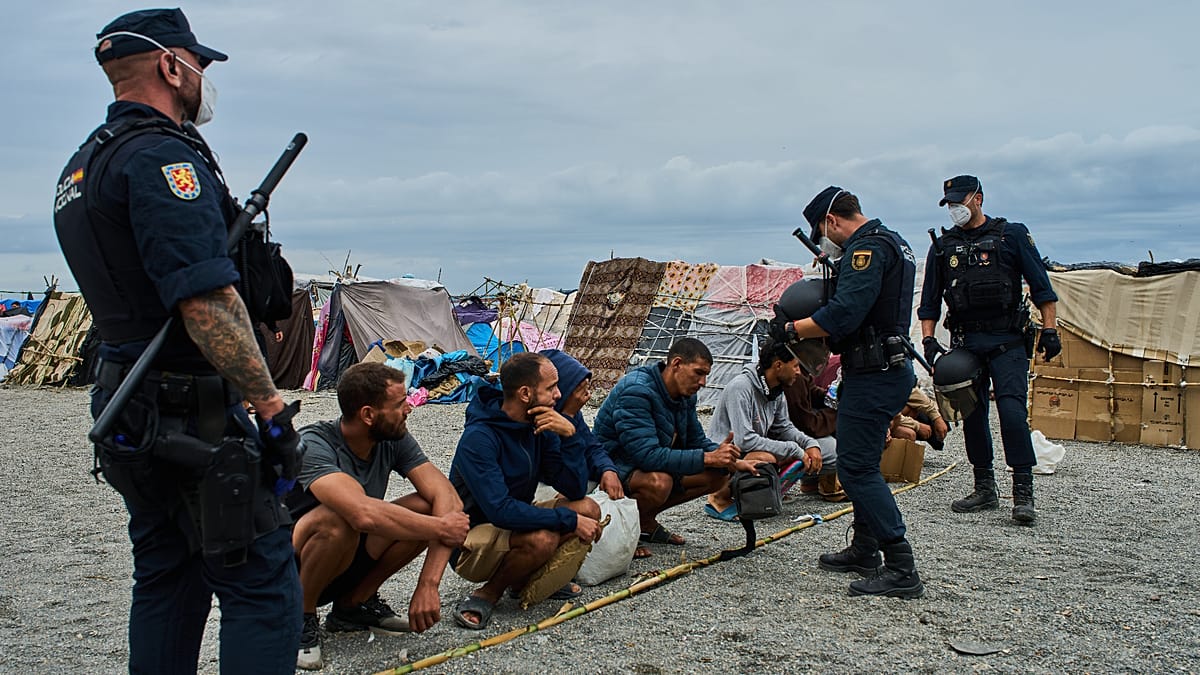
On October 1, EU home affairs ministers meeting in Luxembourg gave their final approval to a new Return Regulation, replacing the 2008 Return Directive. The regulation introduces a legal framework for so-called “return hubs” in non-EU countries, a move that has reignited a fierce debate about whether Europe can enforce its migration rules without undermining the human rights commitments it has made.
What the new rules say
The Council of the EU presents the regulation as a pragmatic answer to a persistent problem. Ireland’s Minister for Justice, Home Affairs and Migration, Jim O’Callaghan, whose country holds the rotating presidency, highlighted the gap between decisions and departures: “Around two in three people ordered to leave the EU do not actually leave. The revised return rules adopted today will help member states implement swift returns effectively.”
The regulation sets out obligations for people without the right to stay, requiring them to cooperate with authorities and leave voluntarily where possible. Non-compliance can lead to sanctions, from reduced benefits to financial penalties. For those deemed a security risk, entry bans can be indefinite and detention can extend beyond 24 months, provided it is justified and proportionate. A new European Return Order will allow member states to recognise each other’s return decisions, initially on a voluntary basis, with a review after three years.
Return hubs themselves require a bilateral agreement or arrangement with a non-EU country that respects international human rights standards and the principle of non-refoulement. Unaccompanied minors are explicitly excluded from the scheme. Separately, Germany, Austria, Denmark, Greece, and the Netherlands are pursuing a joint hub in Africa. Greece’s migration minister, Thanos Plevris, has said the goal is to open a facility in 2027, with Rwanda reported as a possible frontrunner.
Rights groups raise alarms
Human rights organisations are deeply sceptical. Marta Welander, EU Advocacy Director at the International Rescue Committee (IRC), told Euronews: “The proposed idea of return hubs is cruel, costly and counterproductive. No amount of additional funding, training or monitoring design changes the fact that a transferred person's protection would depend entirely on a state outside the EU's legal reach, so proper oversight, rights to appeal and protection from refoulement cannot be guaranteed the way they can be inside EU jurisdiction.”
Chiara Catelli, Advocacy Officer at PICUM, goes further, arguing that the very act of transfer is a rights violation. “No safeguard can make deportation centres a legitimate tool to manage migration. The very fact of sending people to places they don't even know, far from the life they were trying to build, goes against the right to private and family life.”
Catelli also points to what the regulation leaves out. “The Return Regulation doesn't say anything about living conditions or timeframes for detention in the return hubs, nor who will monitor the respect of and enforce any safeguards.” Indeed, the Council’s own description confirms that details are left to individual agreements, which are not yet public.
Council of Europe’s guardrails
Michael O’Flaherty, the Council of Europe’s human rights commissioner, has been vocal in his concerns. In letters published in July to the five countries pursuing the joint initiative, he called for four guardrails: a risk assessment before any hub opens, independent and continuous monitoring with the power to suspend cooperation, legally binding agreements with enforceable human rights clauses, and publication of agreements and findings so parliaments and courts can scrutinise them. These are recommendations, not clauses of the regulation.
Welander doubts that monitoring can be effective in practice. “It is hard to see how effective monitoring could work in a third country where the EU has no courts, no jurisdiction and no enforcement power at all.” The IRC has visited Italy’s detention centres in Albania, often cited as a blueprint for return hubs. “What has been witnessed in Albania includes widespread psychological distress among those detained without proper mental health care, including extremely troubling reports of self-harm.”
Who is responsible?
Catelli insists that responsibility cannot be outsourced along with the detainees. “What is clear is that the EU and its member states cannot just outsource their responsibility to protect people's fundamental rights, or to prevent and address violations, especially when those violations are a direct consequence of policies they have put in place.”
UN human rights chief Volker Türk made the same point after the European Parliament adopted the text in June. “EU States cannot simply outsource their human rights obligations to third States in this context.”
Welander argues that the real bottleneck lies elsewhere. “A major factor behind slow returns is third countries' willingness to cooperate on readmission and document verification - this is widely cited as a bigger constraint than coordination at EU level.”
Rights groups do not dispute that the rules apply. They dispute whether the new powers can uphold them in practice. With no host country confirmed, the answer will emerge from the agreements governments sign, and from whether those agreements are made public. As the EU tightens its migration rules, the question of accountability remains unresolved. For more on the broader policy shift, see our coverage of the ministers' decision and the wider tightening of migration rules.