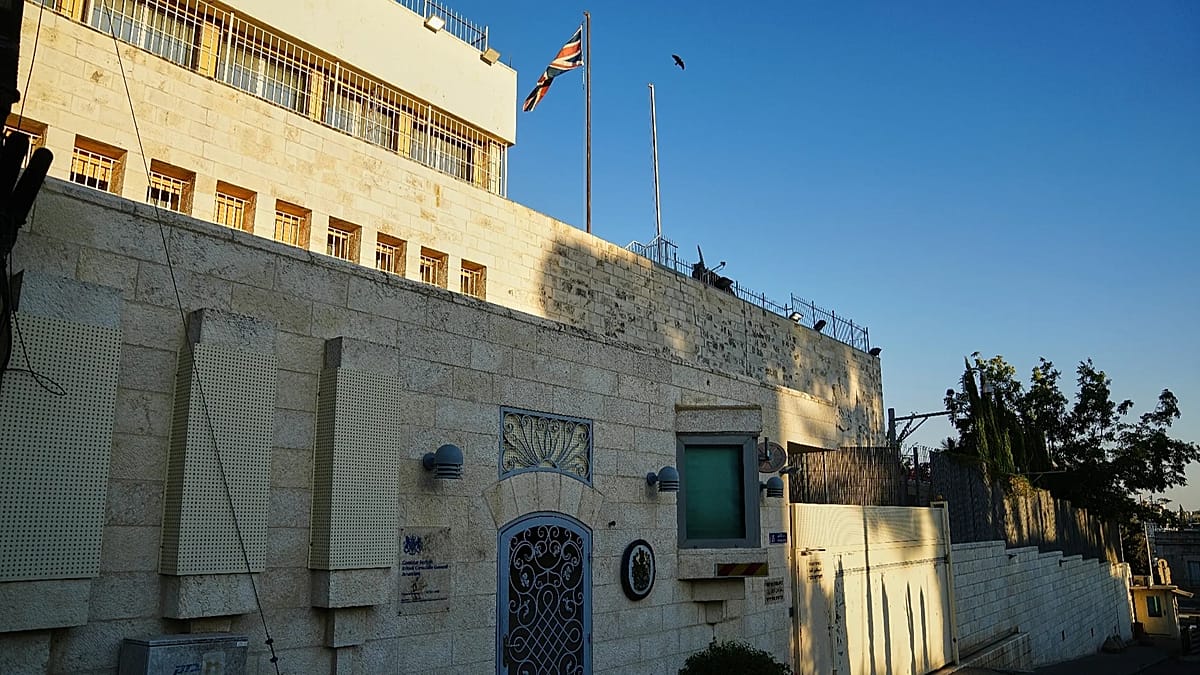
The diplomatic standoff between Israel and the United Kingdom has escalated after Israeli Foreign Minister Gideon Sa'ar announced that the British Consulate in East Jerusalem would cease operations on Thursday. The move is a direct response to recent UK sanctions against Israeli settlements in the occupied West Bank.
In a social media post, Sa'ar stated that the Consul General and 20 diplomats were ending their assignments and would leave Israel. He added that a small task force of no more than seven diplomats, with a very limited scope of activity, would be permitted to continue working from the building. "We did not want it to come to this, but the Labour Government’s actions have led us here," Sa'ar wrote.
British Foreign Secretary Ed Miliband countered that the consulate is not closing. Instead, it will be rebranded as the UK Mission, Jerusalem, from Thursday. "We have been clear that we do not accept that the Government of Israel has the legal right to close the British Consulate General in Jerusalem, which has been there for nearly 200 years," Miliband said in a statement.
Miliband explained that the UK Mission, Jerusalem, remains independent and operational, and will continue to deliver vital services and work with the Palestinian people. He also noted that some staff and their families had been temporarily withdrawn as a safety and security precaution.
Background to the dispute
The tension dates back to September, when Israel announced its intention to shutter the consulate in response to British sanctions on illegal West Bank settlements. In early November, Miliband told parliament that the UK would introduce an import ban on goods from illegal settlements in the occupied territories, accusing "settler terrorists" of "ethnic cleansing" in parts of the West Bank.
Sa'ar rejected these accusations, branding them "outrageous lies." The Israeli government has consistently argued that the consulate's presence in East Jerusalem undermines its sovereignty over the city, which it claims as its undivided capital.
The British consulate in East Jerusalem has historically served as the UK's diplomatic mission to the Palestinian Authority, handling consular affairs for Palestinians and representing British interests in the occupied territories. Its status has been a point of contention for years, with Israel seeking to limit foreign diplomatic presence in the city.
The dispute comes amid broader European discussions on Israel's policies. Earlier this year, the European Parliament witnessed a political clash over the removal of an Israeli flag, and Israel's envoy to France warned of rising antisemitism after a similar incident in Strasbourg. These events highlight the growing friction between Israel and European institutions over the treatment of Palestinians and the status of Jerusalem.
For the UK, the rebranding to the UK Mission, Jerusalem, is a pragmatic solution that allows it to maintain a diplomatic foothold without formally recognizing Israeli sovereignty over the city. The move also aligns with the UK's continued support for a two-state solution, with East Jerusalem as the capital of a future Palestinian state.
Observers note that the UK's sanctions on settlements are part of a broader European trend toward tougher measures against Israeli settlement activity. The EU has also been debating stricter return rules for migrants, but the settlement issue remains a key point of contention in EU-Israel relations.
As the situation develops, the UK Mission, Jerusalem, will continue its work, albeit with a reduced staff. The long-term impact on UK-Palestinian relations and the broader diplomatic landscape in the region remains to be seen.