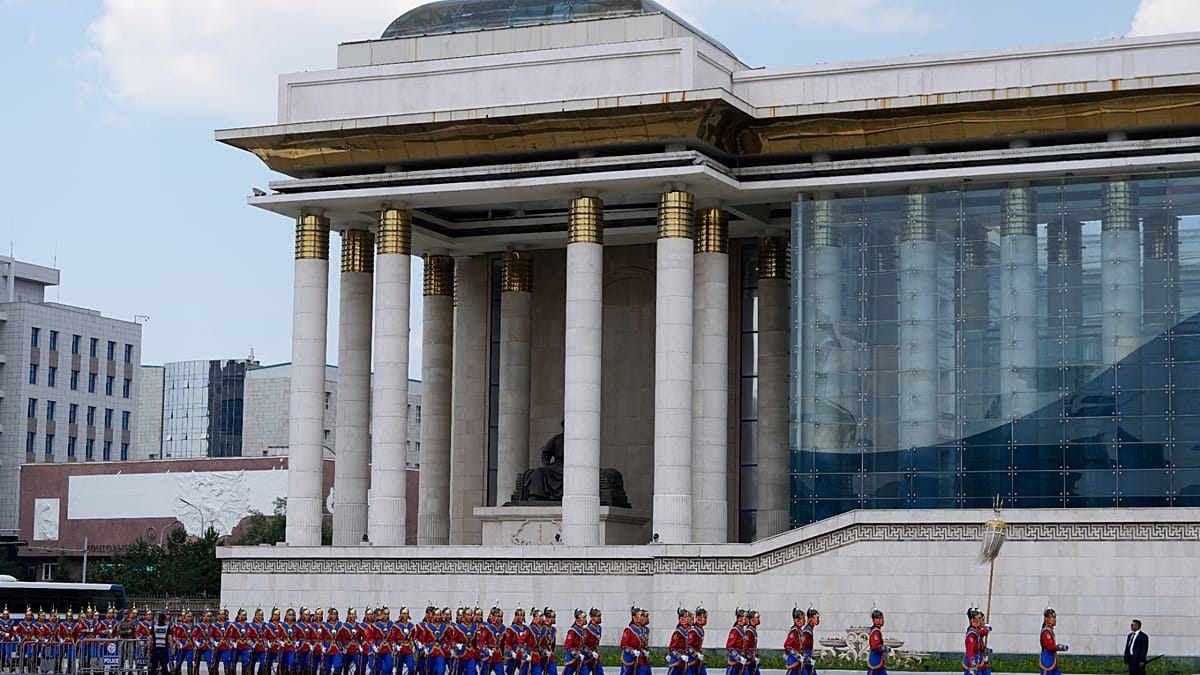
Mongolia is preparing for an unprecedented early presidential election after President Khurelsukh Ukhnaa stepped down amid corruption allegations, a move that has thrown the country's political landscape into uncertainty and opened a debate on constitutional reform.
The State Great Khural, Mongolia's parliament, approved the president's resignation on Thursday, with 96 of the 104 lawmakers present voting in favour, according to the state news agency MONTSAME. This marks the first time a sitting Mongolian president has left office before completing a full term.
Khurelsukh, 58, announced his resignation on Tuesday, saying he needed to clear his name. He has denied any wrongdoing. “I have never lied, stolen or deceived others,” he told a press briefing, as reported by MONTSAME.
The allegations against him were brought by Nyambaatar Khishgee, a former mayor of Ulaanbaatar and a rival within the ruling Mongolian People's Party (MPP). Khishgee claims Khurelsukh accepted $25 million (€23 million) in bribes linked to a 2019 railway contract awarded to Bodi International, a Mongolian conglomerate, while he was prime minister. The project involved the Tavantolgoi-Gashuunsukhait railway, which connects Mongolia's coal-producing region to the Chinese border. Bodi International has denied paying any bribes.
Constitutional reform push
Before leaving office, Khurelsukh called for a constitutional referendum to be held alongside the upcoming presidential election. He proposed either introducing a bicameral parliament that would elect the president or shifting to a presidential system with greater executive powers. Parliament has not yet announced a referendum on these changes.
Under Mongolia's constitution, a new presidential election must be held within four months of the resignation. Until a new president is sworn in, Parliamentary Speaker Byambatsogt Sandag is exercising presidential powers. Parliament must announce the election date within 20 working days of the vacancy, and at least 70 days before the vote.
The election was originally scheduled for summer 2027. The winner of the snap vote will serve a single six-year term, meaning they will remain in office beyond the next two parliamentary elections, expected in 2028 and 2032 under the regular electoral cycle.
Political instability
Mongolia has seen a series of high-profile political resignations in recent years. In June 2025, former Prime Minister Luvsannamsrai Oyun-Erdene resigned after losing parliamentary support amid corruption allegations, which he denied. In March 2026, his successor, Zandanshatar Gombojav, also resigned amid internal MPP tensions and a parliamentary boycott by the opposition.
The current crisis underscores the fragility of Mongolia's democratic institutions, which have been under strain as the ruling party faces internal divisions and public discontent over corruption.
European ties
Mongolia has long pursued a “Third Neighbour Policy” to diversify its international relationships beyond its two powerful neighbours, China and Russia. The European Union has been a key partner in this effort. In a statement following a meeting in Brussels on 29 June, the EU reaffirmed its support for Mongolia's Third Neighbour Policy.
Just a month before his resignation, Khurelsukh made a state visit to Germany, where he met President Frank-Walter Steinmeier. The two countries signed a joint declaration to strengthen their strategic partnership, covering cooperation on renewable energy, education, and security. This visit highlighted Mongolia's desire to deepen ties with Europe, a trend that is likely to continue regardless of the election outcome.
The upcoming election will be a test of Mongolia's political resilience. With the MPP divided and the opposition seeking to capitalise on public anger, the campaign is expected to be contentious. The constitutional reform proposal adds another layer of complexity, as it could reshape the balance of power between the presidency and parliament.
For Europe, the developments in Mongolia are a reminder of the importance of supporting democratic governance in Asia. The EU's engagement with Ulaanbaatar, through political dialogue and development cooperation, is part of a broader strategy to foster stability and rule of law in the region.