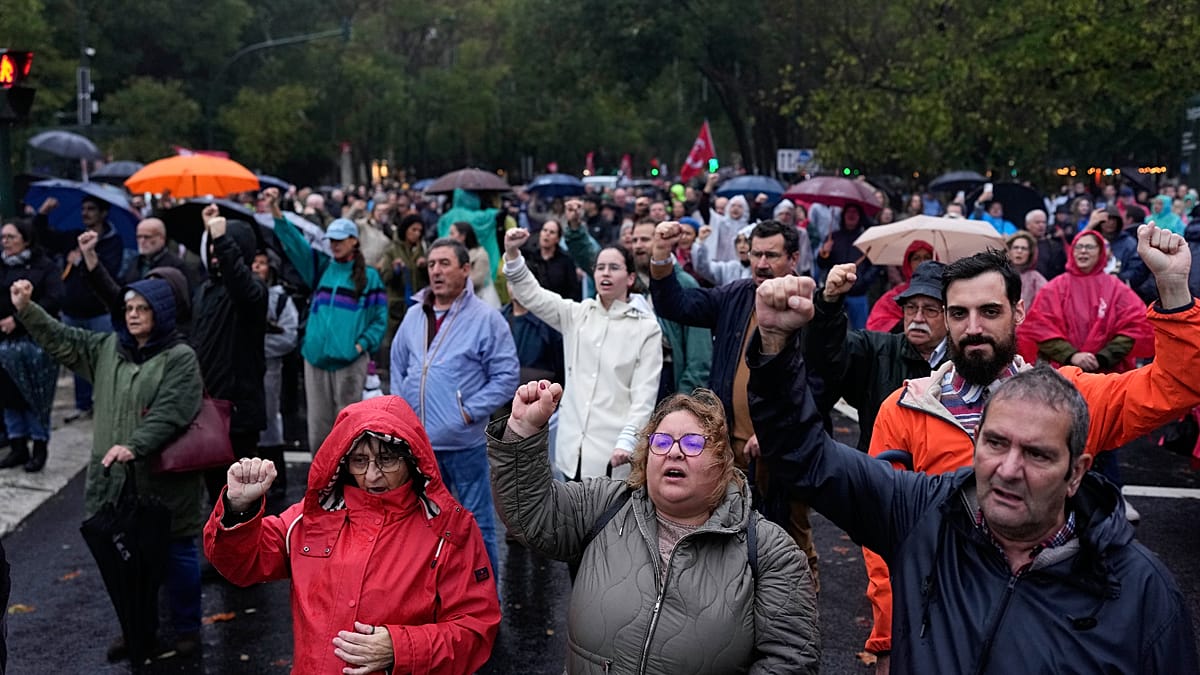
On Saturday, 21 November 2026, thousands of demonstrators took to the streets of Lisbon, undeterred by torrential downpours, to voice their anger over stagnant wages, inadequate pensions, and the relentless rise in the cost of living. The march, which snaked through the capital's historic centre, was one of the largest labour protests in Portugal in recent years, and it landed just days before the government faces a crucial parliamentary vote on its 2027 budget.
Organised by the country's main trade union confederations, the demonstration drew workers from across the public and private sectors, as well as pensioners and students. Many carried banners reading "Salários dignos" (dignified wages) and "Não ao aumento do custo de vida" (no to the rising cost of living). The heavy rain, which had already caused flooding in parts of the city, did little to dampen the mood—if anything, it underscored the determination of those who had travelled from as far as Porto and the Algarve to make their voices heard.
Budget vote looms
The timing of the protest was no accident. Portugal's parliament is set to vote on the government's budget proposal in the coming days, and the demonstrators are hoping to pressure lawmakers into adopting more ambitious measures to ease the financial strain on ordinary households. The centre-left government, led by Prime Minister Luís Montenegro, has promised to increase the minimum wage and adjust pensions for inflation, but many workers argue that these steps are insufficient given the sharp rise in housing, food, and energy costs over the past two years.
"We are not asking for charity; we are asking for a fair share," said Maria Santos, a 52-year-old hospital cleaner who joined the march with her colleagues. "I work full-time, yet I can barely afford my rent and groceries. The government talks about economic recovery, but for people like me, there is no recovery." Her sentiment was echoed by many in the crowd, which included teachers, bus drivers, and retail staff—all of whom described a growing gap between their pay packets and the reality of monthly bills.
The protest in Lisbon is part of a broader wave of discontent across Europe. In recent weeks, similar demonstrations have taken place in France and Spain, and Italy is bracing for a nationwide strike as workers and students feel the squeeze. The common thread is a sense that wages have not kept pace with inflation, and that governments are not doing enough to protect the most vulnerable.
Economic context
Portugal's economy has grown steadily since the pandemic, and unemployment is at a historic low. Yet the benefits of that growth have not been evenly distributed. The average monthly wage in Portugal remains among the lowest in Western Europe, while housing costs in Lisbon and Porto have soared, driven by tourism and foreign investment. The result is that many Portuguese workers, especially the young, are struggling to make ends meet—and some are choosing to emigrate.
The government argues that its budget includes significant social spending, including a boost to the minimum wage and a one-off payment for pensioners. But union leaders say these measures are too timid. "The budget is a missed opportunity," said António Costa, secretary-general of the General Confederation of the Portuguese Workers (CGTP), one of the protest's organisers. "We need structural changes, not just crumbs. The government must act on housing, on public services, and on wages."
The protest also took place against the backdrop of record-breaking storms that have battered the country this month, adding to the sense of a nation under pressure. The rain on Saturday was so heavy that some streets were temporarily closed, but the marchers pressed on, their umbrellas and raincoats forming a colourful mosaic against the grey sky.
Political analysts say the protest could influence the budget negotiations, as the government's parliamentary majority is slim and it may need the support of smaller left-wing parties to pass the bill. Those parties have already signalled that they will push for amendments that go further than the government's proposals. "This is a moment of reckoning," said political scientist Inês Ferreira of the University of Lisbon. "The government cannot ignore the streets, especially when the streets are this loud and this wet."
As the march wound down in the Praça do Comércio, with the Tagus river glistening in the rain, the mood was a mix of defiance and hope. Many demonstrators said they would return to the streets if the budget fails to deliver. "We are not going away," said João Pereira, a 34-year-old warehouse worker. "We are here for our future, and for our children's future. The rain is nothing compared to what we face every day."
The budget vote is expected later this week, and all eyes will be on Lisbon to see whether the government heeds the call from its citizens.