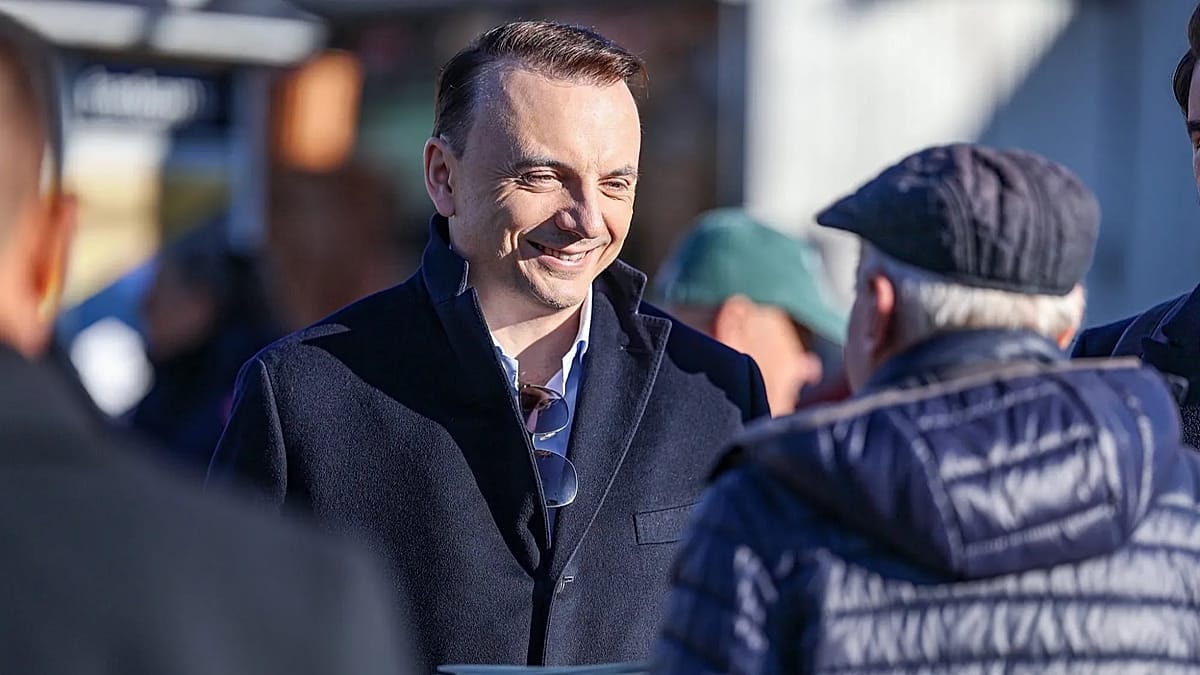
Independent candidate Łukasz Gibała has decisively won Krakow's mayoral run-off, securing 62.12% of the vote against 37.88% for Monika Piątkowska of the centrist Civic Coalition (KO), the main party in Prime Minister Donald Tusk's governing coalition. Turnout stood at 44.27%.
In his victory speech, Gibała declared that "after 24 years, the people of Krakow have got their city back," a reference to the long tenure of his predecessors. He also reached out to opponents, saying: "The election has just ended. Let us put all disputes aside. Let us show the whole of Poland that, despite what divides us, what unites us matters more, and that together we are capable of working for the good of our city."
A difficult inheritance
Gibała, a city councillor and entrepreneur who founded the residents' association Kraków dla Mieszkańców (Krakow for Residents), ran as an independent. He was backed by Jan Hoffman, head of the Old Town district council and one of the organisers of the referendum that removed Civic Coalition mayor Aleksander Miszalski in May.
The new mayor warned that the city faces a challenging period ahead. "Krakow's budget situation is disastrous. There are many things that need fixing. There are many things that need to be changed, cleaned up, so that life in Krakow can return to normal. But I believe that together, with all of you, we will manage," he said.
Gibała has long been a critic of the city's leadership, opposing both Jacek Majchrowski, who ran Krakow for 22 years, and his successor Miszalski, who served only two years before being ousted. This was his fourth bid for the mayoralty, after standing in 2014, 2018 and 2024 at the head of his own independent electoral committees.
National significance
The early election was triggered by a grassroots recall referendum in May, in which residents voted to remove Miszalski from office. Because Miszalski belonged to the country's main governing party, the dispute quickly took on national significance, turning the local race into a test of support for Tusk's coalition.
Gibała's victory is a setback for the Civic Coalition, which had hoped to retain control of one of Poland's most important cities. Krakow, the country's second-largest city, is a cultural and economic hub, and its mayoral politics often resonate beyond the city limits.
The result also highlights a broader trend of independent and localist candidates gaining ground in Polish municipal elections, as voters increasingly question the influence of national parties in local affairs. Similar dynamics have been observed in other European cities, where grassroots movements have challenged established political structures.
For Gibała, the immediate task is to stabilise the city's finances and restore public trust. He has promised to conduct a thorough review of the budget and to prioritise transparency in municipal spending. His supporters hope that his outsider status will help him implement reforms that previous administrations avoided.
As Krakow prepares for a new chapter under Gibała's leadership, the city's residents will be watching closely to see whether he can deliver on his promises of change and accountability.