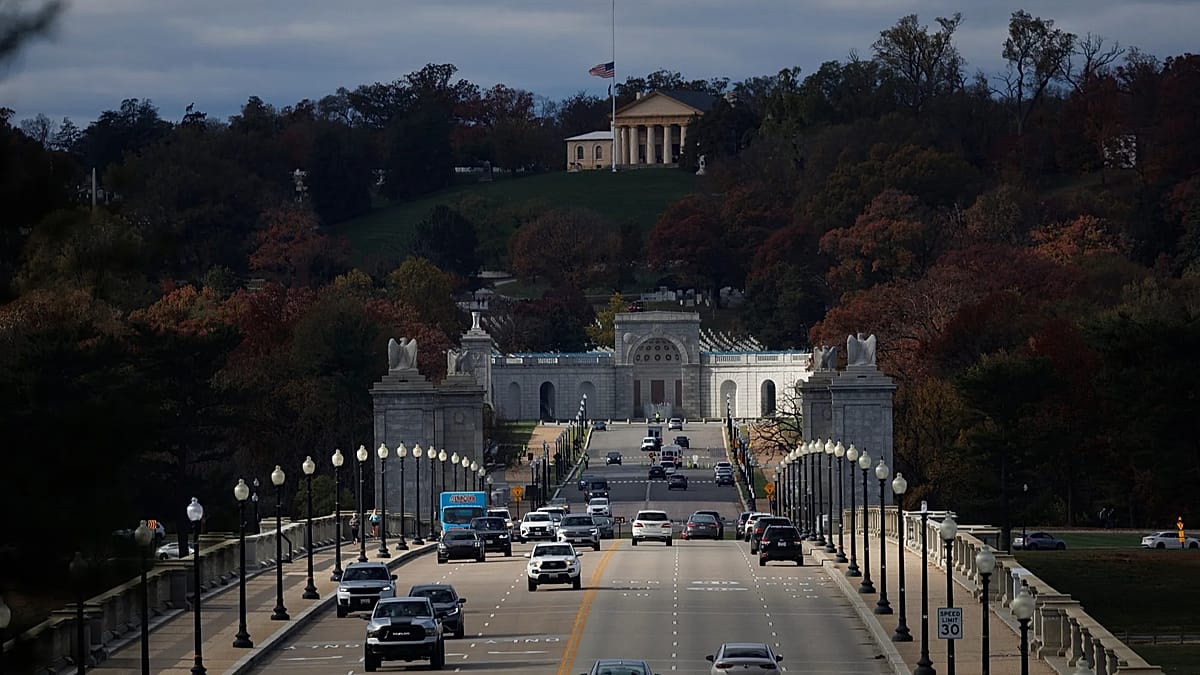
A second federal judge has intervened to stop the construction of President Donald Trump's proposed 250-foot triumphal arch in Washington, D.C., a project that has drawn sharp criticism from local officials and veterans' groups.
District Judge Leonie Brinkema announced on Friday that she would issue a preliminary injunction temporarily halting work on the monument, which is inspired by Paris' Arc de Triomphe and would stand near the Arlington Memorial Bridge. The decision follows a similar block imposed by District Judge Tanya Chutkan, reflecting growing judicial scrutiny of the administration's rapid redevelopment plans for the U.S. capital.
The arch, which Trump has touted as a centerpiece of his campaign to reshape Washington since returning to the White House in January 2025, would be located adjacent to Arlington National Cemetery, the final resting place for hundreds of thousands of American veterans. Opponents argue that the structure would obstruct the cemetery's iconic views and raise serious public safety concerns.
Democracy Forward, the legal group representing Arlington County Board in the case, welcomed Brinkema's ruling. Senior counsel Kate Talmor said in a statement: "We are pleased that the court has recognised the irreparable harm that will come to people who live and work in Arlington and stopped the massive vanity project while our case is heard and considered by the court. We are honored to work with the Arlington County Board to stop the proposed arch from jeopardising public safety."
The project had received approval from the National Capital Planning Commission (NCPC) earlier this month, but the court's injunction now puts those plans on hold. The legal challenge is expected to proceed, with a full hearing to determine the arch's fate.
Trump's vision for a 'military complex'
Trump has described the structure as a "top grade military complex," suggesting it could serve dual purposes as a memorial and a security installation. In a September post on his Truth Social account, he wrote: "I have agreed to convert the magnificent Triumphal Arch, planned since the Civil War Era many years ago, at the Receptive Circle adjoining the Arlington Memorial Bridge, into a top grade Military Complex/Triumphal Arch."
He added that the arch could be used "to house, store, and have the rapid ability to use large numbers of drones, plus Snipers, on both the roof and plaza areas, and additionally have and hold large quantities of sniper ammunition in storage." These remarks have fueled concerns among critics that the project is less about commemoration and more about projecting presidential power.
The arch's design, modeled on the French landmark, has also drawn comparisons to European monumental architecture, but its proposed location has sparked particular unease. Arlington County officials have argued that the massive structure would disrupt the area's character and pose risks to the thousands of visitors who flock to the cemetery each year.
This is not the first time Trump's Washington redevelopment agenda has faced legal hurdles. His administration has pushed forward with several high-profile projects, including renovations to federal buildings and public spaces, often bypassing traditional review processes. The courts have repeatedly stepped in to scrutinize these moves, as seen in his recent calls to European allies that have raised eyebrows across the Atlantic.
While the arch remains stalled, the legal battle is far from over. The preliminary injunction will remain in effect until the court hears the full case, which could take months. For now, the view of Arlington National Cemetery remains unobstructed, and the "triumphal arch" remains a blueprint rather than a reality.