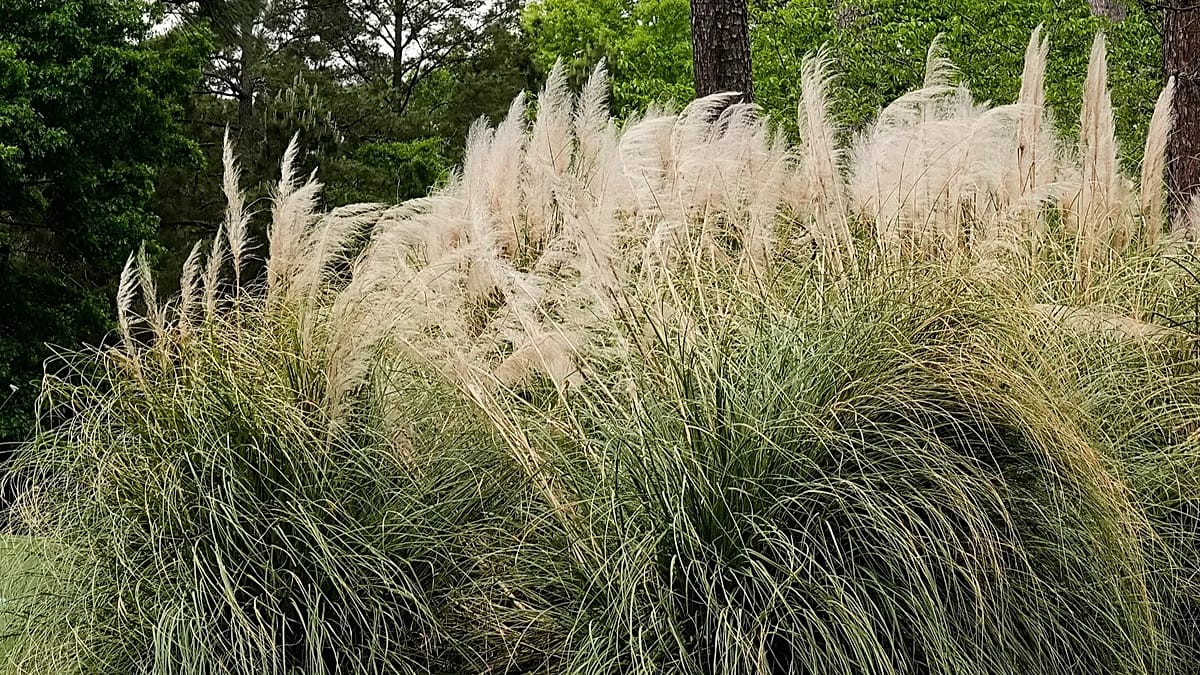
For decades, pampas grass (Cortaderia selloana) was a garden favourite across Europe, admired for its tall, feathery plumes. But in Portugal, this ornamental has become a fast-spreading invader, with consequences for both nature and public health.
According to a 2025 study, the plant has been recorded in at least 208 of mainland Portugal's 308 municipalities. The true figure is likely higher, as current maps rely on citizen reports. The spread is especially visible along the coast, where isolated clumps have turned into dense stands.
A silent invasion driven by wind
Hélia Marchante, a biologist at the Polytechnic University of Coimbra's School of Agriculture, has studied the plant for years. "It is a very, very fast-spreading species," she told Euronews. Unlike some invaders that need wildfires or floods to expand, pampas grass "only needs the wind."
The plant's history explains its success. Native to South America, it was introduced worldwide as an ornamental. For decades, gardens mostly contained female plants, which limited seed production. That changed in the late 20th century when hermaphrodite plants arrived, "almost certainly by accident," providing pollen. Once fertilised, female plants produce vast quantities of seed, each plume acting as a dispersal vehicle.
Wind is not the only carrier. People who cut plumes for decoration, or vehicles and clothing that brush against the plant, can inadvertently transport seeds to new areas. "It is the movement of the plant itself that has the potential to spread it," Marchante warns.
Ecological damage beyond the garden
Where pampas grass establishes large stands, it excludes native vegetation, reducing biodiversity. Its sharp leaves and dense growth hinder animal movement. Research also suggests it alters soil nutrient cycles and microbial communities, with effects that may persist long after removal.
The invasion is not just an ecological problem. Mário Morais de Almeida, an immunoallergology specialist and president of the World Allergy Organisation, explains that pampas grass is a grass species, releasing wind-borne pollen that can trigger allergic reactions in sensitised individuals.
"As this is a grass species, it will indeed release its pollen into the atmosphere, again carried by the wind, and it can cause significant allergic symptoms," he said. The timing is particularly problematic: while most grasses in Portugal peak in spring and early summer, pampas grass flowers from late summer into autumn, extending the allergy season.
For people with allergic rhinitis or conjunctivitis, exposure can cause sneezing, itching, a runny nose, congestion, and red, watery eyes. In asthmatics, it can worsen respiratory symptoms and trigger attacks. Morais de Almeida notes that while there is no direct epidemiological link yet, clinical experience suggests allergic complaints are lasting longer, partly due to climate change and multiple pollen types.
Because seeds and pollen can travel several kilometres on strong winds, the impact is not confined to areas where the plant grows. And human behaviour can help: "People pick the plumes because they are very beautiful, they paint them, they take them home," Marchante said, inadvertently spreading seeds.
Experts are calling for urgent action to control the spread, including public awareness campaigns and coordinated removal efforts. The challenge is significant, but as Marchante puts it, "we need to act before it becomes even more widespread."