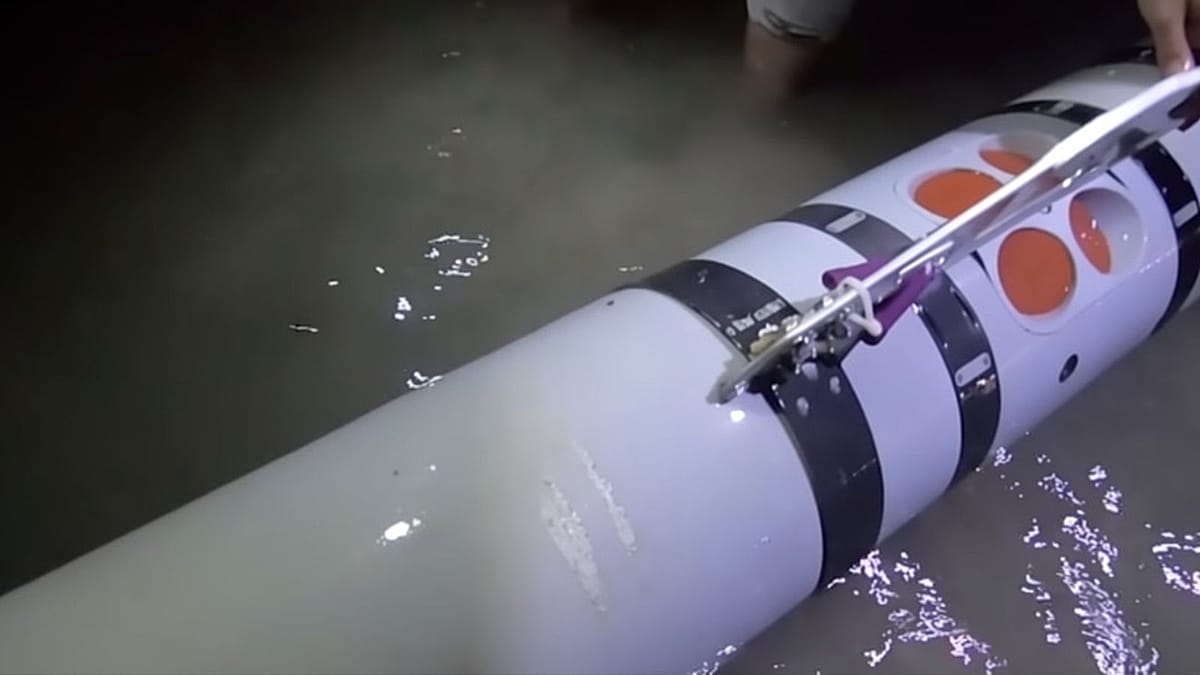
Iran's Islamic Revolutionary Guard Corps (IRGC) Navy has announced the capture of a US underwater vehicle in the Strait of Hormuz, marking the second such claim within a week. In a statement, the IRGC said the device was intercepted during a reconnaissance mission following what it described as a "coordinated intelligence and electronic warfare operation."
The IRGC identified the vehicle as a REMUS 600, a medium-sized autonomous underwater vehicle (AUV) used by the US Navy and several NATO member states. According to Iranian media, the device has been handed over to military experts "to retrieve its data."
The REMUS 600 is a modular system designed for a range of tasks, including surveillance, seabed mapping, mine countermeasures, and underwater inspections. It can operate at depths of up to 600 metres and is equipped with advanced sonar, cameras, and various sensors. Its relatively light weight compared with larger submersibles makes it a versatile tool for naval operations.
Neither US Central Command (CENTCOM) nor the US Department of Defense had confirmed or denied the claim at the time of writing. The lack of an immediate response echoes the silence that followed an earlier incident on Tuesday, when the IRGC announced it had intercepted another AUV, identified as a Dive-LD manufactured by the US defence company Anduril, near the entrance to the strait.
Escalating tensions in a vital waterway
The Strait of Hormuz is one of the world's most critical maritime chokepoints, carrying roughly one-fifth of global oil and liquefied natural gas supplies. Any disruption to shipping there has immediate repercussions for energy markets and for European economies that rely on Gulf energy imports.
In its latest statement, the IRGC reiterated Tehran's position that "the Strait of Hormuz is closed" and warned that its forces would confront any unauthorised passage or military activity. This rhetoric has intensified in recent months, with Iranian officials asserting control over the waterway and announcing plans to levy transit fees on vessels. Those plans have drawn strong opposition from Washington and its allies, including several European governments.
The repeated seizures of underwater drones suggest that Iran is seeking to assert its military presence and test the limits of US and allied operations in the region. The REMUS 600 is not only used by the US Navy but also by naval forces in Europe, including those of NATO members. This raises concerns in Brussels and other European capitals about the security of their own underwater assets in the region.
European navies, particularly those of France, the United Kingdom, and Italy, have operated in the Gulf and the Indian Ocean as part of international maritime security missions. The seizure of a US drone could set a precedent that affects the safety of allied vessels and equipment. The European Union has repeatedly called for de-escalation in the region, but the latest incident underscores the fragility of the situation.
The IRGC's claim also comes amid broader regional instability, including ongoing conflicts in the Middle East and heightened tensions between Iran and the US. The rejection of an Iranian plan to reopen the Strait of Hormuz by the Trump administration earlier this year has further complicated diplomatic efforts.
For European observers, the standoff over the strait is a reminder of how quickly a local incident can escalate into a wider crisis affecting energy supplies and maritime security. The EU's naval mission in the region, known as AGENOR, has been operating since 2020 to ensure safe passage for merchant vessels, but it has not been immune to the rising tensions.
While the IRGC's latest claim remains unverified, the pattern of seizures suggests a deliberate strategy to challenge US and allied presence in the Gulf. The lack of a swift US response may indicate that Washington is weighing its options, but it also leaves room for further provocations.
As the situation develops, European governments will be watching closely. The security of the Strait of Hormuz is not just a regional issue; it has direct implications for global energy prices and for the safety of European ships and personnel operating in the area. The coming days will reveal whether the US and its allies will take concrete steps to counter Iran's actions or seek to de-escalate through diplomatic channels.