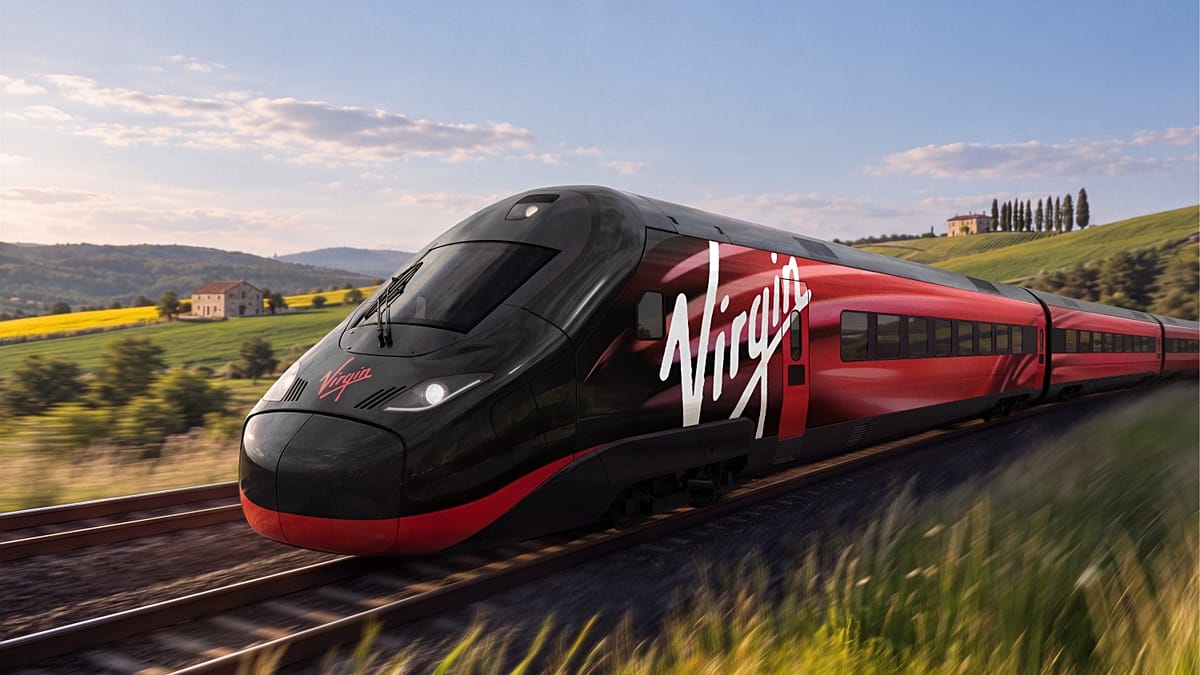
Virgin has given the first glimpse of its planned high-speed trains for the cross-Channel route, unveiling a striking black-and-red design and confirming its ambition to challenge Eurostar from 2030. The company intends to operate 20 daily return services linking London with Paris, Brussels and Amsterdam, adding almost 7.5 million seats annually to one of Europe's busiest rail corridors.
The announcement comes with a signed agreement with French manufacturer Alstom for 12 new trains capable of reaching 300 km/h. Virgin has also secured access to the Temple Mills International depot in east London, following a pact with Eurostar that the UK's Office of Rail and Road (ORR) has published. This will allow Virgin to maintain its fleet on British soil, a crucial step for the planned service.
A Virgin twist on rail travel
While technical details remain scarce, Virgin has released a photo of the train's exterior and promises customised interiors designed specifically for cross-Channel travel. Passengers will find pre-departure lounges and onboard social spaces inspired by Virgin Atlantic's Clubhouses at certain airports, with accessibility a top priority across all carriages.
The food and drink offering will draw on expertise from Virgin Voyages, the company's cruise line, while seating and communal areas will take cues from Virgin Hotels. Loyalty members of the Virgin Red platform will be able to earn and spend points on the trains, tying the service into the wider Virgin ecosystem.
Josh Bayliss, CEO of Virgin Group, said: “We’ll be connecting London with some of Europe’s greatest cities and giving passengers a distinctive new choice in cross-Channel travel. Virgin has always thrived on challenging the status quo and aimed to provide our customers with a great experience. We’ll bring the same approach to the cross-Channel route, making the journey something to look forward to as much as the destination.”
The move intensifies competition on a route long dominated by Eurostar, which has faced criticism over reliability and pricing. Virgin's entry could reshape travel between the UK and the continent, offering an alternative that leverages the brand's reputation for customer service.
Industry analysts note that the 2030 launch date gives Virgin time to navigate the complex regulatory and operational hurdles of running international rail services through the Channel Tunnel. The agreement with Eurostar over depot access is a positive sign, but questions remain about train certification, safety approvals, and the commercial viability of adding 7.5 million seats to a market that has yet to fully recover to pre-pandemic levels.
For travellers, the prospect of a new operator brings hope of more choice and competitive fares. Virgin's plans also align with broader European efforts to boost rail connectivity as an alternative to short-haul flights, a theme that has gained traction in Brussels and national capitals alike.
As the project moves forward, observers will watch closely how Virgin navigates the complexities of cross-border rail, from customs and security to interoperability with national networks. If successful, the service could herald a new era for Channel Tunnel travel, with implications for the entire European high-speed rail landscape.