When I mentioned to my hairdresser that I had just returned from Andorra, their immediate reaction was, “I couldn’t point to it on a map.” Given how rarely this tiny principality makes headlines, that’s hardly surprising.
Nestled in the eastern Pyrenees between France and Spain, Andorra is home to roughly 85,000 people, yet it welcomes around 8 million visitors each year. To put that in perspective, France, the world’s most-visited country, attracts about 102 million tourists annually, while Spain is on track to hit 100 million in 2026. Andorra spans just 468 square kilometres, making it the largest of Europe’s six microstates (the others being Vatican City, Monaco, Malta, Liechtenstein, and San Marino). But unless you’re a skier, it’s not exactly on the typical tourist trail.
Before my trip in July, I associated Andorra solely with its ski resorts. Given my complete lack of winter sports experience, it had never been high on my list. However, as more travellers seek lesser-known destinations to escape overtourism, I decided it was high time—quite literally, as Andorra la Vella is the highest capital city in Europe—to discover what the country offers beyond the slopes.
Cultural Highlights in Andorra la Vella
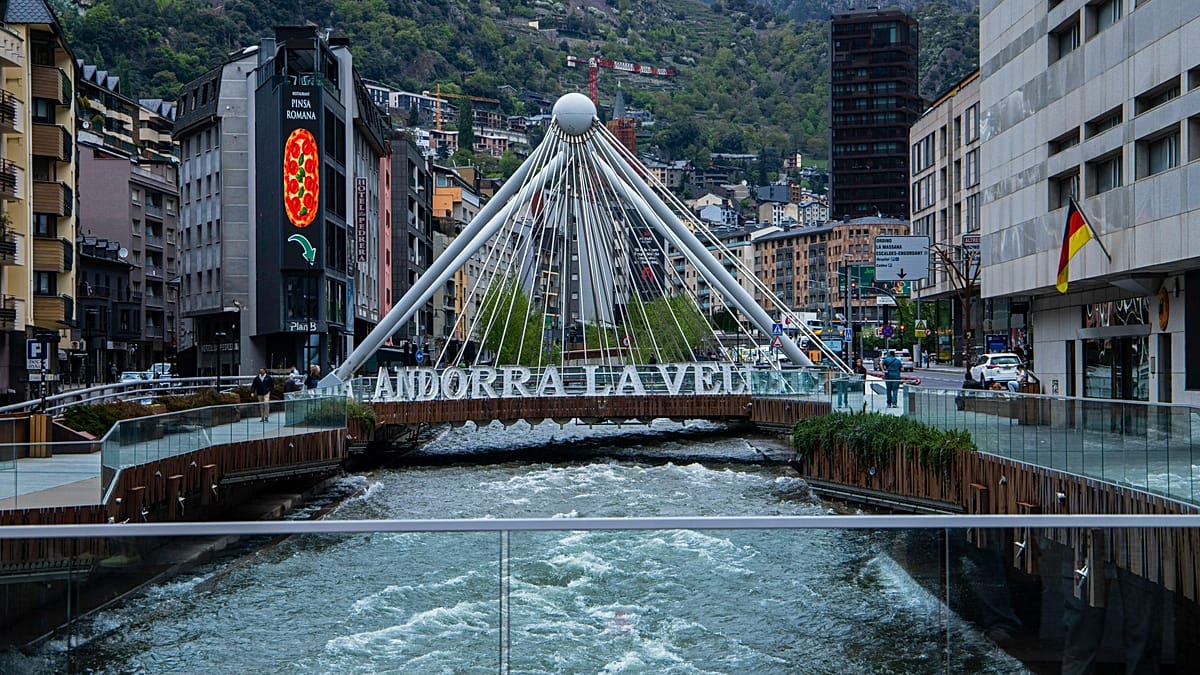
In tourist hotspots worldwide, certain photo opportunities are a must. In Santorini, it’s the blue domes of Oia; in Dubai, it’s the Burj Khalifa from the fountains. In Andorra, the iconic shot centres on Salvador Dalí’s La Noblesse du Temps statue, with the Puente de Paris in the background, helpfully adorned with a large “Andorra la Vella” sign. Fortunately, you won’t have to fight crowds for a good angle. The bronze sculpture, weighing around 1,400 kilos, was installed in 2010 after being gifted to the Andorran government in 1999 by Enric Sabater, a close friend of the artist. The melting clockface set on a tree trunk, topped with a crown, “represents the dominion of time over humanity,” according to the local tourism board.
For another spectacular view of the capital, consider walking the Rec del Solà. This short trail follows an irrigation channel in the hills above the city, offering panoramic vistas. The Visit Andorra website suggests it takes up to three hours, but I completed it in under an hour. From the trail’s end, you can reach the charming old quarter in just 15 minutes.
Speaking of the Barri Antic, if you only visit one museum or gallery, make it Casa de la Vall. This historic home dates back to 1580 and served as the seat of the General Council of Andorra until 2011. Here, you can learn about the origins of the co-principality, whose current heads of state are the Bishop of Urgell and the President of France, as well as the history of the flag and coat of arms. You’ll also see the cabinet of the seven keys, which has locks for each of Andorra’s seven parishes. Next door, you can view the new parliament building, and nearby is Església de Sant Esteve, one of the country’s most historic churches.
In the plaza below the new parliament, you’ll find another of Andorra’s most recognisable artworks: 7 Poets by Jaume Plensa. Installed in 2014, the seven fibreglass figures stand on pedestals and are illuminated at night. According to the artist, “Poets are an integral part of society. They are condemned to failure, because they know they won’t even sell three books, but they are a source of fertility, like a light drizzle that penetrates the earth. In my opinion, this long process, akin to that of a farmer, is highly courageous.”
Shopping and Spa Heritage
With some of the lowest VAT rates in Europe, Andorra is known for its shopping. Many people cross the border to do their weekly grocery shopping, but the main Shopping Mile also features well-known international clothing brands. If retail therapy isn’t your thing, you can explore the country’s spa heritage through the Caldes Project. The natural hot springs in Escaldes were originally used for the textile industry until the first thermal hotels opened there in the mid-19th century. Today, you can visit the Caldes Project to learn about the history of these springs and their role in the development of the local hotel and spa industry.
Andorra may be small, but it packs a surprising amount of culture, history, and natural beauty. Whether you’re wandering the old quarter, admiring Dalí’s surrealist vision, or soaking in the thermal waters, this microstate offers far more than skiing and duty-free bargains. As Europe grapples with overtourism, destinations like Andorra provide a refreshing alternative—one that rewards those who venture beyond the obvious. For more insights into European travel and culture, check out our piece on Europe's poverty divide or the latest on Lídia Jorge's Camões Prize.